On April 22, 1995, in Kibeho, Rwanda, the Rwandan Tutsi army opened fire on Rwandan Hutus too terrified to leave an (IDP) camp, killing more than 4000. Photo: Paul Lowe
Navi Pillay’s participation in the International Court Tribunal for Rwanda (ICTR) should have disqualified her for consideration for the Nobel or any other peace prize.
On October 9th, the Norwegian Nobel Committee awarded the 2026 Nobel Prize to Navi Pillay for leading the way to “a comprehensive global legal order,” and “ensuring that war crimes, crimes against humanity, and genocide are prosecuted.” It cited her work on the International Criminal Court, the International Court of Justice, the UN Human Rights Commission, the UN Independent International Commission of Inquiry on the Occupied Palestinian Territory, including East Jerusalem, and Israel, and for her work on the International Court Tribunal for Rwanda, or (ICTR). The Committee said that, on the ICTR, she was instrumental in establishing that “rape and sexual violence could constitute a crime against humanity – as well as genocide.” They also commended her for prosecuting the first case in which a defendant faced charges of incitement to commit genocide purely on the basis of spreading propaganda.
Pillay has been praised for chairing the United Nations panel which concluded, in 2025, that Israel committed genocide in Gaza. Inevitably, Zionists condemned her, and Netanyahu accused her of telling “the biggest lie of the 21st century." However, Norman Finkelstein, one of Israel’s most scholarly and rigorous critics, is also highly critical of Pillay in his latest book, Gaza's Gravediggers: An Inquiry into Corruption in High Places, particularly for her failure to conclusively reject Israel’s claim that Hamas committed rape during its October 7 invasion.
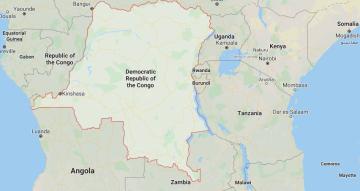
Pillay has been particularly praised for her work at the ICTR, by the UN, the Nobel Committee, and many others, recently including Democracy Now. However, the ICTR was such a monumental travesty of justice that no judgments rendered during its proceedings should stand. It was a political exercise rendering only victors’ justice, and anyone who participated as prosecutor or judge was collaborating in the construction of a historical narrative to serve the purposes of the US and its allies. In her groundbreaking book, In Praise of Blood: Crimes of the Rwandan Patriotic Front, Judi Rever quotes an insider who tells her that Western elites engaged in natural resource management had chosen the Tutsi to manage the vast mineral wealth of the Democratic Republic of the Congo. The Tutsi were the longstanding oligarchs of Rwanda and Burundi, a roughly 14% minority, before the majority Hutu came to power upon independence in 1961 in Rwanda and later in Burundi.
Tutsi aristocrats regrouped in neighboring Uganda and invaded Rwanda as the Rwandan Patriotic Army and its political wing, the Rwandan Patriotic Front, on October 1, 1990. They waged a four-year war until they reclaimed power in Kigali, Rwanda’s capital in July 1994. The horrific massacres committed during the last 100 days of that four-year war are what came to be known as the “Rwandan Genocide,” although popular conception, largely created by the Hollywood movie “Hotel Rwanda,” is that the genocide was an isolated event: one hundred days of bloodshed during which the Hutu majority implemented a long-planned conspiracy to exterminate the Tutsi minority for no conceivable political purpose, solely out of tribal, genocidal, African bloodlust.
Navi Pillay served on the ICTR for eight years, as a judge from 1995 to 2003, and as the Tribunal's president from 1999 to 2003. As its President, she also held administrative and leadership duties beyond the adjudicative role of a regular judge, which included:
leading and managing the Tribunal, directing its overall administration, institutional strategy, and workflow;
steering it during a period of rapid expansion, with an increasing number of trials;
managing assignments, scheduling, and administrative operations of the bench;
serving as the primary diplomatic and institutional voice of the Tribunal before the UN General Assembly, UN bodies, and the international community.
She thus had considerably greater power, particularly in her role as the voice of the Tribunal, to shape its legacy.
Innocent Tutsi, Demonic Hutu
The ICTR indicted only people from one of two warring parties in a four-year war. The two parties were the predominantly Hutu Rwandan army and government, and the predominantly Tutsi Rwandan Patriotic Army and political wing, the Rwandan Patriotic Front, who had invaded from Uganda in 1990. The Tutsi were assumed to be the victims, all of them innocent in a four-year war. How is that possible?
Despite abundant evidence of their crimes, prosecutors and judges had obviously received the message that none of the victors, not a single Tutsi, were to be indicted and none were. The Tribunal held its first plenary session on May 27, 1995, in Arusha, Tanzania, where it adopted its rules of procedure and evidence, creating the legal framework necessary to begin processing cases. Just a month earlier, on April 22, 1995, the Tutsi army had opened fire on Hutu civilians clustered and terrified to leave an IDP camp in Kibeho, Rwanda, killing 4000 or more of them.
Australian medic Terry Pickard watched the Kibeho Massacre with fellow peacekeepers, all operating under an order to stand down. He later recounted its horrifying detail in the book Combat Medic.
No one was indicted for the crime that triggered the genocide
The ICTR also failed to indict anyone for assassinating the Rwandan and Burundian Presidents, even though that was the crime that triggered the war’s final 100 days of violence. Rwandan President Juvénal Habyarimana and Burundian President Cyprien Ntaryamira were flying home from Dar Es Salaam, Tanzania in Habyarimana’s plane when soldiers fired missiles at it from the ground, causing it to crash in Kigali directly on to the grounds of the president’s residence. They had, in Dar Es Salaam, been engaged in a one-day regional summit on peace talks, the danger of ethnic violence, and political turmoil in Rwanda and Burundi.
General Kayumba Nyamwasa was General Kagame’s Defense Chief at the time. He and others formerly in Kagame’s inner circle have said that he gave the order to assassinate the two presidents. In the BBC documentary “Rwanda’s Untold Story,” Kayumba tells narrator Jane Korben, “I know. I was in a position to know.”
The Arusha Accords had been signed in Arusha a year earlier to end the Rwandan war. Elections were to take place in mid-1995, after a 22-month transitional period during which both armies would be able to station troops in Kigali. What could go wrong? For then General, now President Paul Kagame, commander of the Rwandan Patriotic Army, the trouble was that he couldn’t hope to win the election. The RPF could expect to win a minority of share in parliament, but not more, given that Rwandans still largely identified as Hutu or Tutsi. His solution was to shoot the two presidents’ out of the sky and create chaos, during which his army swung into a tightly planned offensive to seize power, which they did after the infamous 100 days of “genocide,” which can be called that in that both Hutu and Tutsi died as a result of ethnic rage.
It was, however, just as much Kagame and his army’s seizure of power, which they have held for the past 32 years, using the genocide as an excuse for tyranny, and for war, occupation, and plunder in the neighboring Democratic Republic of the Congo. Kagame stopped the genocide, the narrative goes, and only he can keep another from happening. Only he can keep Hutu refugees who fled across the border from returning to conclude their genocidal plan.
Never mind that billions of dollars worth of minerals and timber have been smuggled east through Rwanda and Congo to foreign markets, or that Rwanda, at one point, set up a “Congo desk” in Kigali to manage the flow.
Everything proceeded according to US plan, as did the International Criminal Tribunal on Rwanda. International criminal defense attorney John Philpot, who defended Jean-Paul Akayesa at the ICTR Appeals Court, writes, In Justice Belied, the Unbalanced Scales of International Justice, that according to Nuremberg Principles, Uganda and the Rwandan Patriotic Front who invaded Rwanda from Uganda here the aggressors, as were the US and US allies who backed them. Rwandans and their government responded to their aggression in self-defense. The genocide took place during the next four years, most horrifically in the final 100 days, but it served the US and its allies’ purpose to reduce the war to that alone.
Navi Pillay could not have failed to understand that the ICTR was a victor's court creating an epic lie, but she sat in judgment nevertheless, establishing both her loyalties and her credentials for future high-profile international court and commission appointments. Her legacy is not trailblazing justice, but a travesty of justice. She deserves to share the Nobel Peace Prize that Trump desperately covets with laureates Henry Kissinger, F. W. de Klerk, Barack Obama, and María Corina Machado.
Ann Garrison is a Black Agenda Report Contributing Editor based in the San Francisco Bay Area. In 2014, she received the Victoire Ingabire Umuhoza Democracy and Peace Prize for her reporting on conflict in the African Great Lakes region. She can be reached at ann@anngarrison.com. You can help support her work on Patreon.





 In this week’s segment, we hear about the ongoing uprising in France against neo-liberal austerity, colonialism, and white supremacy. But first, we discuss a new report that reveals a 25% decline in…
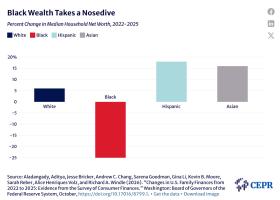 The Center for Economic and Policy Research (CEPR) recently reported on Federal Reserve data indicating that Black people in the U.S. have lost 25% of their wealth between 2022 and 2025. Whites,…
 Bouna Mbaye is an activist, writer, and a member of the Pan-African League-Umoja, the Pan-African Brigade for Palestine, and the US Out of Africa Network. He joins us from Paris to discuss the…
 As Black Agenda Report is poised to celebrate its 20th anniversary, we reprint Glen Ford's commentary on the killing of Trayvon Martin and the impunity provided to his killer in a criminal justice…
 The Democratic Party is terrified of even small liberal reforms and will not abide left leaning democrats thwarting their plans for austerity and neoliberal orthodoxy.



