A Black Agenda Radio commentary by Glen Ford
It’s been two generations since the beginning of modern mass Black incarceration. Prison populations, which only doubled from 1925 to 1972, increased more than seven-fold over the next 38 years, with Blacks accounting for ever higher proportions of inmates. The latest statistics do not indicate that white people “have reconsidered – or even acknowledged – their extraordinarily broad support for placing more Black people in captivity over the past 40 years than at any time since slavery.”
Mass Black Incarceration Ending? Don't Hold Your Breath
A Black Agenda Radio commentary by Glen Ford
“Half of the states reported decreases in their prison populations.”
For the first time since 1972
Does this mean the beginning of the end of mass Black incarceration in the United States? Not hardly. That would require an historic reversal of a nationwide policy to find new places to put Black people who refused to stay “in their place,” in the wake of the Civil Rights and Black Power Movements. There is little in the current American political conversation that indicates white people have reconsidered – or even acknowledged – their extraordinarily broad support for placing more Black people in captivity over the past 40 years than at any time since slavery.
It takes the government almost a year to tabulate the past year’s prison statistics, so the latest numbers are from 2010. They show about 7.1 million people under some kind of correctional supervision – one out of every 33. That’s down 1.3 percent from 2009, the year that saw the first decrease in supervision in two generations. The total population in state and federal prisons – not counting local jails – stood at 1.6 million inmates, down six-tenths of one percent. State prison populations decreased by almost 11,000, and local jails by almost 19,000, but federal prison populations grow by eight/tenths of one percent, to almost 210,000 inmates. That was, however, the smallest percentage increase in a generation – since 1980.
Half of the states reported decreases in their prison populations, with California and Georgia shrinking the most.
“Twenty-four states and the federal prison system increased their inmate populations.”
Speculation on why prison populations have, at least temporarily, peaked, centers on the financial crisis. It is true that states are experiencing unprecedented difficulties paying their bills. Some states have clearly responded to their fiscal crises by finding ways to incarcerate fewer people. Michigan reduced its prison population by 6,000 inmates in three years, mainly by decreasing the number of inmates who wind up serving more time in jail than they were originally sentenced to. California is under court order to cut its prison population by 30 percent, or 40,000 inmates. But the court order came too late to have a significant effect on 2010 prison numbers.
Only half the country has seen any decrease, at all. Twenty-four states and the federal prison system increased their inmate populations, with Illinois, Texas and Arkansas leading the pack. And states have found other ways to cut down on inmate costs without putting fewer people in prison, through wholesale privatization of prisons, and imposition of draconian fees on prisoners, probationers and parolees.
The Pew Research Center on the States
For Black Agenda Radio, I’m Glen Ford. On the web, go to BlackAgendaReport.com.
BAR executive editor Glen Ford can be contacted at Glen.Ford@BlackAgendaReport.com .

 In another step toward the achievement of its national sovereignty, Niger recently declared the United State's military presence in the country illegal.
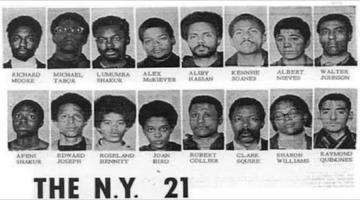 The trial of the New York Panther 21 was the moment in the Black liberation movement that ushered in an era of intensified state repression and violence and increasingly aggressive tactics…
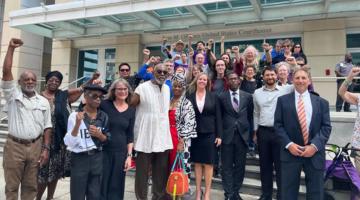 Three members of the Uhuru Movement were recently indicted on charges related to operating as "unregistered foreign agents." This attack has huge implications for free speech everywhere.
 After months of social unrest, the youngest leader in the West African state’s history will take office pledging a progressive program.
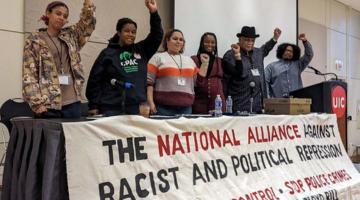 We hear from a Black and Brown coalition in Chicago about their meeting with minister Naledi Pandor of South Africa and their mobilizations for solidarity with Palestine.


