The U.S. indicted 94-year-old Raúl Castro not out of concern for the people of Cuba or the U.S., but because six decades of sanctions have failed to destroy Cuba's revolutionary continuity.
On May 20th, 2026, Donald Trump’s Department of Justice indicted Raul Castro, age 94, on the charge of murder. It’s one of the many hostile actions taken against Cuba, and the prelude to a US military buildup within the Caribbean Sea. The Cuban revolutionaries are defiant: They will not surrender Commander Raul to the US, nor will they cede any of their hard-won sovereignty to the United States’ capricious demands. The US’s latest move against Cuba has been decades in the making. The United States has deliberately assaulted Cuba’s economic capacity, assassinated citizens, and sanctioned the island – all in an attempt to force regime change. The Cuban Armed Forces, the Republic’s entire army, are listed as an international terrorist organization in the US.
This indictment is not about Raul alone. It’s about what Raul represents, about the line that runs from Jose Marti and Antonio Maceo to Fidel Castro to Raul to Miguel Diaz-Canel: The unbroken political continuity of the Cuban Revolution. To indict the 94-year-old Commander is to attempt what 65 years of sanctions, sabotage, and invasion have failed to accomplish: fracturing Cuba’s political unity. But even under these conditions, Cuba has held. In its resistance to US imperialism, Cuba has developed a political unity that no empire could fracture. The US is currently preparing to confront the Cuban military, with a stated goal to destroy it. As the military gathers, the Cuban people rally in the streets, steadfastly refusing to hand Raul over to US authorities. Cries are heard across the Malecon in Havana, in defiance of the threat of US invasion: Raul is Raul. Fidel and Raul were not just leaders of a revolutionary movement - they are living symbols of Cuba’s steadfast resistance against the United States.
Today, six decades after the triumph of the revolution, these symbols have inspired a nation’s resistance.
In an interview with Pablo Iglesias, President Diaz Canal of Cuba said: “Now we are missing liquefied gas... people at home are making charcoal ovens, stoves with firewood...” With supplies depleted in all ways across the island, for decades, this is one of many adaptations Cubans have made en masse to survive. En masse. Not the individual genius of a grandmother improvising dinner for a family, but the coordinated adaptation of an entire society moving together because it remains, despite every effort to fracture it, one society. Long wait lines for gas are a common sight - but on those lines, Cubans play dominoes, listen to music, and survive. In Havana, random power outages from fuel shortages can last longer than a day. Cubans have begun constructing a new solar grid across the city in response. Taxi drivers transition from Fords maintained with humble ingenuity to electric cars, often with overhead solar panels.
The US can’t blockade the sun.
Cuba has set an ambitious goal for its energy system - reduce dependence on oil by transforming the country’s energy grid to solar power. Cuba will develop an extensive network of solar panels across the island. The goal of the plan, first laid out in 2024, is to replace Cuba’s grid with renewable energy entirely by 2050. In the intervening years, as power crises worsened, the transition to solar has been even swifter. Since 2024, solar energy production has tripled in Cuba. ‘Solineras,’ solar charging stations, now provide energy to Cuban residents across the island.
Under material conditions designed to produce collapse, Cuba produced a faster energy transition than most countries managing the same transition under conditions of plenty. The sanctions intended to crush productive capacity instead accelerated a structural transformation the United States cannot reach. This is what creative resistance actually means: not cleverness as compensation for scarcity, but the capacity of a politically unified people to redirect a national plan in real time under crisis conditions. A society without that unity would have fragmented decades ago. Cuba did not.
This tenacious survival increasingly becomes a threat to US interests. The United States has desired the conquest of Cuba for literal centuries. In a letter to James Monroe in 1823, Jefferson proclaimed: “I candidly confess that I have ever looked on Cuba as the most interesting addition which could ever be made to our system of states.” What followed this written exchange was the implementation of ‘Monroe Doctrine,’ wherein the United States positioned itself as the steward of the Americas. Today, President Donald Trump mirrors Jefferson’s annexationist language. In March, President Trump said explicitly: “I do believe I'll be ... having the honor of taking Cuba. That's a big honor. Taking Cuba in some form.” Since the start of 2026, Trump’s administration has invaded several sovereign nations that have challenged US imperialism. But Trump’s ambitions are not his alone - destroying the Cuban Revolution has been a pillar of US foreign policy for decades.
In the aftermath of the Cuban war for independence, the US governed the country from afar, ruling through corporate and military institutions that pervaded the island and supported by its friendly dictator Fulgencio Batista. Batista courted foreign investment extensively, offering lucrative tax incentives to foreign corporations to develop casinos, mills, and corporate infrastructure. In an attempt to make Cuba more attractive to US-based financial institutions, Batista slashed labor and land rights, allowing US capital to pour in under his regime.
The results were stark: By 1958, three quarters of Cuban lands were held by private, large landowners. 25% of land in Cuba was controlled by US corporations directly. Following the revolution, plantations and corporate properties were seized and redistributed to the people. In response, those corporations, and their descendents have kept Cuba on a black list, suing any of them who do business with Cuba even more than six decades after the Revolution’s triumph.
Today, the US’s aspirations reflect the same imperial posture from Jefferson, centuries ago. Most recently, the United States launched ‘Operation Southern Spear,’ in August of 2025. Secretary of War Pete Hegseth mobilized the US military to exert maximum pressure across the Caribbean Sea - in the following months, the US killed hundreds of fishermen at sea with naval strikes. While the operation is supposedly directed towards ‘narcoterrorists,’ the US has openly used its military to threaten and strike Caribbean and Latin American nations that express even vocal displeasure at US occupation. This operation was the pretext to the US’s kidnapping of Nicolas Maduro in Venezuela. In Cuba, the US is preparing to do the same.
In lock-step with military pressure, corporate pressure has triangulated Cuba’s attempts to build its economy. This, too, is a strategy of strangulation: The US has awarded millions of dollars to US-based corporations against businesses that do business with Cuba. Most recently, the US Supreme Court awarded the defunct ‘Havana Docks,’ corporation from Delaware that once owned Havana’s port, millions in damages against cruise liners that docked in Cuba. The US’s relationship, here, is a protection racket - businesses play by US rules, or they’re arrested, fined, sued, and cut off from doing business inside the US. This mirrors the structure of US domination of the island throughout the 20th century: On one hand, the clear application of military force and on the other, the exploitation of the Cuban economy through US-based corporations.
This confluence of US corporate and military interests has long made Cuba a prize. Their steadfast resistance makes them a target. And the US has intensified its single-minded crusade against Cuba, isolating them from longtime partner Venezuela through their invasion in January of 2026.
Therein lies the challenge. Cuba, a nation once prized by the US as a neocolony and framed for centuries as the lynchpin of US control of the Caribbean chose to resist occupation. In doing so, they built institutions that coordinate total political unity across the island - from healthcare, to education, to the military. In doing so, they have built a nation that can build sovereignty and advance even under the world’s largest and most extensive campaign of economic warfare in history.
Yet Cuba refuses to break. On the streets in Havana, tens of thousands rallied last week. Gerardo Riveras, head of the island’s mass-mobilization network known as the ‘Committees in Defense of the Revolution,’ condemned US posture, saying, “Cuba does not constitute a threat to U.S. security. On the contrary, Cuba is a state under attack by the United States.” Cuba has never threatened invasion of the United States. So what is the threat? Wherein lies the danger of a single nation going its own way?
Cuba’s ambitious successes in transforming its energy grid is emblematic of a Cuba on the march. Cuba is internationally lauded for its medical programmes, still under US sanction, which have provided medical care to millions across the world at no cost. Cuba’s international education programs have educated more than 400,000 children in Haiti alone with Cuban teachers; Cuban teachers provide free education across Latin America. And, inside of Cuba, the island has created one of the best public health programmes in the world through collaboration with the state. The US’s program of sanctions prompts leaders in the Communist Party, like Diaz-Canel, to build solutions for their people from within Cuba. Rather than breaking, Cuba has remained, and accomplished, without capitulation to US demands.
Cuba has demonstrated that a small, sanctioned nation can develop world-class public infrastructure under the control of a socialist government, a communist party. The United States’s ideological opposition to communist thought has intensified under Donald Trump, whose administration has named the left wing in general as one of the greatest threats to national security. US administrations constantly parrot talking points, calling Cuba a ‘failed state.’ The US needs Cuba to fail, because Cuba cannot be tolerated as a functioning alternative to US dependency. An impoverished and broken Cuba would prove the US narrative; a Cuba that builds solar grids, trains doctors, and that educated Haitian children for free while under constant siege disproves it. The late Black Panther and New Afrikan radical Assata Shakur, who was safely protected by Cuba for 30 years, once called Cuba “One of the Largest, Most Resistant and Most Courageous Palenques (Maroon Camps) that has ever existed on the Face of this Planet.” Cuba is proof that a Caribbean island can create a thriving world free of US imperialism.
The US cannot allow that proof to stand.
Sanctions and imperialism have encircled Cuba now worse than ever before - with Cuba isolated from its allies in Venezuela. Cuba has no oil reserves left today to fuel its hospitals, transport food to its millions of citizens, or power homes and schools. The effects on Cuba’s people are stark. Popular inventions are everywhere - but you cannot create matter from nothing. No fuel is let into Cuba at all by the US. No food reaches the mouths of hungry children. Infant mortality climbs - rising by 148% between 2018 and 2025 - as a direct result of US sanctions on Cuba.
The United States’ outright goal of its program of brutal sanctions was to foster discontent against an incredibly popular Cuban Revolution. The Mallory Memo, published April 1960, confirms this as US policy. Sanctions were designed to crush real wages in Cuba, incite hunger, and reduce industrial productive capacity. Diminished resistance is a goal, not an accident, of a decades-long project to undermine the sovereignty of the Cubans who stood tall against US aggression.
Cuba has not broken. On the contrary, it has resisted hundreds of assassination attempts, trillions of dollars in damages from US sanctions, and endured clandestine invasions from Bay of Pigs in 1961 to bombings, shootings, and kidnappings directed against Cuban civilians. Throughout it all, Cuba has built political unity under communist governance, creating a society where opposing US imperialism and supporting public good are two sides of the same coin.
Joshua Reaves Charmelus is a husband, writer, and grassroots internationalist. He uses political and historical analysis, photography, and speculative fiction to practice the unity of study and struggle that his political ancestors modeled.”

 The 2026 French uprising is a continuation of the anti-colonial struggle, rooted in the 1961 Paris massacre of Algerians and the ongoing neocolonial relationship between France and its former…
 Disregard for Palestinian rights is a feature of Israeli politics rather than a bug. The upcoming Knesset election will change nothing for Palestinians, because every candidate across the political…
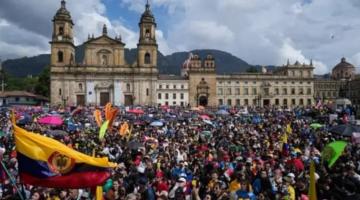 Thousands of people took to the streets across Colombia on Wednesday in the first national strike against President Abelardo de la Espriella’s administration, as police used tear gas, rubber bullets…
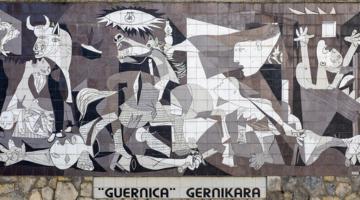 As we are experiencing a world order in disorder, with war and conflagrations and a shifting balance of power, Issa Shivji calls for a Sovereign Pan-African Project. The analyses recap the…
 In this week’s segment, we see through supposed disagreements between the US and Canada and recognize their partnership in settler colonialism, enslavement, and imperialism. But we begin with a…


