“This moment we are living through has infinite possibilities, and not all of those possibilities include the existence of humans.”
In this series, we ask acclaimed authors to answer five questions about their book. This week, we are featuring the work of Alexis Pauline Gumbs.Gumbs is a poet, independent scholar, and activist. Last week, she discussed her book, Spill: Scenes of Black Feminist Fugitivity. Today, we asked her the same five questions about her latest work, M Archive: After the End of the World.
Roberto Sirvent:How can your book help BAR readers understand the current political and social climate?
Alexis Pauline Gumbs: M Archive is from the collective perspective of researchers assembling and interpreting the material evidence of an apocalypse. Do I need to say more? The current political and social climate is environmentally, socially and I would say even spiritually forcing us to confront the possibility of end times. However, this book holds the possibility that all of this destructive energy will lead to one or multiple evolutions beyond what we understand the human species to be, with Blackness in particular (and those who have been and are being excluded from the definition of the human) as a deep dark evolutionary beacon guiding us through what we can never know from here.
What do you hope activists and community organizers will take away from reading your book?
I hope that activists and community organizers will use the scenes and examples in M Archive to invite our communities to think about how the actions we are taking (or not taking, as the case may be) would be looked at from the far future. How might they be interpreted by beings who don’t share our traumatic history or ideas of normalcy? Would they think we loved being alive? Would they think we cared about the future? Would they think we were grateful for the Earth? Or not. And what would we do if we understood that everything (including us, especially us) could be radically different? What are we able to dream when we remember that this moment we are living through has infinite possibilities, and that not all of those possibilities include the existence of humans.
We know readers will learn a lot from your book, but what do you hope readers will un-learn? In other words, is there a particular ideology you’re hoping to dismantle?
This book is an opportunity to unlearn everything that makes sense from this historical vantage point. Everything that allows us to live in denial of our impact on the planet and each other. It is an opportunity to unlearn the ideology of “other,” the technology of “convenience,” and the paradigm of racism that has produced all the lies we tell ourselves and believe. What would the whales say about it? What about the coral reefs? Most importantly I hope this book is an opportunity for us to unlearn individuality, or at least the form of individuality that fuels capitalism. It isn’t serving us or any other species on this planet.
Who are the intellectual heroes that inspire your work?
This work is inspired by and built through the work of the Black feminist tradition. Specifically every scene in M Archive: After the Worldcites phrases or questions from M. Jacqui Alexander’s Pedagogies of Crossing: Meditations on Feminism, Sexual Politics, Memory and the Sacred. Jacqui is a scholar who both models and theorizes transnational black feminism, the technology for collaborating across space, time, difference and modes of understanding. Jacqui is my hero, because her work and her life have taught me that everything is possible, particularly the deep forms of connection that we need to transform systems of oppression into live-giving processes. Audre Lorde also inspires everything I write, and Audre Lorde was Jacqui’s teacher and mentor so this work and this intergenerational lovefest would never be possible without her life and legacy.
In what way does your book help us imagine new worlds?
Yes!!!! This is the whole entire point! The scenes in this book allow us to look at our contemporary world newly, but also at some of the other worlds that our world as we (think we) know it is producing. I hope that the pleasurable (people have reported their hearts racing) work of engaging this book and it’s plethora of scenes, it’s use of familiar phrases set against galactic imperative, create an experience of breathing differently, as if in a transformed atmosphere. Whether that atmosphere has a higher or lower rate of carbon, is up to us. Or another way to say it would be that this book could be a training for unlearning the capitalized New World from the perspective of what remains at the bottom of the ocean, what is visible, (like an island of trash or a dying coral reef), from space.
Roberto Sirvent is Professor of Political and Social Ethics at Hope International University in Fullerton, CA. He also serves as the Outreach and Mentoring Coordinator for the Political Theology Network. He’s currently writing a book with fellow BAR contributor Danny Haiphong called American Exceptionalism and American Innocence: Essays on Race, Empire, and Historical Memory.




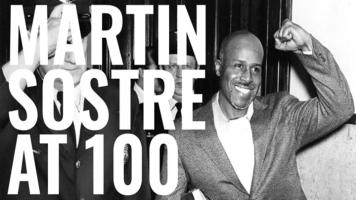 To commemorate 100 years since the birth of former political prisoner Martin Sostre, the Black Agenda Report Book Forum interviews Garrett Felber, A Visiting Fellow at Yale University who is…
 Banks operate with impunity and so they act accordingly.
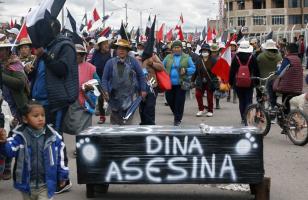 On December 7, 2022 a right wing coup removed Perú’s President Pedro Castillo Terrones from power, but the people have protested against the coup regime ever since.
 "We cannot go through decades of this physical and psychological abuse behind these walls and think We are coming home undamaged, without scars," explains New African political prisoner Shaka Shakur.
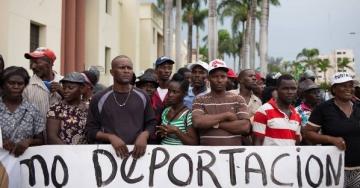 Violence against Haitians and Haitian descended people continues in the Dominican Republic. The Socialist Movement of Workers of the Dominican Republic condemn the latest state sanctioned…


