A Black Agenda Radio commentary by BAR executive editor Glen Ford
U.S. drone bases are multiplying on the African continent. Niger has just “given the green light to accepting American surveillance drones on its soil”; neighboring Burkina Faso already has one; two new drone facilities are opening in Ethiopia and the Seychelles; and UN peacekeepers in Congo want U.S. drones. Drones have terrorized Somalia from AFRICOM’s base in Djibouti for the past seven years.
Fleets of Drones Descend on Africa
A Black Agenda Radio commentary by BAR executive editor Glen Ford
“Drone warfare has become central to the modern U.S. version of gunboat diplomacy.”
With the U.S. and European military offensive in Africa in full swing, the drone wars are set to enter a new phase. Therefore, it is appropriate that U.S. anti-war activists will descend on the White House, on April 13
The West African nation of Niger has been very accommodating to the Americans, as she has been to the French, the former colonial master. According to a high Niger official
The U.S. already has a drone base in neighboring Burkina Faso, which also borders on Benin, Togo, Ghana, and the Ivory Coast.
“Ethiopia is now home to a new U.S. drone base, as are the Seychelles Islands, offshore in the Indian Ocean.”
In East Africa, the U.S. has been terrorizing Somalia with drones since 2006, when it instigated the Ethiopian invasion of Somalia. The U.S. Africa Command, AFRICOM, sends out drones from its large, permanent base in neighboring Djibouti, from which it can watch – or attack - most of the Horn of Africa, including Eritrea, right next door, one of the few countries in Africa that has no relationship with AFRICOM. Eritrea is under constant threat from Ethiopia, from which it won independence after a 30-year war.
Ethiopia is now home to a new U.S. drone base Seychelles Islands
In the very heart of the African continent, the 17,000-man United Nations peacekeeping force in the Democratic Republic of Congo wants to use U.S. drones
At the same time, another section of the United Nations is about to launch an investigation into the legality of U.S. drone warfare in Somalia, Yemen and Pakistan. Thus, it is possible that the United Nations Security Council could wind up calling in American drones to attack people in the Congo region, while the U.N.’s special rapporteur for human rights and counterterrorism
For Black Agenda Radio, I’m Glen Ford. On the web, go to BlackAgendaReport.com.
BAR executive editor Glen Ford can be contacted at Glen.Ford@BlackAgendaReport.com .

 Orisanmi Birton's groundbreaking book, Tip of the Spear, has been listed as contraband in prisons across the country, not only preventing incarcerated people from accessing the book but punishing…
 Billionaire oligarch Gilbert Bigio, is well know as one of the forces of influence that allow for shipments of arms to enter the country, provide cover for the western-backed gangs, and…
 Dismantling Green Colonialism: Energy and Climate Justice in the Arab Region has received much critical acclaim since its publication with Pluto Press in October 2023. Here, while acknowledging…
 September marked eleven years since the Dominican Republic passed the law that revoked the citizenship of millions of Dominican people with Haitian heritage. The government still maintains that the…
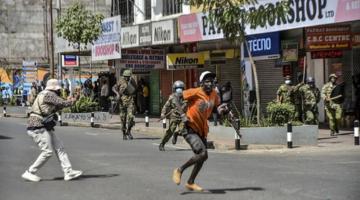 Reflecting on the mass protests that recently shook Kenyan society from top to bottom, Joel Mukisa argues that we must go much further than a choiceless democracy to find answers. A systematic…


