Black Agenda Report
Black Agenda Report
News, commentary and analysis from the black left.

  • Home
  • Africa
  • African America
  • Education
  • Environment
  • International
  • Media and Culture
  • Political Economy
  • Radio
  • US Politics
  • War and Empire

Black Women and International Women’s Day
Ken Morgan
14 Mar 2018
🖨️ Print Article
Black Women and International Women’s Day

“Alongside Assata and Rosa and Harriet and Sojourner, let’s celebrate Grace Campbell, of the Blood Brotherhood and the Communist Party.”

Women’s History Month in the U.S. is rooted in the Socialist and Communist traditions of International Women’s Day, March 8, 1911.

Still, two black women Communists, Grace Campbell, and Claudia Jones and others such as Louise Thompson Patterson, Esther Cooper Jackson, and Audrey Moore seldom if ever appear in “ruling class” public education. It remains a critical missing part of our history mainly since most of us are working class.

The absence of this history denies us a chance not just to understand our history, but also to apply it. It matters not whether you are a Trotskyite or a Stalinist, or Pan Africanist, or Black Nationalist or reformist.

Yes, Sojourner Truth, Harriet Tubman, Ida B. Wells, Mary Cooke Bethune, Ella Baker, Rosa Parks, Fannie Lou Hamer, and Shirley Chisholm easily deserve to be in the pantheon of great women. We seldom hear about Sally Parsons, Clara Day, and Johnnie Jackson – all working women that made their mark on the working class women.

Sometimes Angela Davis, Katherine Cleaver, Mabel Williams, and Assata Shakur’s names pop up. Too often they are marked damaged. Omit no black women because of their politics.

Of course, the women mentioned in all these eras do not register the countless black women involved in the grunt work our struggle, whatever their ideology.

“Omit no black women because of their politics.”

Take Grace Campbell. She was the first African American woman to join the Communist Party. Grace asserted boldly, “My interest in Communism was inspired by the national policy of the Russian Bolsheviks and the anti-imperialist orientation of the Soviet state birthed by the October Revolution.”

She was a founding member of the African Blood Brotherhood. The ABB was a “secret revolutionary fraternal order that advocated for armed self-defense, equal rights, and self-determination.” She ran for office as a Socialist candidate before women possessed the right to vote.

Claudia Jones joined the Young Communist League USA in 1936. Initially, her search there was to support the Scottsboro Boys. Before she was deported, Jones became a member of various CPUSA organs and commissions. Her analysis exudes excellence in her piece, “An End to the Neglect of the Problems of the Negro Woman.” It was not easy to be a black working class woman and a Communist.

  1. out your arms and embrace the Bolshevik, Vietnamese, Cuban, and the aborted revolution in Thomas Sankara’s Burkina Faso. The mission of International Women’s Day will one day be a reality when capitalism is overthrown and replaced by socialism.

A Luta Continua!

Dr. Ken Morgan is an internationalist activist and scholar in the struggle with and for the working class. Reach him at kmorgan2408@comcast.net

#Black Liberation Movement

Do you need and appreciate Black Agenda Report articles? Please click on the DONATE icon, and help us out, if you can.


Related Stories

The Unknown History of Black Uprisings
Keeanga-Yamahia Taylor
The Unknown History of Black Uprisings
01 July 2021
Historian Elizabeth Hinton’s book reveals that, in the late sixties and early seventies, there were hundreds of local rebellions against white viol
Rock-A-Bye Baby: The Anesthetizing Effects of Political Concessions
 joshua briond
Rock-A-Bye Baby: The Anesthetizing Effects of Political Concessions
01 July 2021
The response to Black rebellion are all distinct types of “reforms” to politically sedate Black surplus populations and sustain white settler-capit
BAR Book Forum: Cisco Bradley’s “Universal Tonality”
Roberto Sirvent, BAR Book Forum Editor
BAR Book Forum: Cisco Bradley’s “Universal Tonality”
16 June 2021
Jazzman William Parker’s work is a bold art of resistance to capitalism, colonialism, racism, and the runaway train that is our present-day America
“New Bones” Abolitionism, Communism, and Captive Maternals
Joy James
“New Bones” Abolitionism, Communism, and Captive Maternals
09 June 2021
Joy James uses poet Lucille Clifton's image of “new bones” to reflect on a series of revolutionary anniversaries in 2021 and the nature of pol
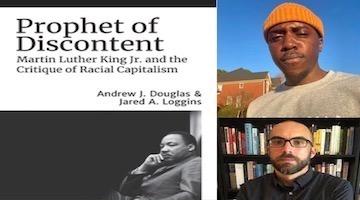
The authors set out to reconstruct King’s critical theory of racial capitalism.
Roberto Sirvent, BAR Book Forum Editor
BAR Book Forum: Jared A. Loggins and Andrew J. Douglas’ “Prophet of Discontent”
06 May 2021
The authors set out to reconstruct King’s critical theory of racial capitalism.
Reaching Beyond “Black Faces in High Places”: An Interview With Joy James
George Yancy
Reaching Beyond “Black Faces in High Places”: An Interview With Joy James
03 February 2021
White supremacist culture is a permanent site of predatory consumption, extraction and violation.
Return to the Source: Democracy is Dead
Editors, The Black Agenda Review
Return to the Source: Democracy is Dead
20 January 2021
By what stretch of the imagination can the US be a democracy when ordinary citizens have virtually no influence over what their government does?&…
Caste Does Not Explain Race
Charisse Burden-Stelly, PhD
Caste Does Not Explain Race
06 January 2021
The celebration of Isabel Wilkerson’s Caste reflects the continued priority of elite preferences over the needs and struggles of
Freddie Gray and Why the Wealth of Sports Franchises Matter
Gustavus Griffin
Freddie Gray and Why the Wealth of Sports Franchises Matter
06 January 2021
A significant portion of sports franchise wealth can be traced directly to the oppression and displacement of Black and Brown bodies.
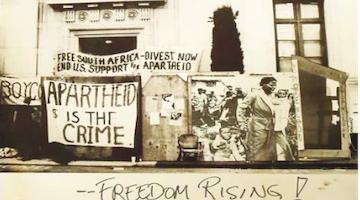
Racial Capitalism, Black Liberation, and South Africa
Editors, The Black Agenda Review
Racial Capitalism, Black Liberation, and South Africa
16 December 2020
The phrase racial capitalism first emerged in the context of the anti-Apartheid and southern African liberation struggles in the 1970s.

More Stories


  • Save the University City Town Homes
    Black Agenda Radio with Margaret Kimberley
    Save the University City Town Homes
    29 Jul 2022
    Rasheda Alexander is a tenant organizer at the University City Town Homes in Philadelphia. She joins us to discuss their struggle to stop a mass eviction amidst the proposed sale of their affordable…
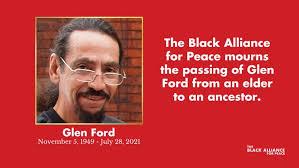
  • Glen Ford's Irreplaceable Journalism
    Margaret Kimberley, BAR Executive Editor and Senior Columnist
    Glen Ford's Irreplaceable Journalism
    27 Jul 2022
    I was very proud to write the preface to Glen Ford's book, The Black Agenda, which was published posthumously by OR Books. As we approach the first anniversary of Glen's passing, I endeavored to…

  • Glen Ford's Ukrainian Crystal Ball
    Glen Ford , BAR executive editor
    Glen Ford's Ukrainian Crystal Ball
    27 Jul 2022
    Glen Ford was among the speakers at a May 16, 2014 teach-in on Ukraine sponsored by the International Action Center. The event was held at The Riverside Church in New York City in the wake of the…

  • The Lies of Empire: Don’t Believe a Word They Say
    Glen Ford , BAR executive editor
    The Lies of Empire: Don’t Believe a Word They Say
    27 Jul 2022
    The U.S. reprises Iraq, inventing a WMD threat from Syria. The FBI concocts home-grown terror through stings, while the NSA claims it has secretly saved many lives. “Why this steady stream of…

  • Glen Ford: Clarence Thomas, the “Anti-Black,” 2007
    Editors, The Black Agenda Review
    Glen Ford: Clarence Thomas, the “Anti-Black,” 2007
    27 Jul 2022
    An essay by the late Glen Ford recounts the perverse origin story of the twisted life and lies of Clarence Thomas.

  • Load More
Subscribe
connect with us
about us
contact us

