(Photo: D. Musa Springer)
There cannot be any discussion of Cuban politics that does not include perspectives from the African descended population. There is much to learn from people who are living in a revolutionary process.
Originally published in Hood Communist.
To fight for peace is the most sacred duty of all human beings, whatever there religions or country of birth, color of their skin, their adult age or their youth.”
Fidel Castro Ruz (14 February 2016)
I left Cuba with more clarity — of the real situation on the ground, of the wants and needs of some Black Cubans and their communities, of the dire economic situation caused by the blockade, AND of the idiocy of most political discussions in the US. I left there with a renewed and advanced appreciation for the revolutionary process that the Cuban people have undertaken and for their resilience in the face of monstrous odds. I came home with an understanding that politics must be in command of all that we do to advance and develop our communities.
A politics of values, with a clear empirical understanding of the material realities and conditions of the people of our neighborhoods, cities, and nations. Without that clarity and understanding we easily fall victim to the tricks and seduction of bourgeois democracy dominated by capital’s anti-human dictates and “incentives”. Including, and especially, in urban planning.
We Cannot Continue To Let Pragmatic Liberalism Fool Us
We are where we are in the US largely because many refuse to divorce themselves from the colonial and capitalistic frameworks that tell us certain radical changes are infeasible or idealistic. Meanwhile the status quo continues to demean, destroy, and dehumanize our people and our planet day after day, month after month, year after year. We search for technical economic and technocratic social solutions to problems that can only be fixed through a revolution of values, culture, production, and distribution. That does not mean such traditional solutions are useless, but it does mean that without broader systemic changes and the achievement of power and control over our communities, there is little hope that the structures of inequity we continue to face will change even somewhat.
In almost all areas except for celebrity, bourgeois political representation, and corporate middle management, the rates of economic and social progress for Black folks have actually stalled or worsened since the civil rights movement (i.e. homeownership, wealth disparities, farmland ownership, and other measures). True there are now more Black wealthy and upper middle class families and individuals, but the economic and social realities for the masses of Black people in the US have fallen significantly — relatively to gains for others, and in some cases absolutely.
Revolutionary Anti-Racist Cuban Organizers Lead The Way
When it comes to Cuba, we have much to learn about Black liberation, and liberation in general. Never have I witnessed the level of functioning plurality in society that I saw in these seven days. I came to Cuba 10 years ago, deeply interested in racial politics and the challenges inherent in eliminating racism and discrimination. In 2013, there was little acknowledgement of the deep harm that racism in Cuban society was having at the time, and seemingly less political will to talk about it openly. Fast forward to today, and not only are anti-racist AfroCuban organizers being celebrated openly, but the national government has a program to fight racism and discrimination at a systems level. While things are not perfect on the island, the revolutionary process in Cuba continues and advances. In the US, we’ve progressed so far that now we have a Black VP who built a career off of locking people up, Black mayors defunding public services to build police playgrounds, Black congresspeople supporting imperialist wars, and Black asset managers inflating rents and displacing working class and poor people. Land of the free.
For those who have not had the chance to break through the propaganda machine on this side of the Caribbean, it’s important to understand the possibilities that emerge within a revolutionary process developing people-centered values. The way that AfroCuban social activists and community workers — like those involved in the Red Barrial Afrodescendiente — are changing the conditions of the people in their neighborhoods and the culture/mentalities of the broader country, is admirable and instructive, especially under a genocidal and racist blockade regime to their north.They are not trying to destroy or delegitimize the revolution or the government, they are working with its moral framework to advance that struggle, that process. This is not because they aim to avoid repression but because they believe that through the revolutionary process is how all Cubans can advance and eventually thrive. Their struggle is focused on Black Cubans because there is inequality and discrimination and ongoing racism inherited from colonialism and the realities of our 21st century global social order. The blockade and the economic crisis have pushed these inequalities even further.
Nonetheless, these organizers focus on shared humanity and on addressing the challenges of the most vulnerable among them. This includes building holistic programs for Black trans community members including entrepreneurship services, emotional and psychological support, housing, and many others. It includes building art, employment, and other programming in traditionally marginalized Black neighborhoods in Havana and Matanzas. It includes much more than this too. These struggles are made more effective because the national government has policies like anti-gentrification / displacement protections in new developments, a national program on racism and racial discrimination, and the newly adopted Family Code laws, all of which provide the foundations and environment for social movements and grassroots neighborhood work to flourish and create democratic practices from the ground up.
All of this is possible because of a politics that values dignity, humanity, true peace, and the everyday experiences and needs of the masses of people.
¡Cuba sí, bloqueo no!
Austin Cole is a graduate student in City Planning and Business Administration. He is a member of the Black Alliance for Peace, and organizes with Black Lives Matter Boston and the MIT Graduate Student Union-UE.

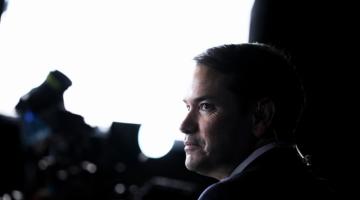 As a U.S. Senator, Marco Rubio was a consistent war hawk and imperialist. Now as Secretary of State he poses great danger to the world.
 In this week’s segment, we will discuss Donald Trump’s efforts to end constitutionally protected birthright citizenship. But first, we will hear about Justin Trudeau, the prime minister of Canada who…
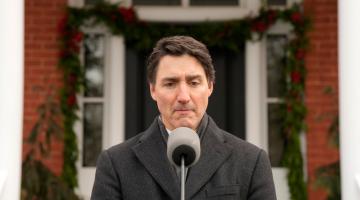 El Jones joins us from Halifax to discuss the legacy of Justin Trudeau, who recently resigned as leader of his party after 10 years as Canada's prime minister. We’ll discuss his foreign…
 Thomas Wolf, Director of Democracy Initiatives at the Brennan Center, joins us to discuss the implications of Trump’s executive order, which denies citizenship to children of undocumented people and…
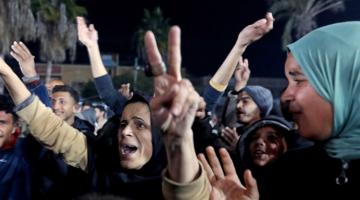 Fifteen grueling months of bombing and military assault have finally come to a pause as the ceasefire agreement between Hamas and Israel has come into effect.


