I don’t do Kwaanza, I just don’t. Rastafarianism , Voudon , Santería and Candomblé all borrow from multiple traditions, as does Islam from Judaism and Christianity, and Christianity from Judaism, Greek and Roman sources, and so on. So I have no quarrel whatsoever with those who celebrate and find value in Kwaanza.
But for many of us who took part in or were simply aware of the Black Panther Party in the late 60s and early 70s, the Kwaanza holiday is inseparable from the career and persona of its inventor, Ron Karenga, now a tenured professor in California. Back in the day, Karenga headed up an organization called US. As a tool of COINTELPRO , the federal counterintelligence program directed at movement organizations, Karenga’s US organization murdered 2 leading members of the Black Panther Party in Los Angeles, Alprentice “Bunchy” Carter and John Huggins, and 2 more in San Diego, Sylvester Bell and John Savage. To my knowledge, Mr. Karenga has never expressed the faintest remorse or regret for these murders, or for his part in furthering the nefarious aims of federal and local police agencies in their assault upon the movement of those times. Karenga was later convicted along with his wife, of kidnapping and torturing two women in his own organization , a crime for which he served 4 years in prison, and one of which he still claims to be innocent. Some of Karenga’s close and credible associates however, like former US chair Wesley Kabaila , maintain Karenga was not only responsible for those women’s torture, but that it was part of an ongoing pattern over the years.
“I’m a feminist,” Kiilu Nyasha, a former Black Panther in New Haven CT told Black Agenda Report. “How can I honor a holiday made up by a man who tortures women in his own organization?”
She’s got a point. Just now, Spelman College is suspending its Bill and Camille Cosby endowed professorship , folks are hiding or throwing away their old Bill Cosby albums and places are covering up the Bill Cosby plaques inside the very buildings built with Cosby money. It’s their very imperfect way, if not of sympathizing with Bill’s long hidden victims, of at least disassociating themselves and their works from Cosby’s apparent crimes. It’s a reasonable precaution. After all, what would we think of charities and institutions who’d taken Cos’s money and loudly celebrated his generosity but couldn’t be bothered with the slightest acknowledgement of his victims?
What rankles many of us about the annual hoopla around Kwaanza, and what should disturb those engaged in building today’s movements against injustice and oppression is that the elderly Mr. Karenga, much like Bill Cosby before his fall is enjoying an ill-deserved and unrepentant victory lap. To this day he has utterly evaded any accountability for his part in the murders of Carter, Huggins, Savage and Bell. For us, what others call “Kwaanza” has become a time to remember and celebrate the contributions of the freedom fighters whom Karenga’s US organization murdered.
“I worked with John Huggins, I knew John Huggins personally,” continued Kiilu Nyasha. “He was a beautiful young brother, only 21 or 22. John left an infant daughter less than a month old. He stood in defense of our people’s right to be free.”
Pretty much everybody knew Alprentice “Bunchy” Carter. “He had a real track record,” said former LA Panther Harold Welton. “Before helping organize the Southern California chapter of the Black Panther Party, he was known to many as ‘the mayor’ of Los Angeles, and as an accomplished poet and vocal stylist . Earlier, he was part of the Slausons, a Los Angeles street organization originally formed to defend its neighborhood against local white gangs, one of which was called the ‘Spook Hunters.’ Influenced by the movement of those times, Bunchy attempted to politicize the Slausons, splitting off a formation which called themselves ‘Renegade Slausons,’ before coming into, really helping organize the Black Panther Party in Los Angeles.”
In those times, one of the highest priorities of government was to prevent the street-level, spontaneously formed organizations in every black neighborhood from becoming political. Organizing inroads with this aim were a key reason in why Chicago Panther leader Fred Hampton was targeted and murdered, also by COINTELPRO. But while widely respected by those organizations, Chicago’s Fred Hampton was an outsider to the street tribes, appealing to them from the outside. California’s Bunchy Carter on the other hand, was an insider among those tribes, presumably a high priority target of COINTELPRO. Bunchy was less than 30 years old.
“Even now after all these years, if Karenga would come forward and admit what he did, and begin in his final years to apologize, and ask forgiveness, to somehow begin to atone for the murder and the torture and the other stuff,” Harold Welton told Black Agenda Report, “we’d have to begin figuring out how to respond in the right spirit. People do sometimes change, and come in from the cold. But he’s saving us the trouble. He’s arrogant and unrepentant, and even looked up to by a generation of young folks who know little or nothing about the man or his history.”
In his mid or late 70s, the unrepentant Karenga is now celebrated by figures like the establishment’s designated dean of “black history” Henry Louis Gates , who put him up as an authority on the struggles of the 1960s, including the Black Panther Party in one episode of his PBS show “The African Americans: Many Rivers To Cross.” Karenga is regarded as mentor to Temple University’s shameless redbaiting professor Molefi Asante , who justified his underhanded firing of Philly’s Dr. Anthony Monteiro with accusations that Monteiro was a “tool of communist apparatchiks.” Karenga pens a regular column in the Los Angeles Sentinel in which he absurdly claims his own organization was targeted by COINTELPRO just as the Black Panther Party was, instead of acting as the instrument of COINTELPRO.
The way many of us see it, people who celebrate Kwaanza and are getting something out of it should hold that high. We’re happy for them. It’s true enough that Kwaanza is now bigger than the crimes of its founder, and will outlive him. But that doesn’t mean Karenga’s crimes never happened or that they should be forgotten. Someone has to hold high the legacies and the work of John Huggins and Sylvester Bell, of John Savage and of Bunchy Carter. Somebody has to remember who they were, what they lived and served for. Somebody has to recall why they died and at whose hands. While you’re celebrating Kwaanza some of us will be doing that.
Bruce A. Dixon is managing editor at Black Agenda Report, and was a rank and file member of the Black Panther Party in Chicago in 1969 and 1970. He lives and works in Marietta GA, where he serves on the state committee of the GA Green Party. Bruce can be reached via this site’s contact page, or at bruce.dixon(at)blackagendareport.com.
VIDEO

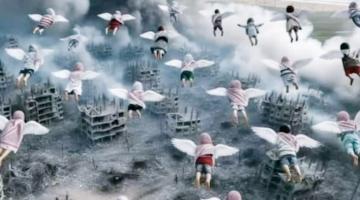 In the 1980s, African Americans understood the war on Palestine as one of genocide.
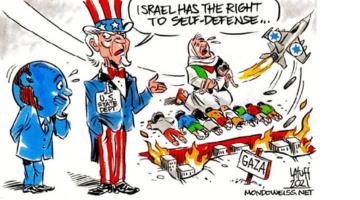 Corporate and government-controlled outlets are serving as enablers in the campaign to demonize and erase the people who are being bombed and starved on a daily basis.
 The impending invasion of Haiti is the latest in a long line of colonial aggressions perpetrated against that nation.
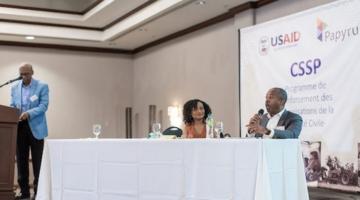 USAID is a front for U.S. imperialism. In Haiti its creation of "civil society" projects will be used in service of the next plan for occupation.
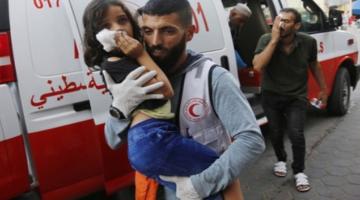 A No-Fly Zone over Gaza would prevent the Israeli Air Force from continuing its war crime against the Palestinian people.


