As the Dominican Republic escalates its brutal crackdown on Haitian migrants and Dominicans of Haitian descent, Red Malunga condemns the racist policies fueling systemic violence and human rights abuses. The organization demands global solidarity to confront this 'social apartheid' and hold the Dominican government accountable for its violations of international law.
Originally published in RHI News.
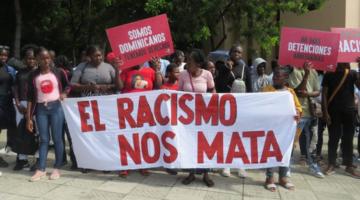
Dominican Republic, Friday, April 25, 2025 — In a statement released Thursday, Red Malunga, a network for global justice and against anti-Black racism, expressed its "categorical rejection" of the Dominican Republic government's new migration policies targeting Haitian migrants and Dominicans of Haitian descent.
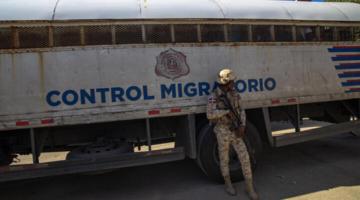
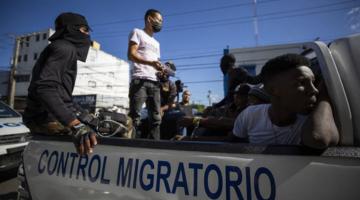
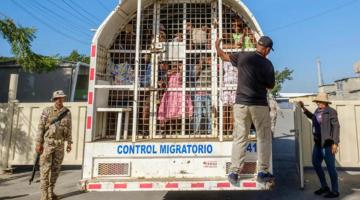
According to the organization, the measures, which came into effect on April 21, have "intensified immigration roundups" and "institutionalized violence" against these communities, exposing those affected to systematic violations of their human rights.
"In a context where the world is demanding a real and effective solution to the Haitian crisis, and while Afro-descendant peoples from around the world demanded, at the UN Permanent Forum in New York, the restitution of the historical debt to Haiti," recalls Red Malunga, "it is unacceptable to remain silent in the face of this policy of racial violence."
The statement emphasizes that the current situation of Haitians and their diaspora is "intrinsically linked to the negative view of the Haitian revolution," which, historically, "challenged the colonial order by wresting freedom and dignity for enslaved peoples." Therefore, the organization argues, "it is inconsistent to demand historical reparations without taking into account the contemporary suffering of the Haitian people, both at home and in exile."
Red Malunga calls the forced expulsions of Haitian migrants amid a resurgence of internal violence in their country a "crime" and a "violation of international commitments" regarding the protection of people displaced by conflict. "The international community, which is quickly mobilizing for other humanitarian crises, cannot remain indifferent to this situation," the organization denounces.
Red Malunga reports a list of worrying abuses:
1) Detentions and expulsions of pregnant women from Dominican hospitals;
2) Massive and indiscriminate arrests, leaving children and the elderly to fend for themselves;
3) Dangerous police pursuits based on racial profiling, sometimes resulting in deaths;
4) Destruction of homes at all hours, and violence by citizens and employers.
"These practices, although ancient, have intensified and become commonplace," notes Red Malunga, referring to a veritable "social apartheid" facing the Haitian population in the Dominican Republic.
The organization also denounces that "dozens of pregnant women have been arrested by immigration agents in several hospitals," according to testimonies relayed in local media. Furthermore, relatives of victims report that "young black Dominican girls without papers are regularly mistaken for Haitian women and arbitrarily arrested."
Since the announcement in October 2024 of a plan to expel 10,000 migrants per week, "violence against this population has continued to grow," warns Red Malunga.
The network particularly denounces the operation of April 22 in the Mata Mosquito neighborhood of Friusa, "where, in less than 24 hours, hundreds of people were arrested and expelled without a protocol to individualize the situations."
The organization points out that the Dominican Republic is bound by numerous international legal instruments guaranteeing "the life, dignity, and fundamental rights of all persons present in its territory, regardless of their migratory status." "While border protection is a sovereign right," Red Malunga acknowledges, "it can in no way justify the violence inflicted on pregnant women and children, who pose no threat to national security."
Finally, Red Malunga highlights a blatant contradiction: "While the Dominican government officially recognizes the gravity of the Haitian crisis and calls on the international community for help, its actions within its borders demonstrate a policy of racist repression."
Concluding its appeal, Red Malunga demands "an immediate end to racial profiling, systematic immigration persecution, and segregation policies." It calls on Afro-descendant movements and the international community "to speak out against this institutionalized violence" and to "demand that the Dominican government respect the human dignity of all, without distinction."




 Jordan Chariton is the founder of Status Coup news.
 Black voters feel trapped in the duopoly but other groups are giving a master class in political courage. The Abandon Biden campaign shows the way.
 The late African revolutionary Sekou Odinga in his own words.
 Siddarth Kara’s book exposes the exploitation behind the Fourth Industrial Revolution.
 "MrJoeSam’s Text Messages" is the latest from BAR's Poet-in-Residence.


