by Ramor Ryan
The U.S. exports to the rest of the world an industrial-strength strategy of policing that is rooted “in counterinsurgency campaigns.” The “Broken Windows” philosophy of policing dramatically expands the number of people “churned through the criminal justice system,” more deeply embeds structural racism, and “leads to more violence against marginalized communities.” Communities of color become urban prison spaces.
Anatomy of a Neoliberal Racist Killing Machine
by Ramor Ryan
This article previously appeared in TeleSUR TV English.
“Why have the police been endowed with the arbitrary capacity to regulate the lives of the racialized poor in US cities?”
“Policing the Planet” begins with the story of Eric Garner, a Black man killed by New York City police in 2014 in an incident arising from a small-scale infraction involving the sale of loose cigarettes. The book could just as easily begin with the story of Alton Sterling, shot dead by police last week as he went about his business of selling CDs on the street in Baton Rouge. Both men have joined what is described in “Policing the Planet” as “the morbidly expanding roll call of the racialized poor killed by police and vigilante violence.”
The book makes a direct connection between these all too frequent killings and evolving police strategy. The application of the so-called broken windows policing theory—a zero-tolerance, invasive form of street policing—has increased police power, and leads to the criminalization of whole sections of the population, specifically the poor, Black and homeless communities.
In a collection of essays from leading scholars, activists, social movement organizers, and journalists, “Policing the Planet: Why the Policing Crisis Led to Black Lives Matter” attempts to “intervene in urgent public debates about structural racism, policing, and urban uprisings in the neoliberal present.”
It shows how the aggressive policing tactics inherent in broken windows exasperates structural racism and leads to more violence against marginalized communities.
And in the face of this form of punitive, racially biased policing, Black lives do not seem to matter.
Shifting Strategies
The book considers the ramifications of a shift in policing strategy in response to the social crises of the 1960s and 1970s. The new strategies sought to move away from mass incarceration and toward a less brutal form of social control premised in community policing. The focus shifted from serious crime to “disorder,” because disorder—things like broken windows—leads to a greater climate of crime. Clean up the small stuff, goes the theory, and there will be less crime in general, including serious crime.
Broken windows policing was prominently established in New York City under Police Commissioner William Bratton during the 1990s. In practice, it meant more cops on the street busting people for previously overlooked misdemeanors like fare evasion on the subway, carrying open alcohol containers, and hawking goods on the sidewalk.
Bratton certainly got results in terms of “cleaning up the streets,” but as Alex Vitale explains in “The Emergence of Command and Control Policing in Neoliberal New York”—one of the books’ seminal essays—the result was the dramatically expanded role of police in the everyday lives of certain marginalized communities such as of young people of color, homeless people, street vendors, and sex workers.
“Clean up the small stuff, goes the theory, and there will be less crime in general, including serious crime.”
Broken windows, explains Vitale, “has become a system to micromanage these populations, not through the constant brutality that characterized earlier methods of policing the poor, but through more subtle but invasive tactics of creating hundreds of thousands of additional contacts between the police and the policed and dramatically expanding the number of people churned through the criminal justice system even if for only short periods of time.”
Rather than a substitute to mass incarceration, broken windows serves—as pointed out by the editors in the Introduction—as a “robust supplement to it,” adding collective punishments to communities already under siege. Vitale argues that the NYPD’s core policing strategies moved emphasis from “using extensive imprisonment as the primary tool of punitive social control towards the intense regulation of low income communities of color as prison like spaces themselves.”
Globalization
Despite fierce criticism, the broken windows doctrine has been lauded as a success by advocates who see it as an effective remedy against urban lawlessness, serving to quell public fear of crime and restore order to fraying communities. Tracing the global spread of the broken windows policing strategy, “Policing the Planet” notes that “from New York to Baltimore, Los Angeles, London, San Juan, San Salvador, and beyond, Bratton’s model has become a neoliberal urban strategy practiced and adapted worldwide.”
The reason for its popularity among police departments globally is alluded to by Arun Kundnani in “Total Policing and the Global Surveillance Empire.” He explains how the U.S. is seen as “almost the definition of innovation in policing, so there has been an almost constant stream of imports from the U.S. to Britain,” and evidently, around the globe. He asserts that the roots of these policing strategies are found in counterinsurgency campaigns employed globally by imperialist forces.
“Bratton’s model has become a neoliberal urban strategy practiced and adapted worldwide.”
This manifests itself on the ground with deadly and divisive consequences. Marisol LeBron outlines how Puerto Rican officials, in response to the breakdown in social order due to neoliberal economic policies, “turned to policing in an effort to maintain ‘order’ and manage populations rendered redundant, and therefore, dangerous, within racial and capitalist systems of value.”
The resultant mano dura (iron fist) policing reduced general levels of crime but saw homicide rates soaring to unprecedented levels. LeBron concludes that the implementation of these strategies has “rendered certain (low-income and racialized) populations vulnerable to premature death through logics and practices of dehumanization and criminalization.”
'Protesting Profound Austerity'
This deadly dehumanization and criminalization of “redundant” sectors of society is implicit in the killings of Eric Garner and Alton Sterling. They form part of the morbid roll call of racialized poor killed by the police that has given rise to the powerful protest movement, Black Lives Matter.
#BlackLivesMatter exploded into national and international consciousness in the wake of the Ferguson uprising prompted by the 2014 death of Micheal Brown in Ferguson, Missouri. A decentralized, horizontal social movement organized in autonomous chapters around the country, Black Lives Matter has brought multitudes of people out onto the street in response to police killings. “And in this powerful new movement,” says one of its founders, Patrisse Cullors, “we are seeing some of the most vibrant, creative responses to state violence.”
“Black Lives Matter seek to turn criminal problems back into social issues.”
Indeed, the impact of the social movement is such that Ruth Wilson Gilmore can assert that “post-Ferguson, the #BlackLivesMatter uprisings and broad-based organizing have pushed some aspects of US policing to the brink of a legitimacy crisis.”
In her essay, “Beyond Bratton”—a brilliant and erudite contribution to the volume—Wilson Gilmore explains how Black Lives Matter seek to turn criminal problems back into social issues: “Sparked by police murder, in the context of racial capitalism’s neoliberal turn, the post-Ferguson movement may therefore be understood as protests against profound austerity and the iron fist necessary to impose it.”
It is in this context that editors Jordan Camp and Christina Heatherton place Policing the Planet:
“Rather than asking how the police can kill less, (protesters) have forced a broader set of questions: why have the police been endowed with the arbitrary capacity to regulate the lives of the racialized poor in US cities? Why do they have expanding and unfettered access to the bodies of poor people in general and poor people of color routinely? How and why are poor people criminalized for occupying public space?”
Crisis of Legitimacy
“Policing the Planet” is an important intervention to a key issue at a crucial time. It is not just critics of the police who speak of a crisis of legitimacy. Police commissioner William Bratton himself spoke in the wake of Eric Garner’s death and the spontaneous demonstrations that rocked the streets across the U.S.
“Let’s face it, we’re in a crisis at this time, in this country, on issues of race, around effectiveness of policing, around police tactics, probably the most significant I’ve seen since I joined policing in 1970,” said Bratton.
One thing is certain, as “Policing the Planet” points out: the present policing arrangements will not go unchallenged, nor remain as they are. The pressure from below can force police reform or the mano dura may be reinforced from above.
Black Lives Matter co-founder Patrisse Cullors has a clear idea of what is to be done.
“I think we need to have a movement around divestment—to divest from police and prisons and surveillance and to use that money to reinvest in the communities that are most directly impacted by poverty and the violence of poverty,” said Cullors.

 "Hey, Mr. Tangerine Man…" is the latest from BAR's Poet-in-Residence.
 The international liberation struggles of colonized people in nations like Haiti, Palestine, as well as Indigenous nations on land stolen by the U.S., are inextricably linked to the struggle for the…
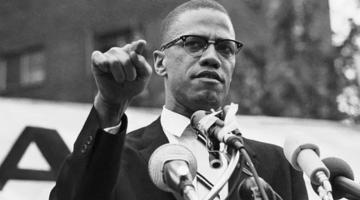 The contributions of Malcolm X to African liberation cannot be understated.
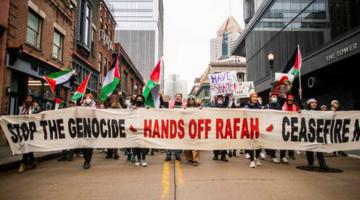 The ICGSP put out this call for movements around the world to support the university movement for Gaza solidarity.
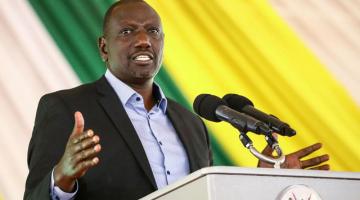 Kenyan President William Ruto is serving the role of a comprador facilitating the continued colonization of Kenya and betraying the revolutionary history of their people.


