by Brendan McQuade
It takes many actors to pacify a rebellion. Police repression is only one tool, and often counterproductive. In Chicago, the ACLU hijacked local legislation that would have enhanced the Black community’s power over the police, in favor of an agreement that papers over the contradictions between the cops and the people.
Non-Profits and the Pacification of the Black Lives Matter Movement
by Brendan McQuade
This article previously appeared in Counterpunch.
“The ACLU works to pacify the Black Lives Matter movement by blunting its grievances.”
Rebellions aren’t simply repressed. They’re pacified. While repression – the iron hand – is useful to terrorize a population into submission, the issues animating a rebellion must be partially redressed – the velvet glove – to forestall a further reaching revolutionary upsurge. The most effective way to defeat rebellion is to blunt its grievances and overtake its leaders. This is precisely what is happening with the Black Lives Matter movement.
For the past year, much attention has focused on the most dramatic responses to the Black Lives Matter movement: the militarized police and smoke grenades, states of emergency and curfews, government surveillance and fears of infiltration. While these forms of repression should not be discounted, they should be properly understood. Heavy-handed responses polarize the struggle. The middle ground disappears and both sides radicalize. For those seeking to maintain the status quo, this is not the best outcome.
It’s much better to co-opt moderates and divide the opposition. After the initial explosion in Ferguson following Mike Brown’s death, Governor Jay Nixon put a black officer, Missouri Highway Patrol Captain Ronald S. Johnson, in charge. Johnson immediately won praise, when he ordered his officers shed their riot gear and started walking with marching demonstrators. In this new context, liberal organizations began to separate themselves from more radical demonstrators. The NAACP organized events “to channel the anger over Brown’s death into positive action such as getting people to register to vote and to obtain college grants.” Johnson and other police executives marched at the head of a NAACP demonstration. The response to the Ferguson Rebellion had shifted from crude repression to subtle pacification.
“Heavy-handed responses polarize the struggle.”
Established non-profit organizations are essential to this work. They bring needed legitimacy to the state’s efforts to contain dissent. In Ferguson, the NAACP and local religious groups have sought to temper protests, limit property damage, and redirect discontent toward institutional channels. Despite their best intentions, these groups become potent weapons to mollify discontent and moderate change.
The same dynamic was recently at work in Chicago, where the ACLU of Illinois sold out grassroots movements, who had been working to curtail stop and frisk by the Chicago Police Department (CPD). In the summer of 2014, the CPD conducted a quarter million stops that did not lead to an arrest, four times the rate of New York City. Nearly three quarters of those stopped were black. In response to this systemic racial profiling, We Charge Genocide, a grassroots abolitionist organization, wrote the Stop, Transparency, Oversight and Protection (STOP) Act. This municipal ordinance would have required the CPD to collect and share comprehensive data on police stops.
The We Charge Genocide (WCG) name is an allusion to a 1951 report that Civil Rights Congress presented to the UN. The study cited lynching, police brutality, legal disenfranchisement, and systemic inequality as evidence that the US government was engaged in genocide against its black citizens. In September 2014, WCG presented its own report to the UN Committee Against Torture that detailed the Chicago police’s systemic harassment and abuse of minority communities, the failure of existing redressive mechanisms, and the resultant impunity of the Chicago police. For the past ten months, WCG has worked to educate and mobilize youth of color about the CPD’s racially discriminatory stop and frisk practices.
“The ACLU used WCG and STOP Act as bargaining chip to advance a narrow policy goal.”
While grassroots activists were mobilizing support for the ordinance among Chicago’s communities and alderman, the ACLU entered secret negotiations with the CPD and mayor’s office to broker an alternative agreement. On the very day that the STOP Act was to be filed by three aldermen, the ACLU announced the details of their agreement with city government. Instead of public disclosure, the ACLU-CPD “settlement” names an independent consultant, former US magistrate Arlander Keys, who will issue biannual reports on the CPD’s street stops and recommend policy changes. This is sharp contrast from the STOP ACT, which would have required quarterly public reporting of more comprehensive stop and frisk data: demographic information of those stopped, the badge numbers of officers involved, as well as the location, reason, and result of the stop
In effect, the ACLU used WCG and STOP Act as bargaining chip to advance a narrow policy goal. As the WCG’s public letter put it:
“What you have ‘won’ is fundamentally different from the STOP Act, both in its means and in its ends. Our goals are rooted in the experiences of those most directly impacted; yours are not. Our movement is rooted in a political analysis that recognizes the need to shift power away from police and into our communities; your policy ‘victory’ is not. Our motivation is rooted in a theory of change that prioritizes movement building and centering the leadership of those most affected; yours is not. Now, because of your self-serving interest in pushing simplistic policy changes, we and our allies face a much harder task pushing the critical package of reforms included in the STOP Act but ignored in your settlement. There is no such thing as an easy victory, and yours has come at a high cost.”
The ACLU agreement shifted the terrain of struggle. Their agreement is a half measure that allows the CPD and city government to show that they are doing something, while, at the same time, undercutting a more radical plan that would have subjected the CPD to more meaningful public accountability.
“Their agreement is a half measure that allows the CPD and city government to show that they are doing something.”
More importantly, the ACLU-CPD agreement denies WCG and the larger Black Lives Movement an important victory. In their letter, WCG acknowledged that the ACLU “settlement represents just one of many efforts… to co-opt our movement by engaging with less threatening groups. Passage of the STOP Act would be public recognition of the real, grassroots power of young Black and Brown Chicagoans; instead the City wisely sought to settle into an ongoing relationship with a legal organization that poses no real threat to the status quo.” In other words, the ACLU is not an ally. It works to pacify the Black Lives Matter movement by blunting its grievances and overtaking its solutions with half measures.
The ACLU did not become complicit in the pacification of the radical movements because they are part of some crude conspiracy. It’s more subtle. The ACLU is a foundation funded non-profit. It’s part of the web of elite institutions that exercise political power in the United States. By class background, socialization, and worldview, the ACLU’s lawyers and administers have more in common with Chicago Mayor Rahm Emmanuel and Police Superintendent Garry McCarthy than they have with WCG activists.
The overlapping interests of elites in the ACLU and city government highlight the importance the idea of pacification. In the recent years, critical scholars have recuperated the term “pacification” from military jargon to highlight continuities between warfare and policing. Both are class projects to eliminate enemies and fabricate social order. The iron hand and the velvet glove work together. To pacify “communists” in Vietnam or “terrorists” in Iraq, you need to build a government that enough people can abide. The same dynamic is at work in Chicago, where the ACLU just helped the city government efforts to pacify ongoing black insurgency.
Brendan McQuade is a visiting assistant professor of international studies at Depaul Univeristy.

 A No-Fly Zone over Gaza would prevent the Israeli Air Force from continuing its war crime against the Palestinian people.
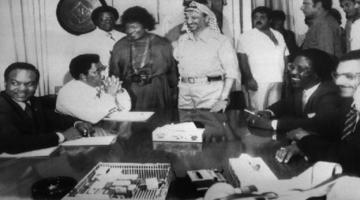 Most of the world's people are in solidarity with Palestine, but Black people in this country have a special bond born of common struggle.
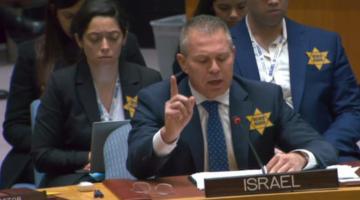 After 120 members of the 193 members of the UN General Assembly called for an immediate ceasefire in Gaza, Israel demonstrated its increasing isolation by declaring the UN illegitimate and irrelevant.
 Any public statement which questions Israel's war against Gaza is potentially met with personal attack and punishment but the stamp of approval from the Biden administration is the real cause of the…
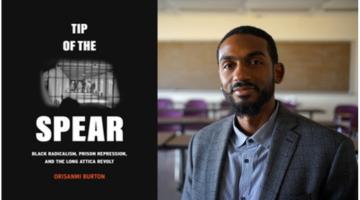 This week’s featured author is Orisanmi Burton. His book is Tip of the Spear: Black Radicalism, Prison Repression, and the Long Attica Revolt


