Gun Violence Debate Needs to Include Police Militarization and Drug Prohibition Violence
“Any meaningful approach must address the war on drugs, its role in militarizing the police and the effect it has had on communities of color.”
On March 14, thousands of students walked out of school to protest gun violence, demanding legislators enact more stringent gun control in the U.S. Later that night in Rio de Janeiro, Marielle Franco, a Brazilian city council member and a vocal critic of Brazil’s militarized law enforcement, was assassinated.
Four days later, 22-year-old Stephon Clark was shot and killed by the Sacramento police. While news outlets and social media made note of these murders, the national conversation instead largely focused on the March for Our Lives protest that took place the following weekend. As the media continued to cover the responses to the March for Our Lives, news broke that the two officers responsible for the murder of Alton Sterling would not be facing charges for their use of lethal force that left yet another black father dead. In the span of two weeks, the country was engrossed in the discussion of gun control and gun violence, yet there was very little discussion of the main victims of gun violence: people of color.
Communities of color (primarily black and Latinx communities) face increased gun violence at the hands of both community members and the police ostensibly charged with protecting them. While these communities were addressed by some of the courageous students at March for Our Lives, the solutions presented—stricter background checks and weapons bans—are ultimately ineffective for these vulnerable communities, as they only address a small percentage of the victims of gun violence. A more complete attempt at a solution must address the war on drugs, its role in militarizing the police and the effect it has had on communities of color.
“There was very little discussion of the main victims of gun violence: people of color.”
Consider historical precedent. During Prohibition, the supply of alcohol was illegal, yet demand remained, causing the rise of an illicit market. Given the illegality of that market, ensuring some sense of justice fell to individuals rather than police and rule of law. As a result, the country witnessed an increase in organized crime, violence and murder—all directly stemming from the prohibition of alcohol, which effectively decreased with the 21st Amendment. The war on drugs has had the same path, with the exact same results, but more dire consequences. We have seen decades of remarkable gun violence, in Miami, LA, Chicago and even internationally, all in the name of the illicit drug market. The current response by the powers that be to this violence, faced largely by black and brown people, benefits neither from learning from history or understanding community need. Instead of calling for an end to this failed drug war, the main driver of gun violence, or reevaluating the legal status of drugs in our society, our government has responded through the militarization of law enforcement.
First, the Anti-Drug Abuse Act of 1988 authorized the Edward Byrne Memorial Justice Assistance Grant (JAG) program, providing a monetary incentive for anti-drug policing. Then, the National Defense Authorization Act of 1990 authorized the Department of Defense to transfer military equipment to law enforcement agencies, for use in so-called “counterdrug activities.” This was further catalyzed by Bill Clinton’s creation of the Department of Defense Excess Property Program (1033 Program), which further armed law enforcement with surplus military equipment. For decades, law enforcement has been affected by this feedback loop, making drug policing both the rationale for and result of more militarization of our local police departments.
“Instead of calling for an end to this failed drug war our government has responded through the militarization of law enforcement.”
Providing local police departments with military grade weapons and equipment in order to fight the drug war has resulted in police who look like soldiers patrolling communities that feel like combat zones. Furthermore, in spite of the reality of nearly uniform rates of drug use and sales across racial lines, black and Latino communities are policed for drug activity at a disproportionately higher rate compared to their degree of engagement in drug activities. It then comes as no surprise that black and Latino individuals suffer higher rates of gun violence at the hands of the police without any justice. In this drug war, the propaganda motivating the police soldiers features enemies painted as black and brown.
During wartime, propaganda is an effective, arguably essential, tool, particularly wielded by the media. In the case of the war on drugs, the media’s stigmatization and dehumanization of black and brown people have had the strongest effect on the war. For decades, the media has focused on black and Latino communities when warning of the horrors of drugs. Drug use became a racial issue, with people of color being labeled crackheads, thugs and drug dealers. This has not changed, even in the wake of the “gentler” drug war.
“The media’s stigmatization and dehumanization of black and brown people have had the strongest effect on the war.”
Thanks to centuries of racism and slavery, in conjunction with decades of racist drug war rhetoric, people of color are deemed criminals first, people second. The same cannot be said for white offenders. On February 14, a former student went to his former high school in Parkland, Florida and carried out one of the deadliest school shootings, killing 17 people, most of them students. Little over a month later, Stephon Clark fit the description (young black male) of a suspect accused of breaking car windows and was pursued on foot by two Sacramento police officers.
Today, the Parkland shooter, having confessed to the shooting, is sitting in jail awaiting his day in court. He was safely apprehended and arrested by the police without the use of any force, while Stephon Clark is dead, a victim of immediate lethal force. We can hope for some justice in this case, but if history is of any indication, neither officer will see their own days in court. For black and Latino people, every day is a struggle to prove their own humanity, as victims of community gun violence and as victims of state-sanctioned murder, both of which are permitted and committed by the war on drugs.
Megan Humphrey is is a policy coordinator for the Drug Policy Alliance, based in Los Angeles office.
This article previously appeared in the Drug Policy Alliance blog


 Over a year in advance, the Black Misleadership Class has kicked their efforts to corral Black people into the Democratic party, despite the Dems’ apathy toward Black politics or the concerns of…
 The US empire is continuing its psychological warfare campaign by conducting a mass mobilization of resources and waging a propaganda offensive to protect its interests in the Middle East.
 Despite the reality of US intervention causing inhumane conditions in the region, Venezuela’s push for the annexation of Guyana’s Essequibo region prioritizes its own political objectives,…
 Survivors open up about struggles with lingering post-traumatic stress disorder 18 years after the storm
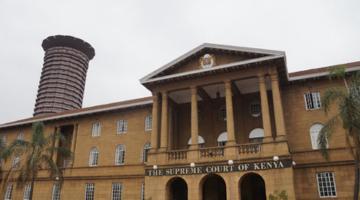 The high court in Nairobi will issue a ruling on a legal challenge to the deployment of 1,000 Kenyan police forces to Haiti as part of a “multinational force.” The US and UN-backed mission has been…


