by Maya Rockeymoore
The people who control the selection of artists and project teams for Hollywood films are 96 percent white and 87 percent male. They are not smarter or more creative than the rest of us, but their worldview dominates the mass culture of the planet. Their “product” is “effectively limiting the ability of our nation to form a true cultural democracy that validates the diverse experiences and views of all of its people.”
Did the People Who Took Home Oscars Really Deserve Them, Given How Biased the Process Was?
by Maya Rockeymoore
This article previously appeared on AlterNet.
“If the response of Hollywood’s elite is inadequate, it could have ramifications not only for the movie business but also for the stability of our society.”
When Hollywood’s glitterati walked across the stage Sunday night to accept their Oscars, one wonders whether any of them had doubts about whether their awards were truly deserved, given that they resulted from a biased process.
A recent Washington Post analysis of the nominating body of the Academy of Motion Pictures Arts and Sciences found that of the 450 members of its executive branch — the group that controls the selection of artists, projects and project teams for Hollywood films —96 percent are white and 87 percent are men. It also found that the director branch of the Academy is 89 percent male and 84 percent white.
Lost in the uproar over the lack of diversity among this year’s Oscar awardees and the subsequent analysis of the Hollywood power structure is the impact that biased cultural representations purveyed through film and other forms of mass media have on our democracy and national sense of self.
Political theorists have long noted the profound role that culture plays in society. Early twentieth century Italian scholar Antonio Gramsci’s work highlighted how the ruling class uses culture to regulate social life and perpetuate the dominant political and economic order. A Marxist theorist, Gramsci concluded that “cultural hegemony” was necessary for the maintenance of capitalism.
Contemporary U.S. scholars have used Gramsci’s framework to describe how biased cultural representations help to perpetuate American inequality by gender, race, class and sexual orientation.
When one group controls powerful cultural platforms, like white heterosexual men in the Hollywood film industry, it elevates and legitimates their worldview over that of other groups and marginalizes the experiences and humanity of the dominated groups in the process. This is extremely dangerous in our increasingly pluralistic and multicultural society.
Unbalanced or biased cultural portrayals affect the beliefs, values, perceptions, and attitudes that shape our social, economic, and political norms. Ultimately, these representations influence the decision making processes of everyone, from the local police patrolling neighborhoods and bankers determining who gets access to capital to members of Congress determining who gets the rewards and penalties of public policy.
“Biased cultural representations help to perpetuate American inequality by gender, race, class and sexual orientation.”
Those who work to maintain the status quo — because of beliefs rooted in fear, ignorance, prejudice, hate, or the desire to maintain power — are not just affecting the power structure of the arts and entertainment industry, they are effectively limiting the ability of our nation to form a true cultural democracy that validates the diverse experiences and views of all of its people.
If America is to reach its fullest potential, the current arrangement has to shift.
In their 2000 book, Cultural Hegemony in the United States, scholars Lee Artz and Bren Ortega Murphy argued that the obvious contradictions inherent in the status quo would foment resistance from those who are shortchanged by it. Their work foreshadowed the institutional challenges now coming from frustrated women, people of color, LGBTQ representatives, and religious minorities.
Given the role of imagery in our democracy, if the response of Hollywood’s elite is inadequate, it could have ramifications not only for the movie business but also for the stability of our society.
Industry leaders must not only become more diverse and inclusive, as a body they must commit — in word and deed — to promoting enlightened understanding that our nation’s cultural diversity is our promise, not our problem, and the basis of our democracy’s strength and prosperity.
They can demonstrate their commitment to fairly representing all people and experiences by adopting a framework for action that:
* Recognizes the value of diverse people and communities,
* Embraces representations of culturally diverse people, experiences, and images through various platforms,
* Supports the development and dissemination of culturally diverse ideas, performances and products,
* Champions equitable job, business, and financing opportunities for individuals of different backgrounds,
* Develops pipelines that advance opportunities for diverse artists, entertainers, writers, producers, directors, etc., and
* Fosters cross-cultural understanding through education, collaboration, and creative expression.
Americans of all backgrounds deserve to live in a country with an inclusive culture that affirms their constitutional right to life, liberty and the pursuit of happiness. They also deserve to have leaders — in Hollywood and in Washington, DC — who truly believe that these fundamental rights are universal.

 Ajamu Baraka, Chair of the Coordinating Committee of the Black Alliance for Peace, and columnist and editor at the Black Agenda Report, is on the ground in Venezuela and joined The Kim Iversen Show…
 Sonya Massey’s brutal murder at the hands of the police has resulted in anguish and anger but no difference in how state violence is protested. Instead, we see surrender to the crumbs of condolences…
 For the late Dr. Bernice Johnson Reagon, Black music was a tool in the struggle for Black liberation, and not what it has mostly become today: a retrograde appendage to neoliberalism and white power.
 Ajamu Baraka, Black Agenda Report editor and columnist, discusses observing the recent elections in Venezuela and why the U.S. still seeks to undermine that democracy.
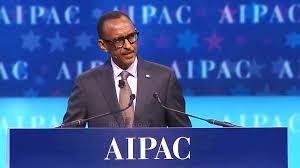 Rwanda weaponizes the Rwandan Genocide to justify its violence in the Democratic Republic of the Congo (DRC), just as Israel weaponizes the Holocaust to justify its violence in Gaza and the West Bank.


