Free the Corinthian15 – From Student Debt
by BAR executive editor Glen Ford
“Blacks are far more prevalent in for-profit student bodies than in the general college population.”
In what may be the first student debt strike in U.S. history, 15 aspiring college graduates who were suckered into taking out tens of thousands of dollars in private and federal loans to attend for-profit Corinthian Colleges are demanding that their federal debts be forgiven. “To Corinthian and ECMC, we have one thing to say,” the students declared, in a message circulated online by The Debt Collective. “We owe you nothing.”
Corinthian once operated more than 100 campuses and online units under the brands Everest, Heald and WyoTech, but has dissolved under the weight of numerous lawsuits and a federal criminal investigation for predatory lending and false advertising. Twelve of the units are to be closed, but 85 others are being sold to the ECMC, the Educational Credit Management Corporation, a private non-profit company that the U.S. Department of Education uses as an enforcer to compel students to repay their federal loans. Students that attended the 12 schools that are to be closed stand a good chance of having their obligations discharged, but the bulk of the Corinthian’s 72,000 enrollees are technically being “transferred” to the ECMC, a bill collection agency that has never run a school. In effect, the U.S. government is running a corporate shell game to keep Corinthian’s victimized students in debt, even as it forces the for-profit college out of business for using the students as cash cows to extract the maximum federal student loans.
The Debt Collective grew out of the Occupy Wall Street movement’s Strike Debt working group. Last year, Strike Debt’s “Rolling Jubilee” bought and abolished almost $17 million in student debt at Everest College, a Corinthian property. The Debt Collective uses Facebook and other social media to find people that owe money to the same creditors, and then organizes them to take common action. The Everest Colleges Avengers Facebook group, organized by debt striker Nathan Hornes, has nearly 700 members. Hornes and his sister, Natasha, another Corinthian striker, owe $68,000 and $50,000, respectively. Both now work in the low wage service sector and say their Corinthian courses are worthless in the job market.
“The Debt Collective uses Facebook and other social media to find people that owe money to the same creditors, and then organizes them to take common action.”
Worthless and expensive. The business model of for-profit schooling in the United States is wholly dependent on federal loans to low income students. Federal regulations, however, require that schools derive at least 10 percent of their income from private sources. Corinthian solved this problem by setting tuitions higher than the federal loans could cover, so that students would be forced to take out additional, private loans, which would then make the school eligible for more federal loan money.
Within three years, 60 percent of Corinthian students default on the private loans – leaving them with bad credit as well as a worthless educational experience. For-profit schools account for 13 percent of all college students, but for 47 percent of student loan defaults. A huge share of that debt is owed by Blacks, who are far more prevalent in for-profit student bodies than in the general college population. Ashford University and the University of Phoenix award Blacks more baccalaureate degrees than any other schools in the country, including historically Black colleges. Half the 40,000 students at Strayer University, the outfit fronted by professional Black ignoramus Steve Harvey, are Black or Hispanic. Between 2004 and 2010, Black enrollment in for-profit bachelors degree programs grew by 264 percent. Indeed, most of the increase in Black college enrollment in the 21st century has been in for-profit institutions – a predatory business model designed to exploit the poor and bilk the state.
So, yes, by all means, Free the Corinthian15 from student debt – and then give everyone a free, quality higher education.
BAR executive editor Glen Ford can be contacted at Glen.Ford@BlackAgendaReport.com.

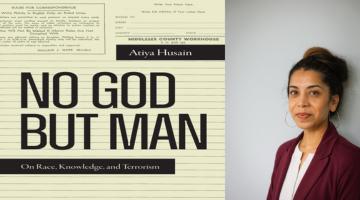 In this series, we ask acclaimed authors to answer five questions about their book. This week’s featured author is Atiya Husain. Husain is Associate Professor of Africana Studies at Williams College…
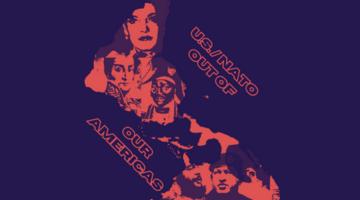 The Black Radical Tradition is the rich legacy passed down by revolutionaries. It is an important tool today as we struggle to turn the Americas into a Zone of Peace.
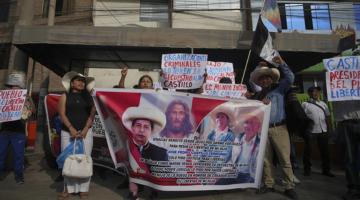 The trial of former Peruvian president Pedro Castillo, the victim of a 2022 lawfare-style coup, has begun. The legal process used against him is a sham covering up the human rights abuses…
 Trump administration interference in Panama has brought about a reckoning on migration and human rights throughout the region. These issues can no longer be ignored.
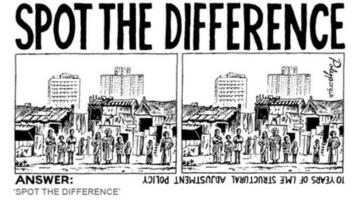 Presenting new research, Dylan Sullivan and Jason Hickel mount a devastating critique of the impact of structural adjustment in Africa in the 1980s and 1990s. Drawing on recent data on Africa’s…


