Super Bowl Slavery
by Dave
Zirin
This article originally appeared in the Los Angeles Times.
"Bridgestone/Firestone allegedly overworks, underpays and exposes its 4,000 Liberian employees to hazardous chemicals and pesticides."

The Super Bowl is perhaps the last cultural event that unites a majority of
Americans. Whether the game is a thriller or a snooze, Super Bowl Sunday is a
day to gather with friends, rate the commercials, assess the halftime show and
wear pants with elastic waistlines.
On Feb. 3, though, pay close attention to the halftime show. Tom Petty is
performing, which means that any wardrobe malfunction could lead to the fall of
Western civilization.
The show also stands to be a commercial bonanza for its sponsor,
Bridgestone/Firestone. The Fortune 500 company has been crowned the
"Official Tire Sponsor" of Super Bowl XLII and Super Bowl XLIII. As
John Gamauf, an executive with the company, said, the sponsorship "is an
unprecedented opportunity to showcase the Bridgestone brand to the world."
Peter Murray, the National Football League's senior vice president of
partnership marketing and sales, chimed in: "By teaming with a global
leader like Bridgestone, we can make America's favorite event even more powerful."
But NFL Commissioner Roger Goodell might want to be more careful about who the
league cozies up to, especially when the partner is known in some parts of the
globe not for high-velocity tires but for highly exploitative labor practices.
The rubber business has historically been horrific for African workers, known
as tappers, who collect sap from rubber trees on plantations south of the
Sahara. The labor practices of the Firestone Natural Rubber Co., a subsidiary
of Bridgestone/Firestone, in Liberia seem in keeping with this history.
"Bridgestone/Firestone
is known in some parts of the globe not for high-velocity tires but for highly
exploitative labor practices."
For 81 years, the company has operated a plantation in Harbel, a company town
in the truest sense. Its very name comes from founder Harvey Firestone and his
wife, Idabelle. The town received its name after Firestone signed a 99-year
lease with the Liberian government in 1926 that gave his company access to 1
million acres of land on which rubber trees grow. The sap -- known as latex --
collected on the plantation is shipped to the Bridgestone/Firestone plant in
Nashville, where it is used to make tires, among other goods
According to a 2005 lawsuit filed by the International Labor Rights Fund, a
Washington-based advocacy organization, Bridgestone/Firestone allegedly
overworks, underpays and exposes its 4,000 Liberian employees to hazardous
chemicals and pesticides. Its subsidiary also oversees what has been called de
facto slavery.
Dan Adomitis, president of Firestone Natural Rubber Co., said that "each
tapper will [draw sap from] about 650 trees a day, where they spend perhaps a
couple of minutes at each tree."
That translates into a 21-hour day. If employees don't make that quota, their
daily wage of $3.19 is cut in half. To avoid this, workers call on their wives
and children to help them hit the number -- and they go unpaid.
"If employees don't make the quota, their daily wage of
$3.19 is cut in half."
In addition to the lawsuit, which is pending in Indiana, Bridgestone/Firestone
has drawn fire from other quarters. The Liberian Environmental Protection
Agency has cited the company's subsidiary for dumping toxic waste in Harbel's
Farmington River, and in early 2007, the corporate parent won the "Public
Eye Global Award" for irresponsible corporate behavior because of its
record on child labor and the environment. The "award" ceremony is
held concurrently with the World Economic Forum in Davos, Switzerland.
Bridgestone/Firestone says that the plantation jobs pay well by Liberian
standards and that they come with an array of essential social services.
Liberian workers may disagree, but in a country with 80% unemployment, they
can't just walk off the plantation and find another job. "In our country,
you are young, then you get married, then you have children and then you
die," Junior Tokpah, a tapper, was quoted as saying in a McClatchy News
Service story published at the end of 2006. "There are no other prospects.
That's why I can't complain about this work too much."
In July, the Firestone workers on the plantation took a different tack to
protest their working conditions: They held an election and voted out the
leaders of the longtime company-controlled union.
But the ousted company-appointed officials challenged the results in court, and
Firestone refused to bargain with the new elected union leadership. In
December, workers walked off their jobs, demanding that the company recognize
their union.
"Firestone still has not negotiated in good faith."
Then later that month, the Liberian Supreme Court ruled that the July elections
were legitimate and that Firestone would have to negotiate with the union.
Austin Nantee, the newly elected president of the Firestone Agriculture
Workers' Union of Liberia, said workers "are looking forward to carving
out a new collective bargaining agreement with the company."
But Firestone has not definitively accepted the election outcome and still has
not negotiated in good faith with the newly elected union leadership.
So the question remains: Should the NFL be offering an international platform
to a company accused of using child labor and refusing to bargain with a union
whose leadership was democratically elected?
Goodell has been quick to levy tough suspensions and stiff fines on players who
run up against the law off the playing field. He should be as vigilant in
picking sponsors for his league's marquee game.
Dave Zirin is the author of the new book
"Welcome to the Terrordome" with an intro by Chuck D (Haymarket).
You can receive his column Edge of Sports, every week by emailing
dave@edgeofsports.com Contact him at edgeofsports@gmail.com.

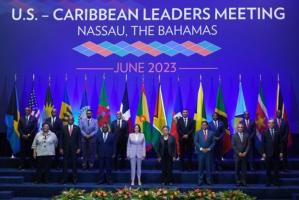 Kamala Harris can be the object of derision for her word salads and oddly nervous laughter. But she plays an important role in promoting US imperialism and the cynical politics of representation.
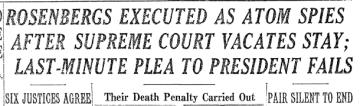 Joseph McCarthy carried out his red scare with the help of establishment media like the New York Times. Its recent Sinophobic screeds follow the Biden administration narrative and are consistent with…
 Glen Ford explained the end of affirmative action in 2013, CIA experiments on indigenous children and Black prisoners, and the Peoples' Senate builds its formation.
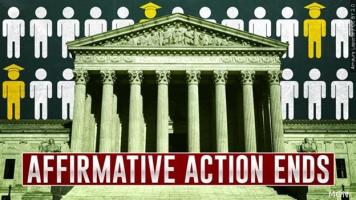 Black Agenda Report co-founder, the late Glen Ford, spoke to the Real News Network after another affirmative action ruling in 2013.
 Orisanmi Burton is an assistant professor at American University’s Department of Anthropology.


