
by Rep. Maxine Waters
The return of Jean-Claude “Baby Doc” Duvalier, in combination with the fiasco of a presidential election, has created a perfect storm of fear and anger in Haiti. California Congresswoman Maxine Waters, who witnessed many of the events surrounding the U.S. overthrow of President Jean-Bertrand Aristide, wants to know if the U.S. was involved in Duvalier's arrival, and if some officials of the Organization of American States are plotting to force President Rene Preval out of the country. “The OAS and other international agencies have no right to dictate the outcome of the election and no right to plot the exile of the current President of Haiti.”
What Role Did U.S. Play In Baby Doc’s Return to Haiti?
by Rep. Maxine Waters
This statement was previously published in Haiti Action.
Congresswoman Maxine Waters (D-CA) issued the following statement upon learning that Haiti's former dictator, Jean-Claude "Baby Doc" Duvalier, returned to Haiti after 25 years of exile in France:
The plot to control Haiti has gone from the absurd to the ridiculous. The return of Jean-Claude "Baby Doc" Duvalier to Haiti in the midst of a flawed election is truly shocking. The Duvalier dictatorship was absolutely brutal, and there is extensive documentation of the human rights violations suffered by the Haitian people during his reign. I was pleased to hear that the authorities had taken him into custody, and I urge that he be tried for his crimes. Nevertheless, Duvalier's return raises serious questions about who in Haiti facilitated his return and what his supporters expect to gain by bringing him back.
Duvalier's return comes in the midst of a desperate attempt by President Rene Préval to maintain control of Haiti by ensuring the election of Jude Celestin, his chosen successor. President Préval did this by appointing a Provisional Electoral Council (CEP) that was biased in his favor, which refused to allow candidates from over a dozen political parties to participate in the elections. Among those excluded was Lavalas, Haiti's largest political party and the party most popular among Haiti's poor. The result was a deeply flawed election that generated widespread and sometimes violent protests among the Haitian people.
“Duvalier's return raises serious questions about who in Haiti facilitated his return and what his supporters expect to gain by bringing him back.”
Had the elections truly been inclusive, the most likely result would have been the election of a President who represented the impoverished majority of the Haitian people. This would have been contrary to the interests of the rich and powerful business elites of Haiti, whose main goal has always been the exploitation of the Haitian people as cheap labor. It is these wealthy Haitian elites who benefited under the reign of the Duvalier regime and who would no doubt benefit if he were to return to power.
Additional confusion was created by the Organization of American States (OAS), which attempted to salvage these flawed elections by issuing a report based on flawed methodology. The OAS did not conduct a full recount, but instead examined a sample of only 919 of the 11,181 tally sheets from voting booths across Haiti, threw out 234 of these tally sheets, and then concluded that Michel "Sweet Micky" Martelly should advance to a runoff, along with Mirlande Manigat, in place of Jude Celestin. The OAS report concluded that Martelly defeated Celestin by a margin of only 0.3 percent of the votes reported on those tally sheets that the OAS chose to count. This would mean Préval's candidate, the candidate who is most likely to be trusted by the elites, would be eliminated.
However, according to an analysis by the Center for Economic and Policy Research (CEPR), tally sheets were either missing or were discounted for irregularities at 1,326 voting booths or 11.9 percent of the total. The proportion of discounted votes and other irregularities is more than sufficient to cast doubt upon the entire process, especially when the difference between the number of votes counted for Celestin and Martelly is so small. The recommendation of the OAS to change the names of the candidates included in the runoff election is an ill-advised and sloppy attempt to fix an election that should be scrapped entirely.
In any case, it is now clear that no runoff can be held this month as previously planned, and no successor will be elected prior to February 7th, the last day of President Préval's term in office under the constitution. Consequently, there is the possibility that Haiti could find itself with no President, thus creating a void and the opportunity for a dictator.
“The recommendation of the OAS to change the names of the candidates included in the runoff election is an ill-advised and sloppy attempt to fix an election that should be scrapped entirely.”
I was shocked to learn that OAS officials discussed forcing President Préval to leave the country on board a plane – much the way that former President Jean-Bertrand Aristide was forced to leave the country in a coup d'état in 2004. Ricardo Seitanfus, the former OAS Special Representative to Haiti, recently revealed that at a meeting of United Nations, OAS and donor country officials, some representatives suggested that President Préval should leave the country and an airplane should be provided for that purpose.
The OAS and other international agencies have no right to dictate the outcome of the election and no right to plot the exile of the current President of Haiti. Despite President Préval's role in these failed and fraudulent elections, the OAS cannot be a part of a plan to try to determine the outcome of the elections.
It is absurd and outrageous that anyone would even think to take advantage of this situation to facilitate Baby Doc Duvalier's return to Haiti. Unfortunately, he has returned, and it is important to ask why. Who assisted Duvalier in his return? Where did he get the money to pay for his return? Were any officials of the U.S. Government aware of his plans to return? Was the Central Intelligence Agency (CIA) aware? If so, was any action taken to stop him from returning or to ensure that he would be arrested and prosecuted for his crimes and not allowed to usurp power if he did return?
I am deeply concerned that the wealthy elites of Haiti who supported the Duvalier regime in the past, along with the assistance of international agencies, may have encouraged Duvalier to return in the hope that the flawed elections will create a power vacuum that could allow him to take power once again. I am even more concerned that OAS officials may be wittingly or unwittingly helping to create precisely the type of power vacuum that would enable him to do so.
It is important that we determine what role U.S. officials played, if any, in facilitating Duvalier's return. It is even more important that we determine what role the U.S. Government will play moving forward.
“Were any officials of the U.S. Government aware of his plans to return?”
The U.S. Government promised to help Haiti recover from last year's earthquake and develop its economy. I introduced legislation to forgive Haiti its foreign debt, and allow the country to secure additional aid in the form of grants so that it wouldn't incur further debt. I was very pleased that Congress passed the legislation in a bipartisan manner, and that President Obama signed it into law just three months after the earthquake. President Obama also requested and Congress appropriated almost $3 billion in funds for humanitarian assistance and long-term reconstruction and development for Haiti. Meanwhile, donor countries committed more than $9 billion in aid for Haiti's reconstruction at an international donors' conference last March.
Haiti's next government will be called upon to make difficult decisions regarding the allocation of these resources. If these decisions are not made by a credible and legitimately-elected government, billions in U.S. taxpayer funds could be wasted and many donors may refuse to distribute the funds that were promised. Meanwhile, Haiti's recovery could be delayed for decades and the Haitian people will continue to suffer.
I believe the only recourse is for Haiti to organize new elections that will be free and fair, inclusive of all eligible political parties and candidates, and open to participation by all Haitian voters. The U.S. Government should demand a clear statement to that effect by both the OAS and President Préval, and the U.S. should stand ready to assist Haiti in organizing new elections.
Only through free, fair and inclusive elections will the people of Haiti be empowered to create a better future for themselves and their children.

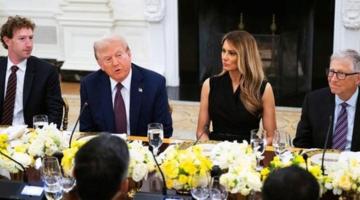 The power structure in the U.S. can be boiled down to a system of might, and white, making right. Donald Trump has exposed its rotten foundations and the two-faced collaborators who keep it running.
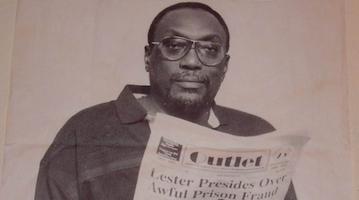 “There has been divide and rule in the modern Caribbean with a vengeance, all in the interest of US hegemony over the economic, military and political destiny of the Caribbean as a whole.”
 These are remarks prepared for a 09/16/25 Covert Action webinar on Neocolonialism in Africa.
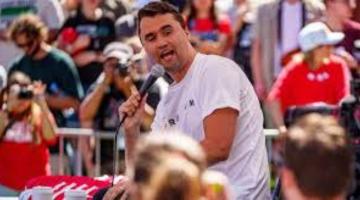 The assassination of a far-right demagogue raises the question: when does 'free speech' become a tool for inciting violence? Nations like South Africa and Brazil have decided that some speech is not…
 “The youth are getting restless. I can't hear you, Let them hear you all the way to Washington, The youth are getting restless, Own creation, The Youth are Getting Restless, And once again a nation,…


