Let's Just Get Along: Poll Passes Up Structural Analysis of Race
by Seth Wessler
This article originally appeared in RaceWire, the ColorLines Blog.
"The poll is bound by a narrow understanding of race and racism."
 Race, racism, and racial stereotypes run deep according to a new opinion poll of over a thousand Blacks, Latinos and Asians by New American Media. The poll asserts that people of color in different groups don't trust each other and feel like race, racism and ethnic cleavages are just as present as they've always been despite some hope for change.
No surprise thus far. But where do we take this old news?
The poll is framed as something new and, to a certain extent, actually asking people of color what they think about race and racism is a step in the right direction. But the poll doesn't quite do what it could because it is bound by a narrow understanding of race and racism on the front and back ends. The poll, like so many other efforts to figure out "race relations," starts with an assumption that race and racism are primarily issues about how X individual of one race feels about Z individual of a different race.
On the front end, we've got a problem with the questions themselves. Have you ever dated someone of a different race?; Do you have any Black friends, Asian friends, Latino friends?; Would you rather do business with white people or Asian people?. As a result of asking these questions, the poll offers the same answers we always get: Racism is a problem and racial divisions are serious problems. In response: lets just get along.
On the back end, the way the poll is used; the messages we take from it; and the action we propose to take, all risk being similarly bound by an individualized understanding of racism. But running stories in the ethnic media about mixed-race relationships isn't going to solve the problem of racism.
"Racism runs deep because it is ingrained in the institutions, the laws, the policies, and the cultural currents that dominate."
Racism is a societal problem; it is structural and historical. It runs deep because it is ingrained in the institutions, the laws, the policies, and the cultural currents that dominate. And herein lies the problem with the poll: it assumes that individuals aren't influenced by the dominant messages and frames that we hear over and over, and it doesn't question the institutional basis of them.
The point is this: if the goal is to encourage the creation of a multiracial civil society, then racism needs to be addressed through institutional and structural interventions. Taking race seriously in this context means asking questions about media's role in perpetuating racist policies, institutional practices and social myths that pit groups against each other. The New American Media poll could help us to move in this direction but it will have to be taken to the pedestal and used to reshape the messages in the ethnic media and mainstream media.
When we build a society that values all people, a just society that does not punish and abandon people of color, then maybe we'll have a society where people trust each other.

 In this week’s segment we hear about the right-wing politics of the anti-migrant movement in South Africa, ANC failures, and upcoming elections in that country. But we begin with the first and only…
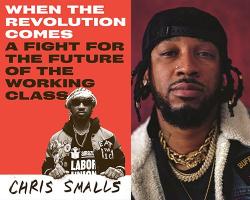 Chris Smalls discusses his memoir, "When the Revolution Comes: A Fight for the Future of the Working Class," published by Penguin Random House. He is the first and only union leader to successfully…
 Our guest is Nairobi based political writer and strategist Clinton Nzala. He joins us to provide an update and an analysis of the South African anti-migrant March and March movement, which is…
 The Hague Group’s goal is to “. . . take coordinated legal and diplomatic measures against Israel’s violations of international law.” But international law was never a reality.
 “I believe that the Movement of Nonaligned Countries…can buttress the united will of the Arab nation and help it to prevail against intervention and aggression.”


