Click the flash player below to listen to or the mic to download an mp3 copy of this BA Radio commentary.
Although nobody but Americans believes Washington was not behind the late June coup in Honduras, Barack Obama brings his own touch to subverting one's hemispheric neighbors. “Obama makes democratic noises – and then refuses to back them up with any actions that would cause U.S. clients in the Honduran military and oligarchy to relinquish power.” And he does it all with a straight face.
Bush and Obama: Different Styles of Coup-Making
Black Agenda Radio commentary by Glen Ford
“Bush would ratchet up the aggression with threats of regime-change all around.”
There should be no doubt about U.S. involvement in the military coup in Honduras, June 28. Nothing happens in the Honduran military without U.S. knowledge and consent. Honduras is the original “banana republic,” once a wholly-owned subsidiary of the United Fruit Company (now Chiquita Brands) and for the last three generations a U.S. staging area for subverting governments throughout the hemisphere.
What the U.S.-backed Honduran coup illustrates is the difference between Barack Obama and George Bush. President Bush would likely have set the coup in motion with bombastic statements from the White House and State Department charging Honduran President Jose Manuel Zelaya with conspiring with Venezuela’s President Hugo Chavez and other leftist leaders to undermine governments in the region friendly to Washington. Rather than simply defend the local necessity of the coup, Bush would ratchet up the aggression with threats of regime-change all around. But of course, that’s one of the reasons Bush isn’t there anymore, and why after eight years of Bush’s counterproductive rants and threats U.S. corporations threw their money to the Democrats – specifically, the fresh new face of Barack Obama.
“Obama’s State Department continues to avoid even using the word 'coup.'”
Obama keeps the drama out of regime change, by pretending to be opposed to coups in principle. So Obama makes democratic noises – and then refuses to back them up with any actions that would cause U.S. clients in the Honduran military and oligarchy to relinquish power. Obama’s State Department continues to avoid even using the word “coup” to describe the military’s arrest and forced exile of President Zelaya. If the Americans acknowledged that a coup had occurred, they would be legally obligated to cut off millions of dollars in military and economic aid to Honduras. Latin American heads of state made it a point to meet directly with President Zelaya, to show their solidarity with his elected government. Obama sends underlings, to signal to the coup plotters that he’s got their back. Alone among members of the Organization of American States, the U.S. continues to maintain an ambassador in the Honduran capital. His name is Hugo Llorens, a Cuban exile and Republican holdover and multinational corporate political operative. Llorens has admitted to having participated in meetings where coup plans were discussed, although he claims he was simply an observer. Historically, in Latin America, the U.S. embassy has been ground zero for regime change. There is no reason to think the latest coup in Honduras is any different.
President Obama may have trouble pulling off his innocent act. The European Union is threatening to suspend $92 million in aid to Honduras, which caused Secretary of State Clinton to make a call, pretending to pressure the civilian coup leaders.
In the end, it is even possible that the U.S. will allow Zelaya to return, although in a weakened condition. The coup will have served as a lesson to Latin America, that the U.S. is still in the regime-change business, even if Barack Obama denies it with a straight face.

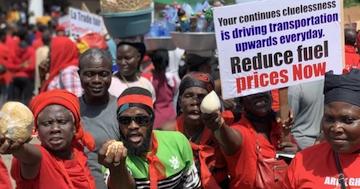 The 2001 Dakar Manifesto had a simple but unassailable claim: the total and unconditional cancellation of the odious African debt.
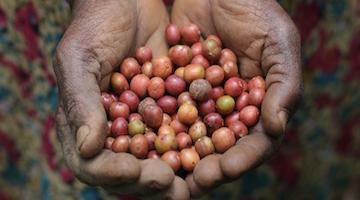 Food production in Africa is complicated by climate change and the use of fertilizers which increase food production but which also create green house gases and create other environmental harm.
 …
… Onyesonwu Chatoyer of the All-African People's Revolutionary Party and BAR Book Forum Editor Roberto Sirvent discuss how "We Can Save Ourselves."
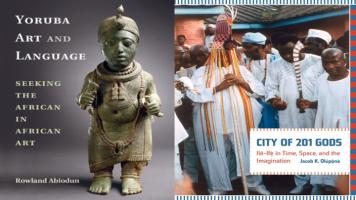 This week’s featured scholar is Ayodeji Ogunnaike. Ogunnaike is an assistant professor at Bowdoin College where he teaches interdisciplinary courses on Africa and the African Diaspora highlighting…


