The White, White House Press Corps
by Sam Fulwood III
This article originally appeared in The Root.
"Black political writers were ‘big-footed' off the Obama
campaign plane by white reporters."
Jesse Jackson's 1984 presidential campaign boosted-no, it
actually created-the careers of a whole cadre of black political reporters.
Barack Obama's historic capture of Oval Office? Well, not so
much.
The reasons behind the white-out of the Obama campaign are
varied and complex, ranging from the reduction of general political coverage by
mainstream media to fewer experienced black political reporters to the
persistence of racism in the doling out of coveted newsroom assignments.
A generation ago, as the peripatetic preacher crisscrossed
the country to the chants of "Run, Jesse, Run!" black
journalists-among them Gwen Ifill of The (Baltimore) Evening Sun,
Julie Johnson of The (Baltimore) Sun and later The New
York Times and ABC News, George Curry of the Chicago Tribune, Ron
Smothers of The New York Times, Milton Coleman of The Washington
Post, Kevin Merida of The Dallas Morning News and Kenneth Walker
of ABC News-traveled along, reporting and interpreting the historic political
campaign.
Nearly a quarter century later, Barack Obama made the same
primary run, and it was not the symbolic stab at the White House that Jackson's
represented; instead, the junior senator from Illinois took the prize and will
become the nation's first black president.
But black journalists by and large weren't around to
document the groundbreaking victory. A handful of black journalists popped in
and out of the Obama campaign, notably Suzanne Malveaux of CNN, Ron Allen of
NBC and William Douglas of McClatchy Newspapers. At the end of the campaign, the
black faces most visible on the Obama plane belonged to reporters and
photographers representing Ebony and Essence, magazines that
don't traditionally cover politics.
The complexion of the media can be an important factor in
defining the president and his policies. In fact, even as Obama's campaign
operated with "no-drama" precision, some media miscues emerged, among
them the Associated Press describing Obama as half-black.
"Black journalists by and large weren't around to
document the groundbreaking victory."
Speaking at a recent journalism symposium conducted by the
Nieman Foundation at Harvard University, Jack White, who covered the 1984
Jackson campaign for Time magazine, noted the irony of Obama's taking
office with relatively few black reporters assigned to cover his
administration.
"We are going to integrate the Oval Office long before
we integrate the media that covers the president," White said. "The
job of interpreting this president to the world is too big and too important to
be left just to white reporters and editors."
Political reporting is something of a boutique corner in
most newsrooms, a space reserved for those deemed to be the best and the
brightest. Political reporting was glamorized by Timothy Crouse's 1973 "The Boys on the Bus," a best-seller that revealed the
techniques and antics of the reporters covering the 1972 presidential campaign.
Of course, all the boys on that bus-the biggest names in the business-were all
white.
The color of campaign coverage changed somewhat when Jackson
announced his presidential aspirations. Run more like a civil rights crusade
than a modern, efficient presidential campaign, the Jackson entourage was
populated, at first, by skilled black reporters who had come into mainstream
newsrooms a generation earlier to cover dangerous urban unrest, neglected
minority concerns and a host of other issues that their white colleagues
couldn't or wouldn't write about.
By 1984 and the Jackson campaign, white-directed newsrooms
had turned the page on those stories and many of the black reporters on the
Jackson bus weren't covering politics for their news organizations.
"The black faces most
visible on the Obama plane belonged to reporters and photographers representing
Ebony and Essence."
Kevin Merida, now an associate editor of The Washington
Post, recalled being reluctant to cover Jackson's fledgling campaign,
fearing it would derail him from more coveted assignments as an investigative
reporter. Now, he credits covering Jackson with boosting his career, which
includes his recent publication of a photo-essay book on the Obama campaign.
"I guess I was like a lot of other black reporters who
didn't want to cover Jackson," he said in a recent interview. "We
didn't want to get pigeonholed, and we didn't anticipate the story becoming as
big as it did."
The lure of political reporting stayed with Merida, unlike
most of the other black reporters covering Jackson. Often, between presidential
campaigns, he marveled at the dearth of black faces at political meetings and
gatherings where white political writers cemented relationships with campaign
operatives and grass-roots activists.
"Covering politics isn't always a glamorous job,"
he said. "It's a lot of rubber-chicken dinners and talking to a lot of
county political hacks."
Squeezed by tighter budgets, fewer newspapers are springing
for reporters-white or black-to indulge in such reporting. The number of black
reporters who do cover full-bore politics has reverted to its pre-Jesse Jackson
days.
White, now retired from Time and a regular
contributor to The Root, recalled covering Jackson's 1984 and 1988
presidential runs, saying it was starkly different from the coverage he
observed from the sidelines during the Obama campaign.
"The number of black reporters who do cover full-bore
politics has reverted to its pre-Jesse Jackson days."
"I got the impression that black reporters didn't get
as much of a bounce from [Obama's] campaign as you might expect," White
said. "Maybe that's because Jackson was seen back then as the black people's
candidate, who shocked the world by winning a couple primaries. Obama was seen
as something more than a black candidate and that meant white editors wanted to
put their best political team on him. And, of course, in their minds that meant
white reporters."
Michael Calderone, a media writer for Politico.com, wrote
recently that an Obama White House is likely to bring more
black and minority reporters to Washington beats. He quoted Julie
Mason, White House correspondent for The Examiner in Washington, as
saying: "The number of African-American commentators on TV has gone
through the roof and I think that'd be reflected in how [news organizations]
cover the White House."
But others are more skeptical. Richard Prince, author of the
online Journal-isms, reported recently that black political writers were "big-footed" off the Obama campaign plane by white
reporters. He said in an interview that he sees no evidence of that changing
after Obama takes office.
"Most news organizations are ignoring that [Obama] is
black, just as they did for the most part during the campaign," Prince
said. "Having black reporters on the White House beat is just not a
priority, unless it can be measurably demonstrated that some special access or
advantage can be gained by having a black reporter there."
What if Obama insisted on black reporters being among the
press corps?
"That's not likely," Prince said. "He's not
going to be that kind of president. Jesse might have been, but not Obama."
Sam Fulwood III is a regular contributor to The
Root.

 Margaret Kimberley of Black Agenda Report speaks with Ahmed Kaballo, founder of Nairobi-based Sovereign Media, about the Africa Forward summit with France, the Pan-Africanism Summit Against…
 Venezuela’s betrayal of Alex Saab in handing him over to the U.S. leaves little room for debate. The Bolivarian revolution has been seriously undermined and can only be revived by the Venezuelan…
 Malcolm X understood that “oppressed peoples must commit themselves to radical political struggle in order to advance a dignified approach to human rights.” What’s needed is a bottom-up mass movement…
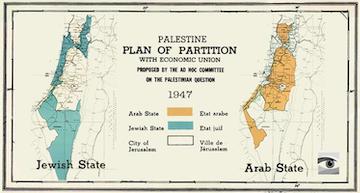 “It is impossible to make a national home for one people in a country inhabited by another, except by dislodging the latter.”
 "That Sunday morning Mom cried …" is the latest from BAR's Poet-in-Residence.


