Troubled White Troops on Ghetto Streets
A Black Agenda Radio commentary by Glen Ford
Those who want a downloadable MP3 copy can obtain one from our Black Agenda Radio archive page here.
"Troops with a history of counter-insurgency warfare are
not fit to patrol the streets of America, especially Black America."
The U.S. military's plans to assign 20,000 federal troops to cope
with terrorist attacks, domestic disasters and civil unrest, would inevitably
expose Americans to the habits of savagery U.S. soldiers have acquired in Iraq
and Afghanistan. The "civil unrest" mission is the most dangerous aspect of the
plan; in the United States, quashing civil unrest is practically a euphemism
for suppressing Black and other non-white populations. Above and beyond legal
questions over the authority of federal troops within the borders of the United
States, the U.S. military is totally unsuited to the mission - especially
troops that have served in combat units in America's two Asian wars. Yet these
are the very soldiers that will be assigned to keep Black folks under control.
The domestic rapid-reaction force is to be built around
combat units, most of whose troops have served at least one tour of duty in
Iraq or Afghanistan. The military newspaper Stars
and Stripes reports that "roughly four in 10 soldiers...have served more
than one deployment - and that number is growing." Most soldiers in the U.S.
Army are currently either in Iraq or Afghanistan, have previously been deployed
there, or are about to be deployed. After five years of war in Iraq and six in
Afghanistan, the U.S. military has been largely transformed into a huge
counter-insurgency apparatus. Troops with a history of counter-insurgency warfare,
in which the military makes little distinction between civilians and active
fighters, are not fit to patrol the streets of America, especially Black
America.
"300,000 American
military personnel "are suffering from mental
health problems, including PTSD."
Today's U.S. military is demographically quite different
than the Vietnam era Army, in which Blacks made up a hugely disproportionate
share of soldiers in combat arms: infantry, armor and artillery. Some elite
units were majority Black. Thirty five years after creation of the
all-volunteer military, these same combat arms units are overwhelming white and
Hispanic. History has shown us that mostly white units should not be deployed
with live firepower in Black neighborhoods. This holds true, even if a Black
man will soon be commander-in-chief.
Racism aside, the current American military is wracked with
post-traumatic stress disorders - PTSD. Waging war in urban areas is bad for
soldiers' mental health. A study by the RAND Corporation found that 300,000
American military personnel "are suffering from mental
health problems, including PTSD." That's an alarming one out of every five
troops - certainly even higher in combat units. And most soldiers avoid being
diagnosed with PTSD or other mental difficulties, for fear of ruining their
careers.
It is unacceptable that mostly white veterans of an urban,
counter-insurgency war, a significant proportion of whom have mental
difficulties related to violence, would be deployed in the ghettos of America.
This is the definition of armed and dangerous, and a formula for reenactment of
Iraq and Afghanistan experiences on the streets of urban America. The U.S.
military should not be occupying other people's countries. They are the last
folks you should want to see on the streets of our own. For Black Agenda Radio,
I'm Glen Ford.
BAR executive editor Glen Ford can be contacted
at Glen.Ford@BlackAgendaReport.com.

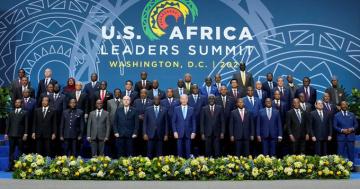 The U.S. Africa Leaders Summit held in Washington in December demonstrated the depth of U.S. disregard for African nations. The photo opportunity extravaganza proved only that the U.S. commitment to…
 Anti-imperialist unity has long been sought by African people but has been thwarted by outside forces. The people still struggle to reach this goal, and the West African Peoples Organization is the…
 The first in a three-part series analyzing African politics in 2022.
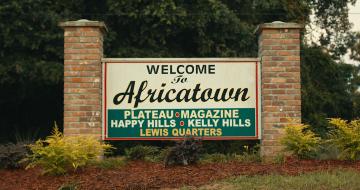 The trans-Atlantice slave trade did not end with the 1808 ban. The Clotilda arrived in 1860 and the descendants of those enslaved people are impacted by that history, as are all African people in the…
 The U.S. imposes unilateral coercive measures, sanctions, against millions of people around the world. Sanctions are war by other means, creating as much damage as bombs and bullets do.


