Climate Change Means Death for Millions
by Desmond Tutu
"Climatic
events can undo the developmental gains put in place over decades."
This article originally appeared in The Guardian (UK).
What if dealing with climate change meant more than a flick
of a switch? Would our friends in the industrialized world think differently if the effects of
climate change were worse than extended summer months and the arrival of exotic
species? Cushioned and cosseted, they have had the luxury of closing their
minds to the real impact of what is happening in the fragile and precious
atmosphere that surrounds the planet we live on. Where climate change has
occurred in the industrialized world, the effects have so far been relatively
benign. With the exception of events such as Hurricane Katrina in 2005, the
inhabitants of North America and Europe have felt just a gentle caress from the
winds of change.
I wonder how much more anxious they might be if they depended on the cycle of
mother nature to feed their families. How much greaterwould their concerns be if they
lived in slums and townships, in mud houses, or shelters made of plastic bags? In large
parts of sub-Saharan Africa, this is a reality. The poor, the vulnerable and the hungry
are exposed to the harsh edge of climate change every day of their lives.
"The poor, the vulnerable and the hungry are exposed to
the harsh edge of climate change every day of their lives."
The melting of the snows on the peak of Kilimanjaro is a warning of the changes taking
place in Africa. Across this beautiful but vulnerable continent, people are already feeling
the change in the weather. But rain or drought, the result is the same: more hunger and
more misery for millions of people living on the margins of global society. Even in places
such as Darfur, climate change has played a role. In the semi-arid zones of the world,
there is fierce competition for access to grazing lands and watering holes. Where water
is scarce and populations are growing, conflict will never be far behind.
In so many of the countries where the poorest live,
governments are ill-equipped to cope. Katrina was a challenge for the US, so
why should we be surprised that the annual cyclone season off the east coast of
Africa continues to stretch the governments of Mozambique and Madagascar to
their limits? Where governments are weak, the reliance on humanitarian agencies
is greater.
People who work for bodies such as the UN World Food
Program are finding their work is a humanitarian "growth industry."
Indeed, the numbers of people who know what it's like to go hungry stands at
more than 850 million, and they are still growing by almost 4 million a year.
The increasing frequency of natural disasters makes the fight against hunger
even more challenging. The World Bank estimates that the number of natural
disasters has quadrupled from 100 a year in 1975 to 400 in 2005.
"The increasing frequency of natural disasters makes the
fight against hunger even more challenging."
In the past 10 years, 2.6 billion people have suffered from natural disasters. That is more
than a third of the global population - most of them in the developing world. The human
impact is obvious, but what is not so apparent is the extent to which climatic events can
undo the developmental gains put in place over decades. Droughts and floods destroy
lives, but theyalso destroy schools, economies and opportunity.
Every child will remember the story of the three little pigs
and the big bad wolf. In the world we live in, the bad wolf of climate change
has already ransacked the straw house and the house made of sticks, and the
inhabitants of both are knocking on the door of the brick house where the
people of the developed world live. Our friends there should think about this
the next time they reach for the thermostat switch. They should realize that
while the problems of the Mozambican farmer might seem far away, it may not be
long before their troubles wash up on their shores.
Desmond Tutu is a former
archbishop of Cape Town and a Nobel peace laureate.

 Book Forum Editor, Roberto Sirvent, interviews Onyesonwu Chatoyer about her political organizing and work as a writer and editor.
 New York Democrats are fueling the panic over a fictional crime wave to increase surveillance and police presence in NYC.
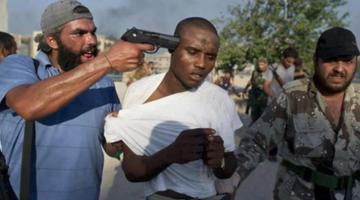 Anti-Black racism in Libya is stoked by the west to justify intervention and maintain dominance over the nation. The path toward liberation is to reject Europe and embrace a political Pan-Africanism.
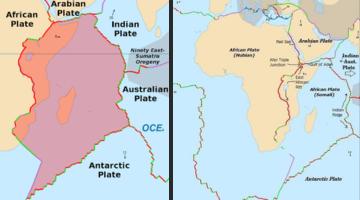 Palestinian people and African/Black people share more than a common struggle. They share a history dating back thousands of years.
 The Black Alliance for Peace lays out the reality of the ongoing crisis in Haiti, rejecting the mainstream narrative of a crisis of "gangs".


