The “Whitening” of Black Colleges
 Court decisions combined with state and federal policies have led to the “whitening” of HBCUs – Historically Black Colleges and Universities – including Delaware State University, where Dr. Jahi Issa taught until his arrest at a student demonstration in 2012. “We’re looking at over two decades of strategic removal of African American faculty and students,” said Issa, whose multi-part articles titled “How Black Colleges are Turning White: The Ethnic Cleansing of HBCUs in the Age of Obama” are published in Black Agenda Report. This trend, along with falling Black enrollment in historically white institutions and assaults on African American Studies programs, poses an existential threat to Black higher education in the United States. HBCUs will likely continue to exist, but “there just probably won’t be too many Black people there,” said Issa.
Reparations “Enforcement” is Key
In recent decades, the struggle for reparations for Africans and their descendants has moved from simple advocacy to “a mode of activism called reparations enforcement,” in which Blacks in various localities target businesses and institutions that have profited from slavery and Jim Crow and present bills for the criminal damages that have been inflicted on Black people, said Kamm Howard, of NCOBRA, the National Coalition of Blacks for Reparations in America. The reparations movement needs a revolutionary language that speaks in terms of criminal acts historically committed against Blacks – acts for which there is no statute of limitations, said Howard, speaking at a Black Is Back Coalition teach-in at Howard University, in Washington.
Defining and Defending U.S. Political Prisoners
The scores of political activists still languishing in prison are testament to U.S. violation of international law and treaties prohibiting racial discrimination, said Efia Nwangaza, of the Malcolm X Center for Self-Determination, in Greenville, South Carolina. Nwanga has just returned from a United Nations forum in Geneva, Switzerland, at which the U.S. claimed, as always, that it holds no political prisoners. Since the term “political prisoners” is also not part of UN terminology, Nwangaza’s Malcolm X Center and the Jericho Movement speak, instead, on behalf of “Cointelpro and civil rights era political activists and human rights defenders.” In arguing before the UN, Nwangaza maintains that “the focus of Cointelpro” – the FBI’s campaign to neutralize political dissidents – “had a significant racial component and, as a result, a significant impact on the Black liberation struggle.”
Black Agenda Radio on the Progressive Radio Network is hosted by Glen Ford and Nellie Bailey. A new edition of the program airs every Monday at 11:00am ET on PRN. Length: One hour. Click here to download the show.

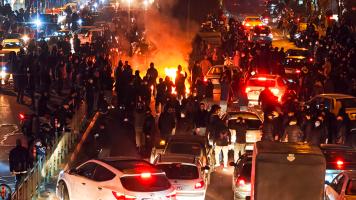
 In this week’s segment, we cover state repression and regime change efforts. While the corporate media parroted state narratives about a popular uprising in Iran, all evidence indicates that recent…
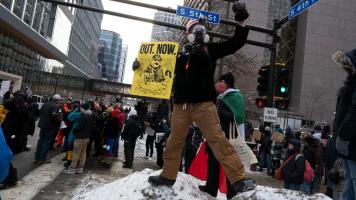 Mnar Adley is the founder and director of MintPress News, an independent media outlet. She joins us from Minneapolis, Minnesota, where Donald Trump's ICE enforcement is used as domestic police…
 Nina Farnia is an assistant professor at Albany Law School in New York. She is a legal historian, focusing on the role of modern imperialism in U.S. law and politics, and a member of the Anti-…
 U.S. funding for a study on the timing of hepatitis B vaccine doses in infants in Guinea-Bissau violates accepted standards of medical ethics.
 Donald Trump and other U.S. presidents are gangsters who will sometimes steal from their own crew. The Greenland heist is but the latest example, as the Denmark colonizers cry that they were robbed…


