A Black Agenda Radio commentary by Glen Ford
The Democrats are panicked, with many congresspersons fleeing from identification with their party. The disarray is the inevitable blowback of Obama's ceaseless campaign to divorce Democrats from their longtime branding as the party of working people. The spiral began with Obama's championing of bank bailouts, beginning with the autumn 2008 meltdown. The public saw that, "when the crunch came, the bankers were relatively more influential among Democrats than Republicans."
The Democrats: Death by Betrayal
A Black Agenda Radio commentary by Glen Ford
"By the summer of 2009, a new brand of Republicans, the Tea Party, had cornered the huge public market on hatred of big business bailouts."
President Obama and his corporate partners have succeeded in de-branding the Democratic Party. More accurately, events since the autumn of 2008 have revealed to even the most loyal Democrats that Wall Street's near-total domination of U.S. politics includes the party many once thought of as representing the working man and woman. This illusion was shattered when candidate Barack Obama near-singlehandedly rescued George Bush's bank bailout from a second defeat in a week, with Democrats twice as much in favor as Republicans. The Congressional Black Caucus reversed its strong opposition to the bailout under intense individual pressure from Obama, as did lots of Democrats. From that moment on, Obama and the Democrats have been most closely associated with what became the biggest transfer of wealth in the history of mankind: $12 to 14 trillion of the people's money to Wall Street. After that, it became impossible for the Democrats to maintain their brand as the party of working people.
The truth is, Wall Street has long been the sugar daddy to Democrats, just as Big Oil has historically bankrolled Republicans, although the alignment was never quite as stark as the public perception. The financial meltdown revealed - as catastrophes tend to do - the true nature of power relationships in society. Wall Street, even though wracked by terminal contradictions, was the supreme power in the United States - and, when the crunch came, the bankers were relatively more influential among Democrats than Republicans. How could Democrats, as a party, ever again brand the Republicans as the bulwark of Big Business, when their standard bearer was so proudly identified as the savior of the most hated plutocrats of all, the titans of Wall Street.
"The Democrats no longer have anything resembling a brand, at all."
Obama continued to eradicate the old Democratic branding, as president, immediately entering into backroom deals with the second most-hated tier of Big Business villains: the drug and insurance corporations. By the summer of 2009, a new brand of Republicans, the Tea Party, had cornered the huge public market on hatred of big business bailouts. Anti-bailout, anti-banker politics had become so popular, the Tea Partyers often found they could use the brand to mask the racism and virulent white nationalism that lies at the core of their "movement."
The Democrats no longer have anything resembling a brand, at all. Is it any wonder, then, that Democratic congresspersons are scrambling to disassociate themselves from the national party, two months from election day?
Far too late, after all the people's money has been siphoned off to the bankers, Obama now proposes a $50 billion scheme to create jobs and establish a government bank to finance rail and highway projects. The proposal is designed to sound like something out of President Franklin Roosevelt's New Deal, although the actual outlines are a blur, as is typical with Obama. But it is too late. Through his own commission on the federal debt, Obama has invited the enemies of the social safety net to shrink government spending for people-oriented programs. He has consumed so much energy beating up on progressives in his own party, they no longer trust him to come through with a jobs program that measures up to the crisis. Most importantly, the people have lost faith in the Democrats as the party that stands up to the rich, for the simple reason that they don't. For Black Agenda Radio, I'm Glen Ford. On the web, go to www.BlackAgendaReport.com.
BAR executive editor Glen Ford can be contacted at Glen.Ford@BlackAgendaReport.com.

 Hagiography is inevitable when presidents and other prominent people die. The unwillingness to ‘speak ill of the dead’ and the propaganda that would have us believe in American exceptionalism must be…
 The late Ronald V. Dellums shows us how to fight against the Pentagon-inspired madness of military spending and nuclear proliferation.
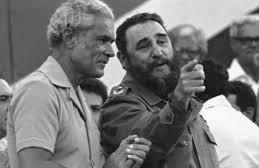 Jamaicans still remember their visionary leaders, Norman and Michael Manley, and the bloody general election of 1980.
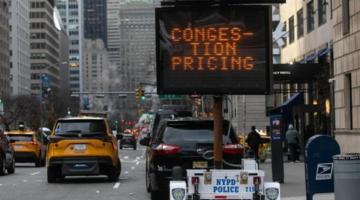 NYC's new congestion pricing program has grave environmental justice implications for poor, working class, and Black communities which will be subjected to increased pollution and poor air quality.
 Trinidad is experiencing an unprecedented crime wave. The state has responded by militarizing the police and loosening restrictions on their actions. To understand these mechanisms, one must look at…


