It seems inevitable our own holiday will be sold back to us by the same corporations that profit from exploiting black lives.
“The actions of the nation are empty, but the actions Black people take to empower themselves truly matter.”
Congress’s decision to make June 19th a federal holiday marks the momentum gained since the national protests against the murder of George Floyd by the police. In the years to come Juneteenth may become fully coopted into the pageantry of corporate diversity, with obligatory celebrity endorsements and racially themed parties. We can hope for something better, but it seems inevitable our own holiday will be sold back to us by the same corporations that profit from exploiting black lives. That a national holiday is seen as an adequate policy response to state-sanctioned terror is further proof of what Malcolm X remarked, “The white man will try to satisfy us with symbolic victories than economic equity and real justice.”
Yet, if we think of the actual history of Juneteenth, the federal government’s attempt to use the holiday to placate calls for Black freedom are brought into greater clarity. While Black people classically understand Juneteenth as a celebration of the emancipation of Black people, there is a different way to think about the holiday. We can also think of the holiday as a mark on how emancipation was granted through state-sanctioned delay and belatedness.
Juneteenth does not mark the day that slavery was (partially) abolished for the entire Union — this happened with the implementation of the Thirteenth amendment. Juneteenth is also a full two years after the Emancipation Proclamation. The Emancipation Proclamation freed slaves in those areas of the confederacy under Union control. This was not the original position of the union nor its President. President Lincoln originally declared in 1853, “I will say then that I am not, nor ever have been, in favor of bringing about in any way the social and political equality of the white and black races.” Along these same lines, in the beginning of the war the Union would capture and return slaves back to the confederacy or would detain them in their own forced labor camps. Not exactly the war of liberation described in the nation’s mythology.
“The white man will try to satisfy us with symbolic victories than economic equity and real justice.”
No, Lincoln declared the Emancipation Proclamation for strategic reasons to win the war. Most importantly, the emancipation proclamation was late. Over 500,000 slaves ran off plantations in what W.E.B. Du Bois describes as a “general strike” of Black people that ground the gears of plantations to a halt. In addition, over 150,000 Black people took up arms without any recognition from the Union army to bring the Cotton Kingdom to its knees. Without permission, in direct contradiction of the law of the time, Black people remade the Civil War into something much larger than a family affair between two settler colonies. Black people produced a third front and collectively declared the war would become about Black freedom. We celebrated our freedom before Juneteenth with the movement of our feet and our gaze that put slavery into our crosshairs.
June 19, 1865 is the day the news of the emancipation of slaves was officially declared to the state of Texas by Major General Gordon Granger. Granger came to announce the result of the Emancipation Proclamation a full two years late. Yet, Black people of Texas began celebrating Juneteenth in 1866 on their own and this celebration spread throughout the South over the years. Black people made Juneteenth into a celebration of their own understanding of freedom. If freedom has any meaning other than national propaganda, it is because we collectively made it so.
We should not skip over the delay described above. As Saidiya Hartman describes in her text Scenes of Subjection, freedom was often a double-edged sword. The newly emancipated Black people achieved both a type of political freedom and the freedom to be exploited by wage labor and held criminally responsible by the police. Black people were emancipated into a landless poverty ruled by tyrants that sought revenge and reclamation through massacres and legal dictatorship. If the slaves had been free 2 years before the declaration to Texas, what were they celebrating June 19? If emancipation can arrive after its declaration, what does it change? How could we live with what changed? As Toni Morrison wrote in Beloved, “Freeing yourself was one thing, claiming ownership of that freed self was another.”
These dates mentioned above — 1863, 1865, 1866 — highlight that the legal emancipation of Black people was not a single historical event – it was an elongated and incomplete process taking place over time. We are still in the time of the political fight for Black freedom, a time we share with our ancestors. This also speaks to a dynamic of Black political life: how there is always a delay between the declaration of emancipation and the actual existence of Black freedom. When is the time that Black people are freed? 1863? 1865? 1900? 1965? 2008? 2021?
“We celebrated our freedom before Juneteenth with the movement of our feet and our gaze that put slavery into our crosshairs.”
For these reasons, the celebration of Juneteenth is complicated to me. I imagine that when our ancestors celebrated, they also asked or felt many questions about the change in their political status. Juneteenth celebrations are not the grotesque propaganda of July 4th. Juneteenth is not the lies a nation tells itself to enjoy its ill-gotten spoils of conquest, captivity, and genocide. What Black people found in jubilation was much more complicated and much more radical. Black people ate, drank, danced, loved, meditated, and prayed together alongside the questions and the joy, the struggle and the longing. In the place of answers, we celebrated the marvels of a life made anew.
Juneteenth is something more than a celebration of the emancipation of Black people. Juneteenth is not the moment we were welcomed into the American imperial project. No, Black people did not celebrate an inclusion, but the invention of something that had never existed before. We partied for impossibilities made possible through collective movement. We celebrated the creation of our political struggles — the marvels of a freedom that this nation cannot recognize. Black freedom is beautiful and confounding. Black freedom is a question to pursue, not an answer achieved, especially not within a settler colony.
So, it is now inevitable that the American empire will attempt to coopt the Juneteenth holiday. In the face of this so-called victory, we must hold on to the meaning of political delay at the foundation of Juneteenth. The delay signifies that the actions of the nation are empty, but the actions Black people take to empower themselves truly matter. In the delay of government recognition, Black lives find their own reasons to celebrate. In the waiting, Black people fight to create their own power.
While this means Black celebration is anything but simple, it does mean it is ours. On June 19, we celebrated something only we can own: the shape of our own visions of freedom. Let us not cheapen the meaning of our history for the sake of an illusory inclusion into a violent order. We fight on until all the days are ours.
Professor Nicholas Brady is an Assistant Professor of Africana Studies at Bucknell University where he writes and teaches on Black politics, culture and thought.
COMMENTS?
Please join the conversation on Black Agenda Report's Facebook page at http://facebook.com/blackagendareport
Or, you can comment by emailing us at comments@blackagendareport.com

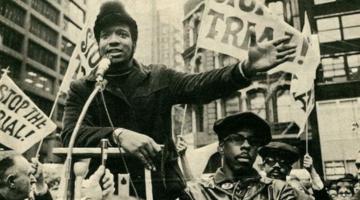 The thread connecting the struggles of Black and Palestinian liberation makes itself known in the propagandistic attacks on the Palestinian resistance. The assassination of Fred Hampton helps…
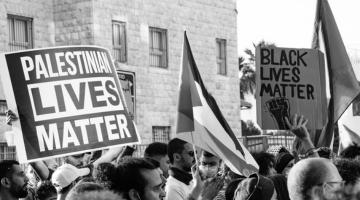 As the US continues to conflate every criticism of Zionism with anti-semitism, the predicable happens once again. Black people are used as an avatar of anti-Jewish sentiment. This tactic will not…
 Al-Fateh’s communique at the 1969 Festival of Pan-African Culture offered a brilliant analysis of the overlapping histories of European colonialism and white supremacy in Africa and Palestine.
 The ongoing crisis is a result of converging forces determined to pursue their own interests by controlling the affairs within the Congo and subjecting the masses to inhumane conditions.
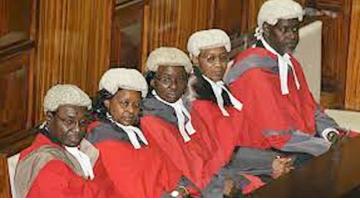 Ngũgĩ wa Thiong'o reminds us that the primary contradiction in Africa is imperialism and its meek comprador bourgeoisie enforcers.


