“In other words, people revolted against the system. But they did not know that the system was called capitalism.”
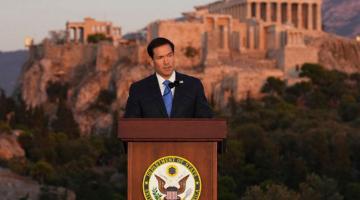
The recently released document Cuba: The Capital of 21st Century Communism is typical of the deranged slop produced by the US State Department and the paranoid, pea-brained and deranged mind of Marco [“Narco”] Rubio. It finds more communist conspiracies than if a methamphetamine-addled Joseph McCarthy stumbled into a Trotskyite bookstore. It creates a spurious and nefarious network of connections between individuals, organizations, and states—all of whom are allegedly intent on destroying the United States. And it finds that Cuba, a country of 10 million people with a miserable per capita GDP and a landmass the size of Pennsylvania, is behind a monstrous global conspiracy of radical anti-American actions. Including within the United States, where it is alleged the Cuban state was the puppet-master orchestrating the protests that erupted following the police murder of George Floyd and the subsequent rise of the Black Lives Matter movement. That’s right, sisters and brothers: Marco Rubio wants you to believe that the ghost of Fidel Castro led you to protest the callous execution of George Floyd— and the long history of US white supremacy. Cuba: The Capital of 21st Century Communism is the harbinger of a new “Red Scare” on steroids.
It is also classic Rubio, that gusano mentiroso, in that it is based on historical distortions. Rubio infamously claimed that his parents left Cuba because they were fleeing the 1959 Cuban Revolution. In fact, they left Cuba in 1956, two and a half years before the Revolution, during the regime of the repressive US-backed fascist dictatorship of General Fulgencio Batista y Zaldíva. For Rubio, this deliberate act of historical revisionism (that is, this outright lie) helps to bolster his anti-Communist credentials and consolidate his identity as a right-wing ideologue. Similarly, Cuba: The Capital of 21st Century Communism selectively draws on the past, twisting history to its own crass, super-charged, bloviated political ends, while conveniently omitting any historical evidence of US interference in, or exploitation of, the sovereign states of the Americas and the world
What is the end game of Rubio’s historical revisionism? Its function is to justify the full-scale military invasion of Cuba, while implementing a full-spectrum system of domestic surveillance and repression in the United States. The aim of the current US regime is to create the kind of fascist, dictatorial system in the United States that existed in Cuba under Batista, before Fidel Castro came to power. That is, the kind of fascist regime that Rubio’s parents fled.
Over the past months, in an attempt to combat such historical distortions, debasements, revisions, and lies-- and to remind our readers of the long history of US imperialism in Cuba and the Americas --The Black Agenda Review has reprinted a series of series of essays, statements, interviews, and speeches on Cuba’s radical history. These reprints have included a 1977 interview with Jamaica’s Michael Manley on the importance of Cuba to the Caribbean; a 1926 essay by Cuban organizer Julio Antonio Mella on the class war in Cuba and another essay, from 1961, by Puerto Rican activist Jesús Colón on the influence of José Martí on the ideology of the Cuban Revolution. We have reprinted an open letter from Pedro Perez Sarduy to Carlos Moore on the politics of race in Cuba; Ernesto “Che” Guevara 1964 statement on Cuba’s sovereignty delivered at the 19th Session of the United Nations General Assembly; and, most recently, Cuban diplomat Armando G. Entralgo’s 1965 speech in Accra on the long history of U.S. imperial rule over Cuba.
This week, The Black Agenda Review adds to this archive by publishing a 1979 interview with Fidel Castro titled “How the Cuban Revolution was Made.” Conducted by O. Darusenkor, a special correspondent of the Soviet journal Kommunist, and originally published in the African Communist, the interview is, in part, a personal account of Castro’s coming to political consciousness from his student days at the University of Havana. But it is also a clear-eyed articulation of the conditions that led to the revolutionary overthrow of the US-backed Batista dictatorship. As such, “How the Cuban Revolution was Made” provides an important rejoinder to Cuba: The Capital of 21st Century Communism. We reprint it below.
How the Cuban Revolution was Made
Fidel Castro
Question: How did you come to take a communist outlook?
Answer: When I entered the university, I did not yet have any definite political views, but only an inclination for political activity. Rather, I just followed certain ethical standards. Theft, abuse, etc. were repugnant to me. Besides, I possessed a rebellious character.
At that time the university was controlled by groups linked with the government of Grau San Martin, which had been wallowing in corruption, resorting to the gangster methods of repression and so on. Not having any coherent political views, but with a very rebellious mind, I, like Don Quixote, plunged into battle against all this.
In the university, I made the acquaintance of some young communists. They were Lionel Soto, Alfredo Guevara, Garcia, Nunes Jimenes and others - indeed a whole group. A friendship sprang between us.
On the first and second courses, we were taught the political economy of capitalism. Studying it, I came to think of economic problems and, as a result, found the capitalist system to be absurd. Earlier thoughts like this simply had not entered my head. For I was of well-to-do family background and had attended a church school. So it was my spontaneous reaction to the study of capitalist political economy, the major test in which I passed with excellent marks, even though classes in this difficult subject, which required the reading of thousands of pages, had been given by a professor who used to fail virtually every student during examinations. The crisis of overproduction, food surpluses while there were starving people, the anarchy of production, machines acting in the capacity of an enemy of workers and depriving them of jobs and other such elementary things got me to take a critical view of the capitalist system. I came to think of how all these problems could be resolved and spontaneously, without knowing it myself, arrived at socialist conclusions which bore a utopian character. I became a utopian communist, having not even read a single Marxist document.
In studying political economy, I discovered that there existed different doctrines - capitalist and socialist. I began to compare them. Those were the early steps. When I first came across the Manifesto of the Communist Party, I turned out to be fully prepared for accepting it. It produced a tremendous impression upon me. After reading this work, I received a theoretical explanation of all the questions which had agitated me and whose solution I had been seeking by my own efforts. So what? I began rapidly to turn into a communist in my convictions. This was also facilitated by my friendly association with communists at the university.
Those were the grim days of McCarthyism when communists were being cruelly persecuted. The establishment sought in every way to isolate them and to deprive them of work. At Havana University among the 15,000 students I cannot recall that there were any more than 15 communists. Maybe, there were even 30 of them, including those who were known and those of whom we didn't know that they were communists. I was on very good terms with them. We together participated in demonstrations and in other undertakings.
But what happened? After I entered the university, under the influence of some student leaders I came into touch with representatives of the forces opposed to the government of Grau. Those forces were the party of Chibas, Luis Orlando and other men who had withdrawn from the ranks of the Cuban Revolutionary Party and taken a stand against the government. I joined those people even before 1 arrived at a communist outlook. Thus started my work in the party of the orthodox, or the Party of the Cuban People - a progressive-liberal reformist party which opposed the government of Grau and enjoyed broad popular support. So I went over to Marxist positions when I was already a member of the party.
By the moment of my graduation, the following picture had emerged. The communists represented just a small isolated group. Anti-communism prevailed in the country. At the same time, there existed an active mass party whose participants were peasants, workers and petty bourgeois.
I came to think of how one could lead the mass of ordinary members of this party up to revolutionary positions. I myself already had communist convictions then and maintained excellent relations with all the communist leaders at the university. They helped me to acquire party literature. I purchased it on credit, since I had little money available. I had all the works of Lenin and Marx, which had been published in Cuba. We coordinated all our university actions. In a word, I had the most intimate relationship with representatives of the Popular Socialist Party. At the same time, within my own party many leaders looked at me askew, with distrust, because more or less they knew about my views.
I worked out my first revolutionary strategy in the hope to rally the masses of the party to which I belonged. It was an unworkable proposition under Chibas. But after his suicide in 1951 the masses were left without a leader. Thus, at the moment when a dilemma could arise before me - either to join the PSP or apply myself to the realisation of my own ideas - it was exactly then that there appeared, from my point of view, the opportunity of taking these masses along the right path. So I began to evolve my own strategic line of struggle for socialism. That was still before the 10th of March, 1952, when Batista made his coup d'etat.
I had plans to use the elections that were to be held in 1952. By all indications, the orthodox seemed to be the sure winners. So I assumed that I would be able to put forward a programme in parliament, similar in content to that which later became the
programme of Moncada. In my firm belief, a broad mass movement could be organized in support of this programme. The programme would certainly not have been approved by parliament. For in the Hinterland of the country leaders of the party of the orthodox were in the majority landowners or bourgeois. They kept control of the party in their hands. True, the situation in Havana was somewhat different. There were more people here who held sounder views. Those people could not be an obstacle to me.
An Active Campaign
After university I began to conduct an active political campaign, and obtained a good means for it in the opposition newspaper Alerta, which had the largest circulation in the country. Each Monday, when its special issue came out, my articles appeared on the front page under big headlines. In short, even several months before the 10th of March coup my strategic line in regard to the party of the orthodox, parliament and a revolutionary programme was successfully being carried out. The coup compelled everything to be changed.
Thus, when I graduated from the university and received the rank of a lawyer, I had close relations with representatives of the youth organisation of the communists and with some of the leaders of the party. The relations were so good that, participating in the elections which took place, if my memory does not fail me, in 1950, I voted for the candidate of the party of the orthodox for the post of the mayor of Havana and for Lionel Soto, a candidate of the communists for the post of a deputy. Thus, having taken my first and only part in elections before the revolution, I voted for the candidate of the communists for parliament. This attests to the excellent relations I had with the communists already at that time.
I was a passionate communist, but formally not a member of the party. And I was not its member because I developed my own strategic line for a revolution in Cuba.
Why did I take this decision? Because anti-communism was dominant in the country, because the people were confused and because the communist party was isolated. In other words, at that time the communist party had no objective possibility to spearhead the revolution in Cuba. I assumed that if I managed to lead the broad masses, then, without speaking of communism, it would be possible to win power. But I believed that a revolutionary programme was necessary. Its ultimate aim was to be socialism. To me, all this was absolutely clear. And it was this strategy that I worked out even before Moncada.
By the time of the coup of March 10 I had established close contacts with the communist party, but the coup produced a new situation. At first I began to prepare people for participation in the proposed united struggle of all anti-Batista forces. I turned to a military strategy. The situation had become new, I told myself. Batista could be overthrown only by the combined efforts of the whole opposition. Among the ranks of the opposition there was talk of armed struggle, and I plunged myself into organizing the movement. Not a separate movement, but a movement within the masses of the orthodox, where I started setting up militant groups and revolutionary cells. They got ready for participation in the common struggle of the opposition against Batista. Our movement thus came into being. It did not appear because of an ambition to have one's own movement; it appeared in order to fulfil the role of a militant force in the struggle for the overthrow of tyranny. This is how it originated. But a year went by and it became clear that the hopes for real struggle had not been justified, that all this was a spurious thing, that the opposition parties had proved incapable–they had no qualities necessary for organizing an effective armed struggle - and that they had deceived everybody. Some of them did not wish to fight, others simply could not. That was how matters stood. Then I arrived at the conclusion that we should launch an armed struggle completely on our own.
We worked out the plan of Moncada whose aim, as I have already repeatedly said, was to capture army barracks, raise the province and call for a general strike, using the people's hatred towards the dictatorship, that is, to do what we ultimately did accomplish on January 1, 1959, five years five months and five days later. The capture of the barracks could provide a spark to all this. If we failed to hold the city, we would withdraw to Sierra Maestra.
Thus, from the time when the attack on Moncada was being prepared we already had a clear idea of what was later translated into practice. And all this time I maintained contact with the communists. In that situation they had their own point of view and their own slogans. To tell the truth, we could not demand of them that they have faith in what we were going to do. For a party educated in a classical spirit, with its own schemes and and with its own conceptions, that was difficult. Moreover, the communist party itself could not set the objective of its capturing power. Even though power in Cuba could be taken by revolutionary means, the communists could not do that, considering that the United States of America held complete sway at that time in our country.
And we had our own ideas and practice showed that they were correct. The masses of the party of the orthodox became the mainspring of the movement, which later assumed still greater proportions.
It turned out to be possible to take power with the help of masses, arms and a revolutionary programme, which ultimately opened the way to socialism.
Question: After the victory of the Cuban revolution bourgeois parties disappeared from the political scene. But there was no decree or any other document banning those parties?
Answer: No.
Question: How did they then disappear? A whole group of bourgeois opposition parties figures in the Caracas pact, but already a couple of months after the victory of the revolution they disappeared. I do not speak of the parties which had supported Batista. This question is clear.
Answer: This was an interesting phenomenon. The leaders of all those parties which had acted against Batista, in the early days after the victory of the revolution were on very good terms with us. Prio, Aureliano and all the others became our great 'friends'.
Question: All of them returned to Cuba immediately after the victory of the revolution?
Answer: Yes. Joyous and happy. Expressing in every way their fine attitude to me. I behaved very cautiously in regard to them, while displaying the necessary attention. In order to understand how attentive we were to them, I shall cite one example. A law against embezzlers of state property was adopted, but with a retroactive effect only from March 10, 1952. Not before March 10 because otherwise we would have had to confiscate the property of Prio and other leaders for, when in power, they had plundered public property. But since all of them were in some way involved in opposition to the dictatorship of Batista, in passing this law the year 1952 was chosen as the starting date of its operation. Otherwise we would have had to confiscate the property of Grau and Prio and all the other leaders of the traditional parties who had once held power. We treated them very gently and with much caution, proceeding from our desire for unity.
The bourgeois leaders themselves began to drift away from us when a radicalization of the revolutionary process got under way. After the victory of the revolution we restored the constitution. And according to the constitution, elections were to be held. I remember how three or four months after the victory of the revolution (I find it difficult to give the precise date now), addressing a mass rally, I broached the subject of elections. And participants in the meeting began to chant: “Why elections?! Why elections?! Why elections?!” That is, the people themselves, who had by then become radicalized told us that they did not need a formal restoration of the political mechanisms that had existed prior to the victory of the revolution. The masses themselves indicated that elections were not necessary.
When I recount it, some people, for example, bourgeois journalists, think that all this is a fiction or an excuse. But it was actually the masses that reached the conclusion that all the traditional mechanisms of government, the mechanisms of state authority had lived their day. And, naturally, we were in agreement with this general mood: 'Why elections?!' And then the bourgeois political parties, seeing the radicalization of the revolutionary process and the impossibility of a return to the mechanisms that decided the question of power which had existed before the revolution, began to lose all hope. Most of them became engaged in conspiratorial activity and started leaving their country. This was how the bourgeois parties ceased their existence. There was no special decision or special decree on the dissolution of parties.
Question: How was the Integrated Revolutionary Organisation formed?
Answer: Immediately after the victory of the revolution there was much confusion about the state of affairs. But there existed very close relations and the coordination of actions with the leadership of the Popular Socialist Party. At some point Comrade Blas Roca, who was the party's general secretary, even suggested that I assume its leadership. Our meetings, first sporadic, gradually became systematic. Thus there emerged our leadership consisting of members of the 26th of July Movement and the Popular Socialist Party. In the early stage, the 13th of March Revolutionary Directorate did not participate in it. The leadership shaped up de facto. It included the main leaders of the revolution: Raul Castro, Ernesto Che Guevara and other comrades, and the main leaders of the PSP. We had no haggle over numbers. Simply the most trusted of= our comrades and the most trusted comrades from the PSP started holding meetings. We met regularly at Cojimar, near Havana.
This union occurred de facto. It resulted from the contacts we had had even before the revolutionary war, subsequent contacts and the acquired habit of consulting each other on the most important questions. As a result, on the basis of a joint decision there was formed a leadership which got the name of the Revolutionary Leadership or the leadership of the Integrated Revolutionary Organisation. But it had worked unitedly even before its formal proclamation. And all this happened in a situation where a people's militia was being formed and a struggle waged to free the trade union movement from reactionary elements. The struggle also proceeded within our own Movement, in which left and right wings existed.
Question: The Popular Socialist Party took a decision on self- dissolution with the aim of creating the Integrated Revolutionary Organisation?
Answer: Yes, it decided to dissolve itself.
Question: And how did the 26th of July Movement act? Was there any special decision taken?
Answer: No. The armed struggle against the dictatorship had made our Movement similar to an army. It, of course, had its own leadership. But after the victory of the revolution differences began to surface in its ranks between those who accepted what was being done in the country and those who did not, those who had great prejudices and suspicions in regard to the communists and wanted to sharpen relations with them. This rendered the leadership of the Movement ineffective. Besides, the Movement hadn't an established organisational form. It did not hold congresses. The Movement was not a party in the direct sense of the word, with its own constitution and other formal attributes.
Now let us look at this matter from a different angle. The Movement enjoyed the support of the overwhelming majority of the people. At that time, one can say, 90 per cent of the people claimed they belonged to the Movement because they supported the revolution. The framework of the Movement proved to be too narrow to embrace the immense popular stream that gushed forth after the victory of the revolution. Organisationally it was unprepared for this, nor had it for this the necessary cadres.
I personally always regarded the revolution and its mass base as something much broader than the Movement. The Movement appeared to me to be the channel of a rivulet too small to hold or direct the popular stream of Amazon dimensions, which was born of the revolution. Besides the Movement had fulfilled its task and we already spoke not so much for the Movement, as in the name of the revolution as a whole.
And really, whom did we represent after the victory of the revolution? Was it just the 26th of July Movement?
Even our army, which was the army of the 26th of July Movement, right after victory we began to call the Revolutionary Army or the Army of the Revolution. We had ceased to talk of the army of the 26th of July Movement. We believed that it had fulfilled its mission. By then we were already acting not only as the representatives of one movement or one organisation. We indeed acted in the capacity of representatives of the whole people. And therefore we stood for unity. The decision on unification we adopted as a political leadership of the Revolutionary Government, and not as the leadership of the Movement, in conjunction with the leadership of the Popular Socialist Party.
Question: What about the Revolutionary Directorate?
Answer: After the desertion by the other political parties, the only revolutionary forces left were the 26th of July Movement, the Popular Socialist Party and the Revolutionary Directorate. At the moment of the formal announcement of the union of all these forces the Directorate took part in it. In other words, negotiations had been held with it and there was a formal meeting at which the Integrated Revolutionary Organisation was established. True, it should be recalled that even before that, long before that there had existed a leadership that was formed de facto from representatives of the 26th of July Movement and the Popular Socialist Party. It had not been given an organisational form. That was a leadership which had taken shape de facto in the process of revolutionary development.
Thus, when on April 16, 1961, after the piratic bombardment of Cuba by forces of American mercenaries we proclaimed our revolution socialist and when the next day intervention at the Bay of Pigs took place, this leadership was already in existence. And the Cubans went to battle against the mercenaries at the Bay of Pigs, defending socialism. This refutes the assertions of those who say that the Cuban revolution was betrayed and so on, because the entire people rose to fight for socialism. In Sierra Maestra the struggle for socialism had not yet occurred. Only prerequisites for this were being created then.
Question: Cuba, where anti-communism had prevailed before the revolution, virtually in just two years turned into a country the public opinion of which began to support socialism. How did such a radical change come about?
Answer: I shall give my explanation of this. A strong anti-communism did really exist in our country. That was the result of an extensive anti-communist campaign by radio, television, press, cinematography and all other means, which had gone on for decades. In this situation the very word 'communism' as such frightened many people, even though they did not know for sure what communism was. That campaign was conducted among the uneducated people who were often simply ignorant. So, in the early stage of the revolution one could ask a group of working people whether they agreed with nationalization or agrarian reform and they answered in the affirmative. One could ask them about everything that constitutes socialism and they nodded their agreement. But as soon as one asked them whether they accepted socialism, the immediate answer was: 'No'. They were against socialism. There was, however, one subtle detail: people were more scared by the word 'communism' than 'socialism'. Even today in many parts of the world there are people who call themselves socialists, while not being such. The word 'communism' frightened even more than 'Marxism-Leninism', in which people saw a definite scientific term.
A developed class consciousness was absent among the people. But there existed, if 1 may say so, a class spirit among the workers and peasants. There was a strong dissatisfaction with the system, but this dissatisfaction was not buttressed theoretically. People were against the government and against all previous governments. Why?
Because of unemployment, illiteracy, the lack of medical aid, poverty and other burdens that citizens of any capitalist country, and all the more so of an underdeveloped one, bore on their shoulders. But they did not know the social and historical reasons, that is, in other words, scientific reasons of all this. They could not find a scientific explanation of it. But the people were against the regime then in existence. I sometimes say that they had a class subconsciousness or class instinct. One can speak of the class instinct of a peasant who pays rent and is exploited by a latifundista; of a people being exploited by traders and importers; of workers being exploited by their bosses and experiencing want. They were not aware of the root causes of their plight because few had the opportunity to study Marxism, which explains all these problems. In other words, people revolted against the system. But they did not know that the system was called capitalism. They believed that the system meant Batista, or Grau San Martin, or Prio. Many people thought that the cause of all their troubles lay in corrupted governments which had plundered the treasury. They did not understand that the cause was backwardness, capitalism, imperialism, in short, a definite economic system.
The revolution put an end to the military dictatorship of Batista and handed over real power to the people. The workers and peasants who had taken arms in their hands everywhere became the representatives of power. Thus, the people had obtained a genuine freedom. But it was not only freedom that was gained. Inequality began to disappear, and so did the racial, sex and other discrimination that had existed here before. People felt that immediately. It was supplemented with social measures.
For, before that our people saw only governments which looked solely after the interests of the powers that be. No one displayed any concern for the people. And now came a government which began to act against the interests of the powers that be and to deal heavy blows at these interests. It was the first government to show a real commitment to justice. For the first time in the history of Cuba criminals began to be executed, that is, those who had murdered and tortured people. And virtually the entire people gave their assent to this. For such justice had not been seen in Cuba throughout its history, including the wars for independence. The Blacks received access to where they had not been admitted earlier: to clubs, cultural centres, beaches and so on. All the disgraceful and humiliating bans that had been established by the bourgeoisie and Yankees were abolished. Social laws began to be adopted. The agrarian reform struck at the big landowners and freed the peasants from rent and Precarism [Precarism was the practice of land use in pre-revolutionary Cuba, under which landless peasants settled on vacant lands and tilled the occupied plot without juridical documents entitling them to their possession, creating simultaneously new conditions for agricultural workers.] A lower rent was introduced, the Telephone Company was placed under state control, and electricity charges were slashed. The people immediately received material benefits. All the workers who had lost work for political reasons were reinstated. A start was made in bringing an end to unemployment and attention began to be paid to public education and health services for the people. Gambling, prostitution, drug addiction and beggary were eliminated. There began the nation's conflict with imperialism. Factories, plants, banks and foreign trade were nationalized.
Development of Consciousness
The people really gained material benefits. But there was more to it. One should not forget the spiritual factors: the dignity of a liberated man, the people who had taken power into their hands, the soldiers, workers and peasants who had become milicianos, who had become state authority. The people who now could go to enjoy sunshine at the seaside. The Blacks who everywhere now had equal access. The people who now felt themselves the masters of the country and were really such.
Each of the measures adopted by the revolution developed the consciousness. All the problems facing the country were now explained to the people and the people began to be relied upon. They were told about the difficulties, about the availability of resources, about everything that helped them to understand that earlier they had lived in the conditions of an exploitative regime, helped them to begin to understand what socialism was. The people associated all the changes with socialism. They started saying: if that is socialism, then we welcome it. At first socialism is accepted, and then begins the acceptance of Marxism-Leninism. In other words, the facts here preceded theoretical explanations. Later the time came for theoretical explanations as well. From each fact and each event a lesson was drawn and a conclusion was made. And then it all resulted in a theoretical analysis of the problem. Thus, theory confirmed the created opinion and explained what had happened. It built up the mood fostered in the people: if that is socialism, then we are for it. I believe that it is the facts, the revolutionary laws and the conditions created by the revolution that led to the people's going socialist. Indeed the people accepted socialism because they identified with it everything that had been accomplished by the revolution.
Of course, a fierce struggle had to be waged against anti- communism. Many speeches had to be made on this account. Television, radio and all other propaganda means were used to this end. For the enemy immediately attempted to split our ranks, attempted to exploit the still existing prejudices. But the policy of unity was pursued most consistently.
By the way, I want to say a few words about one more point. The fact is that anti-communism existed only superficially. It was based on the ignorance of people. Whereas socialist and communist views rest on knowledge, on political literacy. Socialism in itself has an immense power of attraction. Take, for instance, the comrades whom I recruited for participation in the assault on Moncada. They were neither Marxists nor communists. The comrades were ordinary working people. But as soon as théy were furnished with appropriate material, an appropriate Marxist interpretation of problems, they showed an awakening immediate interest. An awareness developed in them that earlier they had been in a state of political ignorance and that Marxism was the ray of sun that elucidates all the problems. What previously they could not understand now, from the perspective of class struggles, in terms of the concept of the exploitation of man by man, they began to grasp very rapidly. For the Marxist-Leninist teaching is exceptionally rich in content. We undoubtedly are much stronger than our capitalist opponents in what concerns doctrines. Socialism and Marxism-Leninism are very attractive not only from the point of view of the strength of their theory, but also of their moral force. One should hear what our people say when one talks with them about capitalism. In a word, anti-communism was a kind of varnish superimposed on the ignorance of people, while socialism has deep roots, it is ingrained in the consciousness and culture of people.
I think that apparently in the Soviet Union also, when the struggle for socialism started in your country, only an insignificant minority conceived in fact of what socialism was theoretically. There, too, a similar process occurred when land was distributed to the peasants, peace was won and workers became the owners of the means of production.
To cite another example, the same is bound to happen in Ethiopia. And also in Angola. Do many people have a Marxist- Leninist consciousness there? Very few. But what, for example, does the MPLA mean? It means independence, freedom and social justice.
I think that probably in all the revolutionary processes actual changes precede the political culture and political consciousness of masses. And herein lies the essence of the enormous importance of revolutionary programmes. The programmes of revolutionary parties should express the feelings, desires and aspirations of masses. A good programme is the one which puts forward demands that meet the aspirations of masses and is realizable in a given situation.
Of course, here in Cuba we had a specific situation: during the war we could not conduct propaganda for socialism and Marxism-Leninism because of the international situation - this would have led to a strangling of the revolution by the Americans. And the people also were not yet prepared for this, they would not have understood us.
Let us take such a document as 'History Will Absolve Me'. It sets out the programme of Moncada. There is a clause on workers' sharing in the profits of factories in it. I remember all the disputes we had on this question. I wanted very much to include in the programme a demand for the nationalization of factories, but I told myself that this should not be done. Although I knew that the conception of profit-sharing was a revisionist one and did not subscribe to it, 1 nevertheless included it in the programme. Since it was impossible to raise the question of nationalisation of factories, so I raised the question of workers' sharing in factory profits. Of course, the Moncada programme was a practical document, it did not pursue the aim of theoretical elucidation of the question. Its task was to open the eyes of the masses. And it did really open the eyes of the masses. Interestingly enough, no one accused the Moncada programme of communism or socialism. But it was this document that brought us to the road of socialism. I have already said that a revolutionary movement should put forward a programme which would be realizable in a given situation. Therefore, all the talk alleging that the revolution did not develop the way it had been planned is groundless. This approach to the revolutionary process is not dialectical, for one cannot really advance a programme which it is impossible to implement. But when the programme has been fulfilled, a new programme is put forward containing the tasks achievable at the new stage.
Nationalism and Internationalism
Oúr enemies have very widely used the thesis that the revolution was betrayed because we were linked with the communists. But the fact is that the very realization of the Moncada programme - agrarian and urban reforms, social laws and so on - sharpened the class struggle and caused the resistance of counter-revolutionary forces. The class struggle had also existed before, but it was not perceived with such clarity. That was an instinctive struggle of people hating the system but unaware of its theoretical essence. A revolution still more intensifies the class struggle. And when the class struggle is intensified, the peasants, the workers and all the poor group on one side and the rich on the other. There took place a demarcation of camps. In addition, the struggle assumed not only a national, but also an international character.
And this is very interesting! Anti-communism in the course of the struggle tumbled down like a card-house. People responded to Marxism and socialism. Some of them still had biases against the old communists, anti-communism was still manifest in some form or other, but this no longer affected the problem of socialism in substance. Gradually this, too, was overcome and anti-communism disappeared.
Some harm to the revolutionary process was done by the sectarianism of a number of 'old communists'. But we tackled this problem with great prudence in order to prevent a resurgence of anti-communism. Since most of the blame for the arising of this problem rests with Anibal Escalante and some other leaders from among the 'old communists', there was a danger that anti-sectarianism might be associated with anti-communism. All the necessary propaganda measures were taken to avoid this. Now I can say with good reason that not a trace is left of anti-communism in Cuba.
One more interesting feature. If we take our Insurgent Army, then, as far as I know, probably there would not have been even one per cent of soldiers who knew what socialism and communism are. Those men were workers and peasants. Among them there were comrades with great prejudices. This problem was also solved with a lot of caution. The appearance of doubts among these comrades and the difficulties they created were not a ground for expelling them. We consistently worked with them, tactfully persuading and educating them. And so, if we take our leading cadres holding important posts today, I must note that in the early period after the victory of the revolution it was impossible to talk with them about communism. Of those who fought in Sierra Maestra, not less than 95 per cent stayed with the revolution. In other words, if some of the Sierra Maestra men deserted, their number was no more than five inone hundred people. Thus, of the 95 per cent of the fighters, among whom there was not even one per cent of people who knew what communism is, no one has left the revolutionary ranks and they march together with the revolution towards socialism and communism. At the end of the war, we had 3,000 men under arms. Five per cent of this number amounts to 150 people. I doubt that we had 150 fighters who deserted from the revolutionary ranks for ideological reasons. For there were comrades who simply had some or other problems. I think that no more than a hundred people left the revolutionary ranks for ideological reasons. And I do not think that there would have been more than one per cent of those who had any clear idea of socialism before the victory on January 1, 1959.
Furthermore, if all those comrades had been asked upon the conclusion of the war whether they accepted communism, probably 95 per cent would have answered in the negative because they did not have a correct notion of it. For throughout their lives, beginning with birth, they had constantly heard that communism was a bad thing, that communism was a terrible thing and so on. That was a kind of conditioned reflex. And now I can say that these comrades are leaders of the party and the state, military commanders and members of the Communist Party. I think that this is a very interesting phenomenon. And it seems to me that this is the effect of the methods of revolutionary work with them: a considerate attitude to people, patience and the prevention of any abuses of power. I think that this played an important, very important role because people did not lose their faith in our revolution.
Fidel Castro, “How the Cuban Revolution was Made,” African Communist, No. 77. Second Quarter, 1979.


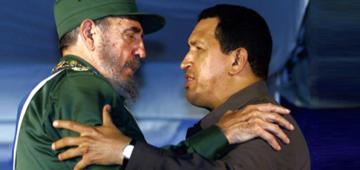
 Symone Sanders interview with Hasan Piker exposed her as a bad-faith interlocutor who uses identity as a cudgel while remaining silent on the poverty, pollution, and police violence that plague the…
 The U.S. extradition request for Fergie Chambers is an attempt to use Spanish courts to extend a domestic repression campaign against political opposition.
 Red Scares are a recurring feature of the U.S. political tradition aimed at criminalizing anticapitalist politics through accusations of foreign infiltration and conspiracy. The NSPM-7 and the report…
 For several years, three landlocked West African states have undergone political transformations designed to turn the page on French neo-colonialism.


