“Fidel Castro, the heir of José Martí is certainly throwing all colonial concepts and attitudes in history’s ash can.”
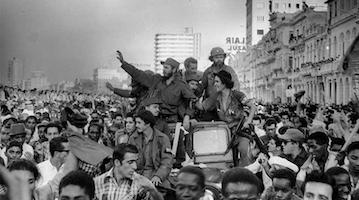
When Jesús Colón visited Cuba in 1961, he immediately encountered the spirit of José Martí. Colón, the Afro-Puerto Rican activist best known for his collection A Puerto Rican in New York and other sketches, went to Cuba soon after the Cuban Revolution. Traveling the towns and villages along the highway from Santiago de Cuba to Havana, Colón found that Martí was everywhere: on signs and posters, and in the speeches and pronouncements of workers and peasants.
In the essay “José Martí Today,” published in a special Cuba issue of the journal Mainstream, Colon found that Fidel Castro may have been the face of the Cuban Revolution, but Martí was its guiding spirit. This was particularly apparent in the Revolution’s adoption of Marti’s enduring belief in “los pobres de la tierra,” [“the wretched of the earth”] and in defending “Nuestra America” against US imperialism. Such beliefs were manifest in the Revolution’s early housing and literacy programs, aimed to uplift the Cuban masses, and in the commitment to an anti-imperialist defense of the sovereignty of the republics of the Americas.
For Colón the spirit of Martí, and the promise of the Cuban Revolution, served as a beacon to “the one half of the earth” living in poverty and under colonial rule.
We reprint Jesús Colón’s “José Martí Today” below.
José Martí Today
Jesús Colón
The family that recently moved from one of the worst slums of Santiago de Cuba, was obviously happy with their OWN new house given to them by the Cuban Revolutionary government. The house was brightly painted. The family showed us around the spacious rooms. They pointed to the shiny chrome gadgets in the shower bath. They were delighted with all the furniture that came with the house—all made in Cuba too.
As we went out the kitchen door and around the well-kept lawn to the front of the house, I noticed a little placard nailed to a stick sunk in the grass. The placard read: “NO PISAR EN EL CEPED.” (Do not walk on the grass.) And right underneath it said:
“ES LEY QUE DONDE FUE MAS CRUEL. LA TIRANÍA
SEA LUEGO MÁS AMADA Y EFICAZ LA LIBERTAD.”
- Jose Martí
(It is a law that where tyranny was most cruel let liberty be most loved and effective.)
As the bus kept eating up the miles of Cuban highways, we passed some workers brigades mending the roads. On their yellow painted wooden enclosure surrounding and protecting them from traffic, we could read the large words:
DANGER, MEN AT WORK.
Under the danger sign there were two lines from one of Martí’s famous poems:
“Con los pobres de la tierra
Quiero yo mi suerte echar.”
Martí
(With the poor of the earth I would like to cast my lot.)
In another enclosure, under the big words:
DANGER, MEN AT WORK.
They had written:
“Esta revolución es de los humildes, por los humildes y para los humildes.” - Fidel
(This revolution is of the poor, by the poor and for the poor.)
The bus stopped in one of the many towns along the road. We went into one of the small cafes looking for something cool to drink. It was not unusual to overhear a conversation, with some one slightly raising his voice for all to listen. He would start with: “As Martí says...” And as the quote came out of the speaker's mouth, giving authority to what he had to say, we could not but be deeply impressed with the man referring to the inspirer, organizer and leader of the 1895 revolution, as if José Martí who was tragically killed at Dos Rios on May 19, 1895, had never died.
I heard repeated many times: As Martí SAYS... As Martí SAYS... As if Martí were walking alongside of Fidel today. As if Martí were looking at the republic about which he wrote and thought and died for, and which, at long last, is coming into being.
As we saw many manifestations of Martí everywhere in Cuba we came to realize how deeply José Martí is rooted in the minds and hearts of the Cuban people today. How much he meant to them. How much they regard Castro and the present revolution as the continuation, under new times and circumstances, of Martí and the inconclusive revolution of 1895.
Many Cubans who fought at the end of the 19th century believed the defeat of Spanish imperialism would end the struggle against all imperialism.
Martí was not of this belief.
As early as the Monetary Conference held in Washington in March, 1891, in which he participated, Martí sensed the increasing power of the trusts in the emerging American imperialism and their avaricious designs against Cuba and the rest of Latin America. Martí thought that the first step of the nascent imperialism in the United States would be to grab Cuba and the rest of the island nations of the Caribbean, then use them as a bridgehead by which to get hold of the rest of the Americas.
Thus, in writing to his friend Manuel Mercado, one day before he was killed, he wrote:
“_.. my duty—since I understand it and have the courage to fulfill it— is to make Cuba independent, thus preventing the United States from expanding into the Antilles and the rest of the lands of our America.”
As we read the history of Cuba from 1901 to January, 1959, and see how Washington and Wall Street dominated the economic, political and cultural life of the Cuban nation; and as the mercenaries, trained and equipped in Florida and Louisiana camps, are sent to invade Cuba, we can see how true and farseeing were Martí’s words on the subject of present-day American imperialism.
We continued travelling throughout Cuba, passing by many large and small schools. City schools with many rooms. Along the roads and beside the highways, many rural schools. All of them without exception, with a statue or bust of Martí to greet you at the entrance. And with a proper inscription from Martí’s many poems and prose writings like the following:
“Al venir a la tierra todo hombre tiene el derecho a que se le eduque; en pago él debe de contribuir a la educación de los demás.”
- Martí
(Each man has the right to be educated when he comes to this earth; in payment for which, he ought to contribute to the education of the rest.)
This quotation by Martí reminded us that 1961 is the “year of education” in Cuba — the year in which the Cuban revolutionary government has pledged to eradicate illiteracy throughout the nation.
The Revolutionary Government is bringing to the masses literature and culture which, under previous governments of the few, by the few and for the few were reserved only for the privileged and the aristocracy.
Following Martí’s saying, everybody is helping — from the grammar school boys and girls to the militia and the professionals — to teach every Cuban citizen to read and write by the end of 1961.
Before the Castro revolution in Cuba, the vital revolutionary meaning of José Martí was buried under pompous oratorical verbiage to cover up his real anti-imperialist and revolutionary meaning. Though there were isolated efforts to study and interpret Martí, there was not a government whose leaders recognized their debt to him—that tried in every one of its acts to implement Martí’s principles by law and action.
In 1895 José Martí had to appeal to “los pobres de la tierra”, the peasants, the workers, especially the cigarmakers, as his main base for his revolution. Carlos Baliño, the highest figure of Cuban Marxist socialism at that time, closely cooperated with Martí and together with him signed the principles and program of the Cuban Revolutionary Party when that political and organizational instrument for Cuban independence was launched at Key West, Florida, in 1892.
As Martí worked hand in hand with the socialist Carlos Baliño and all others working for the benefit of Cuba and its independence, regardless of their ideological leanings, so also Fidel Castro and his revolutionary government are working with the Popular Socialist Party, which is the Communist Party of Cuba whose members have proven to the whole Cuban nation, their dedication and all-out support for the present revolution and its great leader, Dr. Fidel Castro.
Carlos Baliño, the Marxist, Martí’s friend and co-worker in the struggles of the 1890's, was also, with Julio Antonio Mella and others, the founder of the Communist Party of Cuba in 1925.
José Martí: Here is a man who has influenced the thinking of a continent, who is recognized by the leaders of the Castro revolutionary movement as their teacher and guide; a man who was instrumental in introducing Emerson and Whitman to the intellectuals and readers of Latin America and Spain; a man who lived in the United States for fourteen years—1881-1895—writing for the best papers and magazines of the time and agitating and organizing for the independence of Cuba; one of the great thinkers, poets and prose writers of the Spanish language; Martí, whose basic moral, political and social principles, brought up to date, form the basis of the historic Declaration of Havana; a man called the Apostle in all hispanic cultural circles and still ... there is not a decent study or biography in English or even a short biographical sketch under his own name in the Encyclopedia Britannica!
The high political circles in Washington have always secretly despised the Latin American countries. The bourgeois intellectual circles here have also secretly — many times openly and ignorantly — despised the great men and the cultures of the Latin American nations. A mantilla, a guitar, the rumba and a pair of maracas is, for them, the compendium of Latin American culture. There are many prominent exceptions, but the exceptions, no matter how prominent, do not cross out the rule. Economic and political colonialism is always followed by an assumption by the oppressing power, of cultural and intellectual colonialism.
January 28, 1953, the centenary of Martí’s birth, was observed with very small token celebrations that passed unnoticed in the Anglo-Saxon world. In contrast, however, The World Council For Peace honored Martí together with many other world figures who were also born in 1853. The climax of these centenary celebrations was the cultural homage to Martí at the Central House of Art Workers at Moscow. Many outstanding figures of science and the arts, including the Cuban Dr. Juan Marinello, participated (as did Blas Roca), with Ilya Ehrenburg presiding over the brilliant cultural evening.
Fidel Castro, the heir of José Martí is certainly throwing all colonial concepts and attitudes in history’s ash can.
Castro, with present day Cuba, will not only be Martí’s heir but will add new heights to Martí’s fondest dreams for Cuba. Because today “los pobres de la tierra”, with whom Martí would have liked to cast his lot, are the masters on one half of the earth. And they are backing Castro and Cuba to the hilt.
Jesús Colón, “José Martí Today,” Mainstream (Special Cuba Issue), May, 1961.
Fabián Jesús Colón López, born January 20, 1901, Cayey, Puerto Rico, died May 14, 1974, New York City.


 In this week’s segment, we discuss organizers in Washington, D.C. who developed a transit solidarity program to oppose transit fare crackdowns that criminalize poverty. But we begin with a discussion…
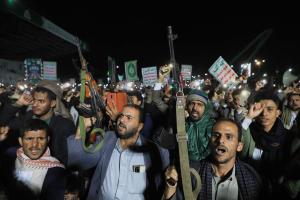 Dr. Shireen Al-Adeimi provides historical background and analysis of events in Yemen as Ansar Allah advances against Saudi-backed mercenaries.
 Pan-African Community Action (PACA) released a Transit Solidarity Plan for Washington, DC that challenges DC fare evasion crackdowns by collecting and redistributing fare cards to residents in the…
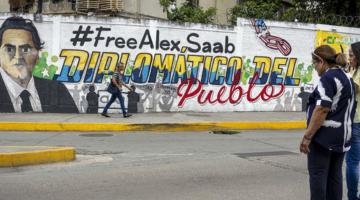 The United States got its hands on Alex Saab a second time in order to use him in its case against Nicolás Maduro. The U.S. succeeded in getting a guilty plea from Saab, but the current Venezuelan…
 “The Iraq invasion greatly accelerated the process of U.S. imperialism’s decline.”


