Red Horse (Minneconjou Lakota Sioux, 1822-1907), ‘Untitled from the Red Horse Pictographic Account of the Battle of the Little Bighorn,’ 1881.
What the Indian wars teach us about today's forever wars.
Originally published in Red Scare.
Since the 1776 Declaration of Independence, the United States has only formally declared war eleven times across five conflicts, and yet it has been at war in hundreds of conflicts throughout most of its existence. To answer why the United States is locked into a state of perpetual war, we have to look to the violent seizure Indigenous land. Tracing this history back to the nation’s founding, as illuminated by the new First America podcast series, reveals how Native resistance has radically shaped U.S. history, laying the groundwork for its most violent conflicts and unchecked militarism.
This century-long campaign of rapid territorial expansion known as the Indian Wars—the nation’s original “forever wars”—forged the bloody blueprint for the United States’s most notorious and unpopular conflicts in modern history from Vietnam to President Trump’s most recent war on Iran. While critics argue that only Congress holds the power to declare war, centuries of executive military actions suggest otherwise. These initial expansionist campaigns set a precedent where presidents initiate wars. As the nation approaches its 250th anniversary, it’s necessary to examine how the Indian Wars continue to shape U.S. imperialism today.
Especially now, with the Trump administration desperately trying to eke out a victory and exit plan in Iran, is it worth understanding how he possesses the power to make war in the first place. The history of the Indian Wars is riddled with equally arrogant and dangerous characters.
Exactly 150 years ago today, the U.S. military suffered one of its most staggering defeats, amid nearly a century of undeclared wars fought against Indigenous nations. On June 25, as the nation prepared for its centennial, the flamboyant cavalry commander George Armstrong Custer hoped to gift the republic an early birthday present: the final defeat of Native resistance. A decisive victory over the Lakota, Cheyenne, and Arapaho alliance on the Northern Plains was meant to lock down the remaining frontier and conclusively win the nation’s longest conflict. The relentless, often genocidal warfare enabled the United States to seize more than a billion acres of Indigenous territory during the westward surge.
Instead of achieving victory, however, Custer suffered a humiliating rout at the Battle of Greasy Grass. Knocked from his horse by a Cheyenne woman, he lost 268 of his men and his own life. Yet, despite this tactical disaster, the broader genocidal campaign eventually secured the plunder of the gold-rich Black Hills. This sacred landscape, revered by more than 50 Indigenous nations, legally belonged to the Lakotas, whose treaty with the United States guaranteed them a “permanent home”including the mountains they call He Sapa.
A century later, the U.S. Supreme Court ruled the taking of He Sapa was illegal and unconstitutional. While the theft was unlawful, the wars set in motion to plunder Indigenous lands were not. In fact, Congress never formally declared war against Lakotas or any Indigenous nation during the Indian Wars, relying entirely on presidential war powers to field armies on the frontier. In the case of war with Lakotas, President Ulysses Grant sent Custer to force Lakotas back on their reservations and to safeguard illegal gold mining in the Black Hills. Even without declarations of war, however, the Senate ratified hundreds of treaties recognizing Indigenous sovereignty, promising peace, and oftentimes securing land cessions after violent conflicts; and Congress appropriated funds to raise the armies to fight Indigenous nations.
While it is clear to see how the United States failed to live up to its treaty obligations to Indigenous nations, often violating its own constitution as in the blatant theft of the Black Hills, the legality of the Indian Wars almost never come under question. In fact, for proponents of executive war powers, the opposite is true: The Indian Wars were lawful and provided the framework for further executive-led military actions. This perceived lawfulness of the Indian Wars has paved the way for centuries of U.S. imperialist wars.
As recently as 2018, the Department of Justice’s Office of Legal Counsel—sometimes called the “Supreme Court of the executive branch”—argued that President Trump was authorized to bomb Syria “without prior congressional approval.” The opinion cited the fledgling country’s first war against Indigenous nations as a justification. Specifically, the Office weaponized George Washington’s 1790 offensive operations against the Northwest Indian Confederacy to establish the genesis of presidential war powers.
Ironically, that early Indigenous alliance—formed by Shawnee, Odawa, Haudenosaunee, Ojibwe, Miami, and Potawatomi forces—had organized in response the growing danger of U.S. encroachment further into the Ohio River Valley. While revered as a great general, George Washington’s war on the Confederacy led to a defeat worse than Custer’s. In 1791, Indigenous forces inflicted more than a thousand casualties at the Battle of Wabash, wiping out a quarter of the standing U.S. army in a single battle. It was the United States’s worst military defeat—ever.
The justification for the war was preemptive, Trump’s DOJ argued, and in “retaliation for Indian atrocities.” Like many of the founders, Washington saw Indigenous peoples as inherently savage and obstacles to western expansion. As part of a civilizing mission, the invasion of Indigenous lands was made to look like self-defense and resistance to it a criminal act. The reasoning recalls to the words of Thomas Jefferson in the Declaration of Independence, describing “the merciless Indian Savages, whose known rule of warfare, is an undistinguished destruction of all ages, sexes and conditions.” This initial framing designates Indigenous nations as traitorous and terroristic savages, their existence on the frontier posing an imminent threat and an obstacle to westward expansion. An enemy defined in such a manner required constant fighting to ensure the safety of invading settlers.
Although the context shifted over time, the framing of an “imminent threat” to justify unilateral action expanded to new theaters of war. Legal scholars like John C. Yoo have weaponized the Indian Wars to build a constitutional justification for expansive presidential war powers and the state’s use of torture during the U.S. War on Terror. Despite campaigning on ending those “forever wars,” Trump, like presidents Obama and Biden before him, has relied on the same post-9/11 legal frameworks to justify military actions without seeking congressional approval.
On the eve of its 250th birthday, the United States has not deviated from the path of endless war. Under the guise of neutralizing “imminent threats,” from Indigenous nations to modern challenges to U.S. hegemony, such as Iran, the U.S. executive has manufactured a legal loophole that has never been closed. Unless stopped, the current state of global U.S. military power will continue to fight the unacknowledged, unceasing, and undeclared Indian Wars.
Nick Estes is a Sicangu American community organizer, journalist, and historian at the University of Minnesota. He cofounded The Red Nation and Red Media.







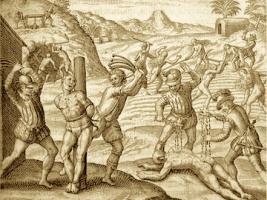



 Abayomi Azikiwe, editor of the Pan-African Newswire, discusses Israeli recognition of the Somaliland region, the US reduction of sanctions on Eritrea, a new anti-government alliance in Ethiopia, and…
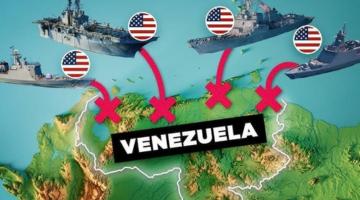 The trope of the United States being in a state of decline is a common one, but it should not be accepted without scrutiny. The U.S. faces crises but remains dangerous, powerful, and single-minded in…
 The "Antifa summit" and the NSPM-7 represent another institutional step toward consolidating fascism in the United States by criminalizing opposition to fascism itself.
 “...the science for revolutionary change…is forged by human persuasion and building social consciousness based on the class analysis which sees the struggle against racism as central.”
 Symone Sanders interview with Hasan Piker exposed her as a bad-faith interlocutor who uses identity as a cudgel while remaining silent on the poverty, pollution, and police violence that plague the…


