Jake Paul’s ascent in boxing is a cultural symptom of an empire in decline. It reflects a country that now prefers empty spectacle over real strength, both in sports and on the world stage.
Boxing’s Racial Phantoms
Boxing is a haunted sport. The ring is crowded not only with bodies, but with phantoms; ghosts of fallen fighters, racial myths that refuse to remain interred, and political fantasies that linger long after their material foundations have begun to decay. That the sport’s history is less a clean lineage than it is a séance of sorts ought not be surprising, given its Victorian roots: with each generation of fighters, figures of yore are resurrected through a kind of pugilistic spiritualism. This conjuring, however, is hardly confined to the ring itself. Boxing is also unique insofar as it often functions to localize geopolitical intrigue in the ring, summoning all manner political and ideological specters of racial antagonism, war, and empire embodied through the fighters themselves.
One early iteration of this phenomenon is the story of Ad Wolgast. Wolgast, an early twentieth-century lightweight champion, suffered two decisive blows in his career. The first came in the ring in 1912, when he lost his title to Willie Ritchie in a brutal sixteen-round bout. The second came later and less spectacularly, accumulating behind the fighter’s eyes. By 1918, Wolgast, the “Michigan Wildcat,” was confined to a California state sanitarium, where he would suffer hallucinations until the end of his life. In 1927, W.O. McGeehan, the sportswriter and editor of the New York Herald Tribune, recounted Wolgast’s most persistent delusion: the former champion believed he had one final prizefight left in him against Joe Gans, the first Black boxing champion of the twentieth century.
The difficulty with Wolgast’s delusion was that Gans had been dead for nearly two decades, having tragically succumbed to tuberculosis in 1910. Despite this setback, Wolgast trained anyway, shadowboxing with Gans’s phantom. McGeehan would later remark that the “manly art of modified murder” had clearly taken its toll on the embattled lightweight, conjuring up the spirit of Gans in the permanently punch-drunk mind of Wolgast.
However tragic, Wolgast’s affliction ought to be neither understood as merely neurological, nor as a unique story in the history of boxing. Wolgast’s tragic hubris reveals something structural about boxing itself: the sport has long been hospitable to phantoms of a very particular sort—figures of masculine longing, racial resentment, and political myth that often attach themselves to the bodies of boxers as though the latter were possessed. It is not an incidental feature of Wolgast’s story that his imagined opponent, Gans, was the first Black boxing champion of the twentieth century; a fighter whose dominance between 1902-1908 had already unsettled the racial order of Jim Crow United States.
The Great White Hope and the Politics of the Ring
When Jack Johnson, the “Galveston Giant,” defeated James J. Jeffries in 1910, the heavyweight championship bout was politically framed as far more than a title fight. Wolgast’s spectral longings to fight Gans must be contextualized against the backdrop of the hunt for a so-called “Great White Hope,” whom the Australian, Jeffries, was seen as embodying. Summoned from retirement, Jeffries was tasked with exorcizing the specter of Black dominance from the ring, attempting to restore racial hierarchy in the sport while putting to rest fears of white inferiority.
Jeffries’s loss to Johnson was therefore not merely a test of athletic prowess, but an ideological showdown, with political and social ramifications. That Johnson's victory culminated in race riots across the United States ought not to be that shocking to anyone with even a cursory understanding of the history of U.S. race relations. In many ways, the so-called “Johnson–Jeffries riots” of 1910 anticipated the events of Red Summer which were to unfold within the same decade. On the other end of the historical timeline, the riots which resulted in the lynchings of numerous African Americans as well as hundreds of injuries hearkened back to the centuries-long tradition of white terrorism leaving lynched, burned, maimed, and crucified victims in its violent and rapacious wake.
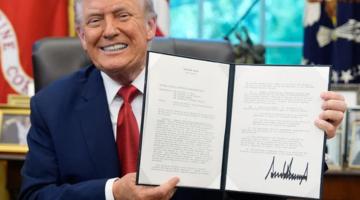
With Johnson’s victory over Jeffries, the myths providing ideological cover for white supremacy had been struck, laying bare the deep-seated political and ideological wounds of whiteness as the era of eugenics and racial apartheid in the United States marched ever-forward. So wounded was white supremacy in this era that numerous states and municipalities across the United States even banned the film of the fight from public screenings—bans which often remained intact until the 1940s. Jack Johnson himself, forced into exile in Mexico fleeing trumped-up charges through the Mann Act (themselves a product of anxious whiteness) was not pardoned until 2018 by none other than Donald Trump. Trump is no stranger to boxing, and combat sports more generally; his name has long been associated with highly publicized fights in the 1980s and 1990s—not to mention his friendship with Dana White, the corpulent promoter of the brutal Ultimate Fighting Championship (UFC). It is not insignificant that Trump has already planned for a UFC fight to take place on the lawn of the White House in July 2026—an idea that in many ways rivals the absurdity of many scenes from Mike Judge’s film Idiocracy in which the future president of the United States, Dwayne Elizondo Mountain Dew Camacho (played by Terry Crews) is himself a former wrestler; a political satire that in many ways stitches together the way combat sports, popular entertainment, and spectacle have been and continue to be intrinsic features to U.S. political economy.
Boxing as Imperial Theater
It is worth observing how some of the sport’s most iconic moments have tended to coincide with moments of geopolitical crisis from which various racial specters and phantoms have often been conjured and enlisted in myriad political and ideological arenas. While Jack Johnson’s reign unfolded at the height of U.S. apartheid, the “Brown Bomber” Joe Louis’s fists were enlisted symbolically against fascism in the late 1930s—his defeat of Max Schmeling in a rematch bout in 1938 was set against the backdrop of the rise of the Third Reich. Not long after, Muhammad Ali’s career became inseparable from the context of Vietnam and the Black Power movement; Ali’s activism a memorable feature of the unraveling of postwar consensus in the 1970s. We might even consider the Rocky film franchise, notably the hamfisted Cold War-style standoff in Rocky IV in which the titular character squares off against Ivan Drago, the Hollywood film’s caricature of a Soviet automaton. Again and again, boxing has served as a cultural stage on which geopolitical anxieties are often rendered legible for mass audiences.
Though its contours are perhaps less monumental in stature than the spectacles of the 20th century, our present moment is no exception. With imperialism in crisis, the U.S. military announces itself loudly but uncertainly in various theaters of combat across the globe, often substituting strategy for spectacle. While the Trump regime seems increasingly to be in pursuit of evermore elastic justifications for committing war crimes across the Caribbean Basin and Latin America particularly, it is telling that they find recourse to well-trodden rhetorics of yore: through a familiar admixture of anti-immigrant xenophobia, anti-Communism, and with the cinders of the War on Drugs still smoldering in the minds of U.S. military-industrial complex on both sides of the aisle, U.S. imperialism lashes out like a punch drunk fighter, emboldened against a phantom enemy yet unaware of its own concussed and contused state.
The current hysteria with regard to the alleged drug trafficking in and out of Venezuela, for instance, functions to construct such a phantom enemy abroad. Much like U.S.’s War on Terror, endlessly invoked in order to justify military aggressions and the specter of war without terminus, the U.S.’s obsession with targets as various as Venezuela, Nigeria, Iran, and others are just the latest iteration of this country’s “forever wars,” which, as Nick Estes recently argued, are themselves a callback to the “Indian Wars” waged, and still being waged, against indigenes, “provid[ing] a useful framework for understanding US–Zionist imperial strategies in today’s genocidal and expansionist wars against Palestine, Lebanon, Yemen, Syria, Iraq, and Iran” and elsewhere. Estes is spot on: these latter day imperial aggressions, perpetrated by what on the surface might appear as an erratic and chaotic Trump administration and the newly minted “Department of War” under Pete Hegseth, are far from unprecedented; as with the racial pogroms of the 20th century harkening back to previous centuries, the settler colonial project of U.S. empire persists in the present in an unbroken lineage.
Trump’s recent reclassification of fentanyl as a “weapon of mass destruction,” for instance, demonstrates a rather overt recourse to the well-worn trope from Bush II’s regime before the invasion of Iraq, while in a recent interview, Benjamin Netanyahu outrageously asserted that Iran was “in cahoots” with Maduro in Venezuela, suggesting that Maduro was “exporting terrorism to America, to the American hemisphere,” and facilitating “Hezbollah and Hamas to get their guys into the United States, so Hamas and Iran and its proxies” posing a threat “to Israel, all America’s allies in the Middle East, and to America itself.” Such rhetorical strategies as these, re-cycled, rehearsed, and reintroduced over and again the U.S. empire as though the latter resembled an aging fighter: still dangerous, still swinging, but no longer sure what victory would even look like—perpectually recalibrating the ideological project with evermore enemy specters in order to justify its imperial longings.
Like Wolgast’s delusions of Gans, U.S. imperialism is shadowboxing with imagined opponents. However pathetic its current state, unlike Wolgast, a punch drunk U.S. empire doesn't only pose a threat to itself.
Jake Paul, the Great White Hype
It is within this atmosphere of imperial fatigue that Jake Paul has arrived on the boxing scene. Paul, a Disney star turned YouTube influencer who has recently taken to the sweet science, was able to leap-frog the amateur division, amassing a scandal-ridden win-loss record in the process. As an artifact of spectacle and byproduct of U.S. whiteness, Paul is a figure whose delusions of grandeur, perhaps unlike Wolgast’s, are produced culturally and politically rather than neurologically; his record itself will likely feature numerous asterisks qualifying his handful of victories against fellow influencers, retired and aging MMA fighters, and other athletes long-removed from their prime. It is telling that in 2023 Paul was defeated by Tommy Fury (the brother of former heavyweight champion Tyson Fury) in a bout that would mark his first against an actual professional boxer.
Whereas Wolgast’s hallucinations may have been born of accumulated trauma, Paul’s seem to have been manufactured by internet platforms and bolstered, needless to say, by the political economy of combat sports more generally, as well as by a culture that often mistakes visibility for legitimacy. And yet the narrative persists: Paul as disruptor, Paul as savior, Paul as the man who will “save boxing” and restore the sport to its former glory—a narrative that immediately invites a parallel with the rhetoric of the MAGA movement, Paul, a sort of Trump-like figure for the sport, an “outsider” who will shake up the world of boxing while sporting a “Make Boxing Great Again” hat. The collapse of legacy sports broadcasters like HBO and Showtime, the rise of streaming platforms, and the fragmentation of audiences thereafter have left a vacuum into which the Paul spectacle has rushed in to seize upon the combat sports cash cow. This narrative survives because boxing, even if hollowed out by structural shifts, is itself vulnerable to such phantoms even under “normal” conditions.
Paul’s self-fashioning as “El Gallo,” while fighting under the Puerto Rican flag, offers a telling case study through which we can understand this cultural formation inhering around the political economy of U.S. imperialism in the Caribbean Basin. Post-hurricane Maria Puerto Rico has become a renewed post-colonial laboratory for financial extraction: tax shelters, offshore capital, and identity arbitrage flourishing amid prolonged crisis. Paul’s performance of Puerto Rican identity fashioned out of a familiar admixture of financial convenience and whiteness—a phantom nationality serving the ends of financial interest in an era of continuing imperial plunder in the region. In many ways, Paul’s identity arbitrage as a Puerto Rican boxer is reminiscent of the phenomena of U.S. settlers claiming Native American identity, a practice so pervasive that one could throw a rock at the U.S. pop culture industry and strike someone who claims Cherokee lineage, for instance; Dog the Bounty Hunter, Buffy Sainte-Marie, Cher, Johnny Depp and others too numerous to mention.
Paul’s rise in the world of boxing culminated in a sanctioned bout with the former undisputed heavyweight champion, Mike Tyson in 2024. Tyson, then approaching sixty years of age, represented not just a fighter but an era—the fight, thus, less a contest than a resurrection of sorts; a form of necromancy, reviving the spectacle of the legendary career of the “Baddest Man on the Planet” from the past to animate Paul’s influence in the present, with the added bonus of lining the latter’s pockets in the process. While many have alleged that fixed in order to secure a victory for Paul, it makes little difference whether it was or not: the spectacle of a young outsider from the U.S. settler class facing off against one of the most recognizable faces in the sport of boxing—nay, in sports history as such—was clearly meant to enhance Paul’s credibility among popular audiences.
Although the world of boxing has always tolerated comebacks (Bernard Hopkins fought when he was 51, Larry Holmes at 54, and even Jack Johnson himself fought until he was 60 years of age), what distinguishes this moment is the way the Paul v. Tyson bout was promoted. The bout existed primarily as content featuring staged vignettes episodically stitched together through Paul’s bizarre presentation of himself as though he were Tyson. Through montage and mimicry, Paul was often digitally inserted into some of the most iconic moments of Tyson’s career. For instance, Paul would adopt a lisp and mimic Tyson’s distinct affectation while parroting memorable quotes such as the one he delivered after his TKO victory over Lou Savarese in 2000: “My style is impetuous, my defense is impregnable, and I'm just ferocious.” Paul also mimicked the infamous ear-biting incident from Tyson’s 1997 bout with Evander Holyfield and even went so far as to reproduce Tyson’s tattoo depictions of Mao Tse-Tung and Che Guevara on his own body.
While it might be easy to chalk these performances up to simple spectacle, doing so risks missing the plot of this bizarre spectacle itself. As though attempting to edit himself into a history that he took no part in—as though simulating going “viral” in the sport before he ever even put on boxing gloves—indeed, before he was ever even in diapers—it is an understatement to suggest that Paul might have been compensating given his very recent and abrupt turn to the sport by plotting himself into the biography of Tyson, arguably the sport’s most famous and therefore well-known personality. Not only this, but Paul’s insertion into these scenes from Tyson’s life ought to be considered as a cultural iteration of whiteness reasserting its claim to history, as though the hype machine were manicuring Paul as a sort of “Great White Hope” for the sport of boxing in an era when the “Great Replacement Theory” has become the rallying cry of white supremacists across the United States. In short, Paul’s performance was not simple clout-chasing, but has wider implications for the way whiteness relates to the political economy of the sport through popular culture depictions; Paul resurrecting the ghosts of Mike Tyson’s past in a parade of post-modern retromania. It is not a stretch to suggest this entire performance as itself a callback to the Jack Johnson era digested and masticated through the filter of internet culture; whereas the feverish search for a Great White Hope in the early 20th century sought to provide succor to a wounded white supremacy, our present era might well be understood as the era of “The Great White Hype,” with Paul as the figure conjured up to fulfill a similar prophecy for a new era of U.S. white supremacy.
Thus Paul, in a roundabout way, may actually be right at home in the sport of boxing in the U.S. context specifically; despite his lack of training and pedigree, Paul’s abrupt, though scandal-ridden ascendency offers a watered down underdog story for the sport—a rehashing of the common character trope often found in sports dramas in the United States: unlike John Garfield’s character in Body and Soul during the Red Scare in the mid-twentieth century, or Sylvester Stallone’s Rocky from the eponymously titled Cold War franchise of the same name, Paul’s arc from nobody to world champion comes devoid of the rags-to-riches narrative, featuring instead a suburbs-to-success story unique to the current iteration of U.S. whiteness. Whereas Body and Soul set a sort of cinematic precedent for filmmakers like Martin Scorsese, whose Raging Bull is a prime example, and Rocky has become monumentalized as a Bronze statue adorning the famous steps of the Philadelphia Museum of Art, it remains unclear whether Paul’s legacy will be remembered more as a footnote to boxing history, or as an asterisk—much like the asterisks which are likely to adorn his win-loss record in the future. What ought to be clear, however, is that Paul, at least at present, represents a figure toward whom reactionary audiences might turn not simply to “resurrect” the sport of boxing as though he were the latter’s saviour, but much more consequentially as a mouthpiece for the Trump regime; flexing his influence to publicly endorse Donald Trump for President in 2024, comparing him to the U.S. “Founding Fathers”—a rare moment of lucidity for the otherwise vapid YouTuber.
With Paul and his political and financial associations, the specter of whiteness has manifested in the ring in more ways than one. (Paul’s brother, Logan Paul, himself a scandal-ridden YouTuber, has also participated in a spectacle bout in the ring, facing off in an exhibition against the retired, undefeated welterweight Floyd Mayweather in 2021. Logan Paul has also faced accusations of spearheading an alleged financial scam known as CryptoZoo—further evidence of the imbrication of speculative capital, social media, and right wing finance.)
Shadowboxing with Ghosts
Boxing has long functioned as a cultural tuning fork, vibrating in response to political and social pressures that originate elsewhere outside of the “Squared Circle.” Paul’s appeal also overlaps with a broader cultural realignment; the rise of the so-called “manosphere,” the monetization of grievance, and the drift of celebrity toward reactionary politics all reflect a moment in which masculinity becomes politically and economically compensatory. It may be a portent of things to come that both Paul and Andrew Tate, the Romanian influencer accused of human trafficking and rape—and who also has ties to Trump’s son, Barron—were both felled by their opponents in back-to-back bouts Christmas weekend 2025.
It is within this context that certain other contemporary confluences between the sport and geopolitics ought to be considered ideologically-charged. For instance, when Paul crossed paths with the two-time heavyweight champion Anthony Joshua, it is interesting to observe that this occurrence took place against renewed attention on Nigeria within U.S. imperialist discourse. Joshua, who is British with Nigerian roots, and who recently survived a near-fatal car accident in Nigeria while visiting his extended family, delivered a punishing right cross to Paul’s jaw, ending the fight as most sane spectators could have predicted—with a wobbly-legged Paul rocked, groggy, and leaking blood onto the canvas. It is interesting to note that within this context, the rapper Nicki Minaj, another pop cultural figure, may have delivered a blow to her own career after publicly echoing the Trump’s false claims about Christian genocide in Nigeria in an address at the UN. Shortly thereafter, Minaj would appear on stage at the 2025 AmFest in conversation with Erika Kirk, the recently widowed spouse of the late Charlie Kirk, and would go on to make bizarre entreaties to the Trump administration; describing Trump as “our handsome, dashing president” before referring to Vice President J.D. Vance as the “the assassin.” While a slip of the tongue cannot be ruled out, Minaj would have avoided this peccadillo altogether had she not cozied up with the Trump regime in the first instance: Perhaps, thus, it would be advisable for Minaj to, at least for the time being, return to her practice of “lip-syncing” in order to avoid potential gaffes in the future. But such are the perils of snuggling up to a political corpse known as MAGA.
In any case, the current popular cultural alignment with the Trump regime was clearly an attempt to lubricate public sentiment leading to the latter’s Christmas day missile assault on Northern Nigeria; the Trump regime’s deployment of familiar forms of U.S. soft-power, such as those employed through the deployment of so-called “Jazz Ambassadors” to the Congo in the lead-up to the assassination of Patrice Lumumba in January 1961. Although we must also understand this current formation as just one element among a broader arsenal of strategies with which to turn attention away from the U.S.’s support of Israel’s continuing genocidal onslaught in Gaza, as well as distract attention from what may well prove to be the beleaguered president’s Achilles heel—his connections with Jeffrey Epstein surfacing and being scrutinized evermore—suffice it to say that culture remains a preferred medium for garnering this kind of ideological support, even if it is no longer received approvingly en masse.
Although the lede from the Joshua–Paul fight was certainly the aftermath of the sixth round, which left Paul on the mat alongside a few of his teeth, the opening of the bout offers its own revealing insight. The self-styled “El Gallo” opted not to perform his signature feigned gestures of “Puerto Rican pride” during his ring entrance. Instead, he conjured the ghostly—and, for some, ghastly—image of the recently deceased professional wrestler and Trump ally, Hulk Hogan (née Terry Bollea), another scandal-ridden exemplar of the noxious combination of toxic and abusive masculinity, anti-union tactics, and anti-Black racism that remains a mainstay of U.S. society. Donning “Hulkamania” red-and-yellow leather, Paul’s costume did more than resurrect the specter of the departed wrestler or evoke 1980s–90s machismo. The heavy alligator-leather outfit may have added more than a gaudy flourish to his already ostentatious persona; it perhaps even contributed to his premature exhaustion as he pranced around the ring before his ignominious defeat—further evidence that, despite his peacocking, Paul remains, at best, a fledgling fighter.
Other of Paul’s sartorial choices as well offered a uniquely poetic interpretation of his performance that evening. His choice to don red trunks overlaid with stitched yellow flames were, in retrospect, a fitting foreshadow to his demise at the receiving end of Joshua’s expert hands that evening, and will perhaps be remembered as a kind of objective correlative or grotesque synecdoche standing in for the battered and bloody fighter whose career also seemed to go up in flames before the eyes of 33 million Netflix viewers globally. This interpretation is far from hyperbolic: indeed, suffering a potentially career-ending broken jaw which required screws and titanium plates, Paul is lucky he did not end up giving up the ghost entirely as the result of this egregiously mismatched bout against the recent heavyweight champion.
While Ad Wolgast trained for a fight that could never happen, Jake Paul trains for fights he believes he deserves but has not earned. The first verges on the tragic while the latter is firmly farcical. Yet both are figures haunted by the same twin afflictions—hubris and hyperbole—a veritable one-two punch consistent with U.S. whiteness historically. While the sport of boxing will likely survive Jake Paul, as it has survived numerous apparitions before him, Paul’s career may very well be on the mat for good, having been dropped from the World Boxing Federation’s cruiserweight rankings after his defeat to Joshua. Not to be outdone by his younger brother, it should also be mentioned that Logan Paul was himself severely injured in his own display of hubris during a televised wrestling match in 2022 wherein he suffered a torn MCL, meniscus, and potentially his ACL as well—further evidence that dilettantish adherence to celebrity comes before athletic prowess like the proverbial cart before the horse of U.S. whiteness. Although the skillset required for YouTube and Disney are not mutually exclusive, it is nonetheless a far cry from the years of serious and dedicated athleticism and assiduous conditioning required to excel at the sweet science and even wrestling for that matter. While showmanship is also an attribute often required for the latter, lest one intends to prematurely become the other’s pallbearer, the Paul brothers would be wise to consider more forgiving outlets for their ostentatious proclivities.
Whether symptomatic of the hubris of whiteness, indicative of popular culture’s state of perpetual adolescence, demonstrative of a broader the crisis of masculinity, or some combination thereof, the spectacle of Paul’s defeat offers an opportunity to ruminate on the cultural, social, and political forces animating the present—forces that cannot be understood in isolation from our current geopolitical conjuncture. Although certain deeper, psychological questions concerning the allure of, and seemingly perennial obsession with, combat sports in U.S. society may remain unanswered for now, the question as to why the culture surrounding boxing remains so invested, inured even, to resurrecting all manner of racial and imperial ghosts of U.S. history’s past nevertheless contributes an important piece to the puzzle. When the certainty and legitimacy of U.S. power are called into question, and when anxieties surrounding a threatened white supremacist and settler-colonial project reach a critical intensity, reactionary forces increasingly sense a weakening hegemony slipping through their fingertips. In response, the culture of boxing invites reactionary forces to slip on a pair of gloves in an effort to avoid slipping on a banana peel. However, when the cultural phenomena encrusted around figures like the Paul Brothers, Wolgast, and others figures beside, are attended to closely, it ought to be clear by now that “the tale of the tape” is to be read as a cautionary one. Seen in this light, the Trump regime’s delusions of grandeur should be read through Paul’s own: the latter as a cultural turning point in boxing, marked by excess and spectacle and whiteness runamuck, and the former as a geopolitical turning point emblematic of late-stage imperial decadence marked by U.S. empire seemingly locked in a state of terminal decline. From its military machinations in the Caribbean Basin to the invasion and abduction of Venezuelan president Nicolás Maduro; from the bombing of Nigeria to the pursuit and seizure of oil vessels—at least one Russian flagged—in the Atlantic and Pacific; from renewed calls for the annexation of Greenland and Canada to the deployment of federal stormtroopers in Minnesota, California, Chicago, D.C., and elsewhere; from plans for a so-called “Riviera of the Middle East” in Gaza to much more besides—the Trump regime’s extraterritorial escapades exhibit the classic indicators of imperial overstretch, exposing it, like Paul, to a veritable flurry of devastating blows.
As Mike Tyson once memorably remarked, “everyone has a plan until they get punched in the mouth.” Whether Jake Paul will internalize this lesson and finally hang up his gloves remains an open question. The more urgent question, however, is whether U.S. imperialism will heed a similar lesson, and abandon its delusional shadowboxing with the panoply of self-fabricated geopolitical phantoms as it confronts its own ignominious retreat as global hegemon—with China in the passing lane—or whether it will continue, like Paul and Wolgast before him, to swing wildly and desperately at specters imagined and long-departed.
Although not gamblers, our bet is on the latter.
Gerald Horne is John Jay and Rebecca Moors Chair of History and African American Studies at the University of Houston. He is the author of 50 books, including The BitterSweet Science: Racism, Racketeering, and the Political Economy of Boxing. His latest book, The Counter-Revolution Of 1893: The Hawaii Coup and the Roots of U.S. Imperialism in the Asia-Pacific Basin is available for pre-order from International Publishers and is due out early 2026.
Anthony Ballas is an organizer with NFEE local 4935. He is also a PhD student in Literature at Duke University. His work appears in Monthly Review, Protean Magazine, Caribbean Quarterly, 3:AM Magazine, Truthout, Middle West Review, CounterPunch, Scalawag Magazine, Peace, Land and Bread Magazine, and elsewhere. He also the host of the De Facto Podcast and co-host of Cold War Cinema.






 The Bush administration had long planned a global war for U.S. hegemony, and the attacks of September 11 provided the perfect pretext to put those plans into motion.
 Oklahoma prison inmates were making political calls for a conservative Super PAC during the primary.
 Longtime attorney Flint Taylor’s new book tells the story of the People’s Law Collective, which grew out of the radical movements of the late 1960s.
 The Trump administration has already cut off Cuba’s access to oil. Now it’s attempting to starve the Cuban people, targeting the country’s capacity to grow, process, and import food — unless it buys…
 Fergie Chambers is an American philanthropist who was arrested on July 10 in Ibiza, Spain, by order of the Trump Administration.


