
Related Stories

"What would Glen Ford say?" That question is one which we often ask ourselves two years after his passing. Glen was extremely prescient,
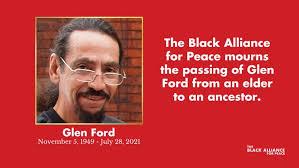
I was very proud to write the preface to Glen Ford's book, The Black

The compilation of Glen Ford's work, "The Black Agenda" was publ

Glen Ford reminded us that Black liberation cannot be found over a cheese plate and mimosas in a $6 million southern California mansion.

Glen Ford's legacy is recognized all over the nation. Japanese- American newspaper Rafu Shimpo printed this tribute to his work.

Ford was among the few journalists who took a stance for Black liberation and against imperialism.
Glen Ford followed in the footsteps of another legendary Black journalist.

Black radical analysis was the foundation of Glen Ford's work.
More Stories
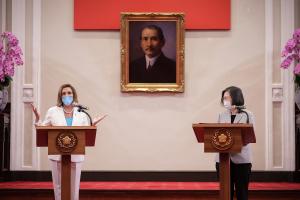
 National and international crises exemplified in Nancy Pelosi's visit to Taiwan. The struggle to secure reparations for African people continues.
 Dr. Anthony Monteiro is a Duboisian scholar and founder of the Saturday Free School for Philosophy and Black Liberation. He joins us from Philadelphia to analyze the crises in U.S. domestic and…
 Kamm Howard is Executive Director of Reparations United. He recently attended the reparations and racial healing summit in Accra, Ghana. He joins us from Chicago to discuss the campaign to secure…
 White supremacist arrogance was the order of the day when Nancy Pelosi ignored a red line set by the Chinese government and visited Taiwan.
 Assata Shakur exposes the conditions faced by incarcerated Black women in a powerful 1978 essay.



