
Related Stories

Reaching a 20th anniversary for Black Agenda Report is indeed a milestone.

"What would Glen Ford say?" That question is one which we often ask ourselves two years after his passing. Glen was extremely prescient,
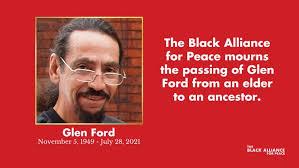
I was very proud to write the preface to Glen Ford's book, The Black

The compilation of Glen Ford's work, "The Black Agenda" was publ

Glen Ford reminded us that Black liberation cannot be found over a cheese plate and mimosas in a $6 million southern California mansion.

Glen Ford's legacy is recognized all over the nation. Japanese- American newspaper Rafu Shimpo printed this tribute to his work.

Ford was among the few journalists who took a stance for Black liberation and against imperialism.

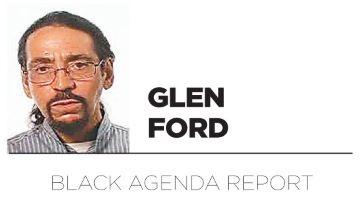
Glen Ford followed in the footsteps of another legendary Black journalist.

Black radical analysis was the foundation of Glen Ford's work.
More Stories
 Not one Democrat on the stage in Houston objected to Washington’s economic warfare and constant subversion and military threats against Venezuela.
 Police Killings of Blacks Explode in Bolsonaro’s Brazil
 For students of color in the US, schooling has long been a “carceral condition,” said Connie Wun, a researcher and advocate for women and girls, who wrote an influential artic
 Dr Leslie Hinkson, author of “Subprime Health: Debt and Race in US Medicine,” said Black people “get bad care, and that not only leads to further undermining of their health,
 In just three months, police in Rio de Janeiro killed 434 people, most of them young Black men. Joao Costa Vargas, professor of anthropology at the University of California at



