
Related Stories

"What would Glen Ford say?" That question is one which we often ask ourselves two years after his passing. Glen was extremely prescient,
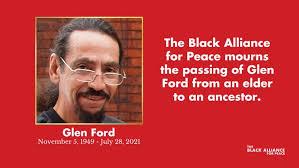
I was very proud to write the preface to Glen Ford's book, The Black

The compilation of Glen Ford's work, "The Black Agenda" was publ

Glen Ford reminded us that Black liberation cannot be found over a cheese plate and mimosas in a $6 million southern California mansion.

Glen Ford's legacy is recognized all over the nation. Japanese- American newspaper Rafu Shimpo printed this tribute to his work.

Ford was among the few journalists who took a stance for Black liberation and against imperialism.


Glen Ford followed in the footsteps of another legendary Black journalist.

Black radical analysis was the foundation of Glen Ford's work.
More Stories
 The “Carceral State” is the Enemy
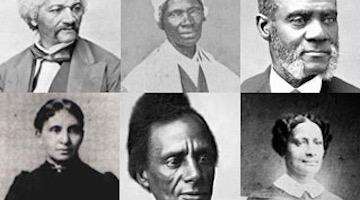 “It was fugitive slaves, who were violent in defending themselves against slave-catchers, who pushed abolitionists towards militant and sometimes violent tactics,” said Duke University historian Je
 “Until our Black and brown communities get control of the police, they are going to continue to murder us with impunity,” said Frank Chapman, chair of the National Alliance Ag
 Atlanta Mayor Keisha Lance Bottoms showed her true colors when she berated protesters, said Trinity College sociologist Dr Johnny Williams.
 The current wave of protest is correctly “targeting the commodification of Blackness by the state,” said Dr Brittany Friedman, a Rutgers University sociology professor at the



