“Reflections on Parenting and Revolutionary Struggle” is a space for parent-organizers to share their experiences and struggles with parenting. How do we parent in a way that reflects our revolutionary ideals? How can we impart the commitment to liberation struggles to our kids and give them (and ourselves) the tools to cope with the capitalist, anti-Black, and imperialist society in which we live? The feature will also include interviews with people who do not have biological or formally adopted children of their own but who serve as some of the primary care-takers, mentors, and spiritual guides for kids in their communities.
Roberto Sirvent: What does it mean to be a parent engaged in revolutionary struggle? How did becoming a parent change your political perspective? What are some of the challenges you’ve faced along the way?
Steven Salaita: I’m grateful that the challenges haven’t gone beyond the typical parenting headaches. My child, now 12, is healthy and curious, so beyond the occasional illness or behavioral issue, I’ve had a relatively normal time of things. I find that the biggest challenge of parenting has less to do with the child than with myself. Knowing that children absorb and mimic the adults in their lives, I try to model good behavior (he knows damn well when I’m faking it): not losing my temper; treating those around me with respect; doing my share of the household work; stuff like that.
In terms of my political perspective, I had always heard that having children tempers a person’s radicalism, but the opposite was true for me. It made me even more determined to undo capitalism. Becoming a parent made the need for change feel more urgent than ever.
Parenting with a liberatory and revolutionary mindset means a lot of things: personal freedom; economic freedom; political freedom. What immediately comes to mind for me is liberation from the toxic cycles of intergenerational family drama. Then as my mind settles into the term I think about liberation as a political principle. I’d rather my child empathize with those who struggle rather than those who oppress.
What have you learned from your kids (or kids in general) about liberation? Is there a story about your kids you want to share?
Children have a ton to teach us about liberation. Until it gets socialized out of them by social, religious, and educational institutions, children have an acute sense of what is fair or unfair and if you take it seriously then it’s easy to see that they’re comfortable thinking about notions of justice. When my son was four or five, he kept going on about how money is stupid and should be outlawed. This wasn’t some flight of fancy. He had an entire elaborate theory for his view, one that sounded classically Marxist without any of the jargon. I love being in the presence of children precisely because I learn so much from them.
How do you navigate the various tensions and learning obstacles that arise when your child’s school is primarily committed to teaching compliance, conformity, and subservience to the state?
This one is extremely tough. I want my child to learn how authority behaves, but at the same time, I want to protect him from any sort of abuse. In general, I believe it’s crucial to transmit ethics and values inside the home. As parents, we focus on the aspects of child-rearing that we can control. All private conversations with children should in some way be a counterpoint to narratives that arise from outside the home. Another simple thing to do is affirm ethical behavior even (or especially) when it runs afoul of power.
What does a revolutionary political education look like for – and with – children?
I see it as deeply personal. At the same time, it necessarily has a social component. It’s been difficult for me to strike a decent balance. I don’t know that it’s a particularly good approach, but I try to focus on values rather than issues. For example, I never inculcated my son into anti-Zionist politics. Some people may find that surprising, but I didn’t want to impose on him a commitment that might not suit his disposition. I treated him as a child filled with wonder, a fully intellectual being who can explore the world at his own pace and discretion. But I did—and do—focus on values: be kind to everyone; stick up for those who are bullied; don’t be afraid to speak in favor of what is just. The idea is that good values can lead him into a set of material commitments when he’s ready for them. He won’t just be repeating what amount to bromides. He’ll feel the issues, instead. In this case, it worked. My son is deeply interested in Palestine and adamantly anti-Zionist. Perhaps it’s because he lives in Egypt, but I think it also has something to do with me and his mother teaching him to identify with the dispossessed as a general principle.
In what ways can parenting be “liberated” from the nuclear family model and instead be centered on more creative communities of care?
To be honest, I’ve learned much more about it from my son than the other way around. (What a beautiful thing it is to learn from children!) You know, I always try to align myself with the less powerful party to any given conflict. It’s been a good guide for me when I’m ignorant of a particular issue. I can put myself in a decent position while I learn about the specificities. I say this as a lead-in to what I hope is a better response to your question. I used to know very little about gender politics, queer politics, trans politics, and so forth. When my son was very young, he was completely fluid with terms such as “nonbinary” and had no problem thinking of same-sex parents as completely normal. Don’t ask me how he knew, but he knew. It was from him that I figured out how important it is to think beyond the strictures I was trained to perceive as timeless or natural. Parents and children have to teach each other to push against the boundaries of what is transmitted to us as normalcy.
What are some support structures you have used in parenting? What are some resources (books, movies, etc.) you would recommend for parents committed to liberation?
I didn’t use any books or guides or anything like that. When my wife was pregnant, I was chatting with a dear friend, the poet Matthew Shenoda. He told me, “You don’t need any of that stuff, man. All you need is a lot of love and some Third World common sense.” He was right. Somehow, I knew what to do when the idea of a child turned into flesh and blood.
Steven Salaita is Professor of English and Comparative Literature at the American University in Cairo.
Roberto Sirvent is Editor of the Black Agenda Report Book Forum.


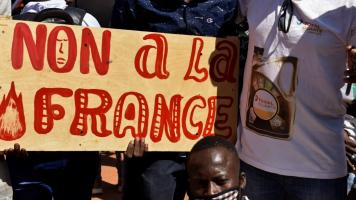 Economic Community of West African States (ECOWAS) has threatened military intervention if deposed President Mohamed Bazoum is not restored in a week. Bazoum was overthrown in a coup by officers…
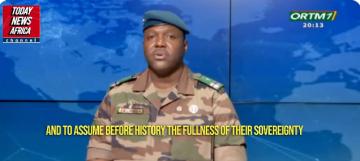 Reaction to the coup in Niger is a litmus test which determines who is truly supportive of self-determination for African nations.
 The people of Peru continue to demand the end of the coup government and the return of their elected president to office.
 The U.S. embarked on a spree of entrapments in the post-9/11 years. Informants were used against gullible and vulnerable people, most of them Black, in order to secure spurious convictions and…
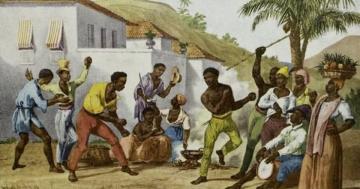 Jesús “Chucho” García is an intellectual and activist, and the author of several books, including Afrovenezolanidad e inclusión en el Proceso Bolivariano [Afro-Venezuelanness and Inclusion…


