Venezuelan diplomat Alex Saab was kidnapped by the U.S. in 2020 and is still in custody. An evidentiary hearing is taking place to determine if the country that constantly speaks of a "rules based order" will be forced to abide by international law and free its hostage.
Starting on December 12, 2022 an evidentiary hearing before the US Southern District Court of Florida is considering a case of historic importance. Is the US above international law? Can international conventions on diplomatic immunity be violated by US courts and prosecutors? The fate of Alex Saab, a special envoy of the Bolivarian Republic of Venezuela is being contested, but larger questions that could affect the lives of diplomats around the world will be decided.
Most prisoners with a get-out-of-jail-free card would have played it, but not Alex Saab. The Venezuelan diplomat has been incarcerated for two and a half years.
On June 12, 2020, Alex Saab was on a mission from Caracas to Tehran to procure supplies of food, fuel, and medicine denied the Venezuelans by sanctions imposed by the US. His plane was diverted to the island archipelago nation of Cabo Verde. When it landed on the tarmac, he was seized at Washington’s behest and has been imprisoned since.
Under pressure from the US, Cabo Verde defied findings by the regional ECOWAS Court of Justice and the United Nations Human Right Committee to free Alex Saab. As a special envoy of the Venezuelan government, he was supposed to be immune from arrest and detention under the Vienna Convention on Diplomatic Relations.
Then on October 16, 2022, Saab was “extradited” – really “kidnapped” because the US does not have an extradition treaty with Cabo Verde – and imprisoned in Miami.
Washington’s embarrassingly feeble excuse for the forcible extraction of a foreign national to the US was that the special envoy was guilty of bilking the Venezuelan people. Yet, as soon as Saab had been thrown into the federal penitentiary, the Department of Justice dropped their seven charges of money laundering.
The remaining charge of “conspiracy” to money launder is a prosecutor’s gift because the accused can’t use the fact that they did not commit the alleged crime as proof of innocence.
In fact, what the imperial power had perpetrated was an example of extra-territorial judicial overreach. Someone who is a foreigner and not in the US is being persecuted for an alleged crime committed in a foreign country. Only an entity that had arrogated to itself to be the world’s cop could pull off such an egregious action.
Surely, if Mr. Saab was indeed undermining the government of Venezuelan President Nicolás Maduro, the US would have been delighted. Such subversive activity would have been consonant with US’s own policy of regime-change to be achieved by applying sanctions. Yet it was Saab who was, by Washington’s own admission, instrumental in helping Venezuela circumvent these unilateral coercive measures by bringing humanitarian supplies from Iran in legal international trade.
Contrary to Washington’s colonialist pretext that Saab was wronging the Venezuelan people, the Caracas government has treated him as a national hero.
But perhaps the strongest argument for Saab’s sincerity is that the US government has admitted that the diplomat was targeted because he had information that Washington wanted. No lesser an authority than former US Defense Secretary Mark Esper wrote: “It was important to get custody of him. This could provide a real roadmap for the US government to unravel the Venezuelan government’s illicit [sic] plans.”
Yet under torture in Cabo Verde and further incarceration in the US, Alex Saab has refused to “sing” and has maintained his allegiance to the democratically elected government of Venezuela. Instead of being reunited with his family, Alex Saab is still arguing for his right to diplomatic immunity and against his illegal detention.
If the US refuses to recognize special envoy Saab’s diplomatic immunity, the precedent will endanger the inviolability of diplomats worldwide.
Roger D. Harris is with the 37-year-old human rights organization Task Force on the Americas and the FreeAlexSaab campaign.

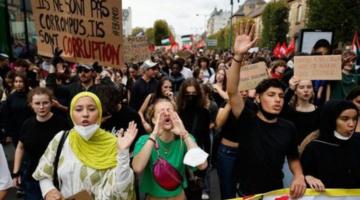 The 2026 French uprising is a continuation of the anti-colonial struggle, rooted in the 1961 Paris massacre of Algerians and the ongoing neocolonial relationship between France and its former…
 Disregard for Palestinian rights is a feature of Israeli politics rather than a bug. The upcoming Knesset election will change nothing for Palestinians, because every candidate across the political…
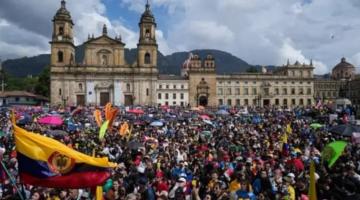 Thousands of people took to the streets across Colombia on Wednesday in the first national strike against President Abelardo de la Espriella’s administration, as police used tear gas, rubber bullets…
 As we are experiencing a world order in disorder, with war and conflagrations and a shifting balance of power, Issa Shivji calls for a Sovereign Pan-African Project. The analyses recap the…
 In this week’s segment, we see through supposed disagreements between the US and Canada and recognize their partnership in settler colonialism, enslavement, and imperialism. But we begin with a…


