“Why are They Doing This to Me?”: Seattle Students Walkout on Ferguson Decision and Racism
by Jesse Hagopian
This article previously appeared in Hagopian’s website, I Am An Educator.
“They have no need to travel across the country to confront the ferocity of racism.”
On Monday after school, members of the Garfield High School Black Student Union (BSU) gathered in my classroom, along with my co-advisor of the student organization, as we braced for the grand jury decision in Ferguson regarding officer Darren Wilson’s killing of unarmed Black teenager, Michael Brown.
None of these students were there to find out what the fate of Officer Wilson would be; they told me they knew Wilson would not be made to face a trial because the institutions of our society do not respect the lives of Black youth. They gathered instead to hold each other up when the inevitable news dropped, and to reaffirm that Black lives matter, no matter what the prestigious and powerful believe.
As the time dragged on, we found out that the grand jury decision would not be made public until later that night. And as we packed our belongings to leave and wished each other well, one BSU member, clearly in deep turmoil, said, “Why are they doing this to me?” His question caught me off guard and I could feel my emotions swelling. Given the look of anguish on his face, should I focus on trying to help him not be consumed with worry as he leaves the embrace of his classmates? Should I quote to him a sentiment from Martin Luther King?: “The arc of the moral universe is long, but it bends towards justice.” Or should I begin to recount the history of racism in this country, long used to amass wealth and power, and quote to him Frederick Douglass?: “If there is no struggle, there is no progress.” I was ashamed I wasn’t ready at that moment with the right words and my own tumultuous feelings about the impending announcement kept me from producing a coherent response.
“He just had to join the demonstrations that night because if it was legal to kill Black youth, then what kind of future did he really have?”
I did finally manage to inquire, “What do you mean?” He explained that he had a college application due the next day, but that there was no way he could concentrate on finishing the paperwork when the news was finally released that there would be no justice for Michael Brown. An effort was made in the group to comfort him and help him understand that it was important for him to also focus on his future. But he expressed he just had to join the demonstrations that night because if it was legal to kill Black youth, then what kind of future did he really have? The BSU parted ways and planned to rejoin the next day at lunch to discuss the next steps in the struggle for justice for Michael Brown.
That evening I watched the TV in unsurprised pain as St. Louis County prosecutor—apparently turned defense attorney—Robert McCulloch announced that Darren Wilson had a license to kill Black people. There was no need for the hassle of a trial. My chest heaved as I heard him explain why Black lives don’t matter, but I tried to hide my reaction from my sons so I wouldn’t have to explain to them the vulgarity of our society. My mind turned to my BSU student—was he writing his personal essay now, or finding out who he was and what he believed as he rallied for justice in the streets?
The next morning, I joined hundreds of people in search of solace and solidarity at the local NAACP rally, which gathered just a few blocks from my school. In my remarks to the crowd, I asserted that while the media likes to talk about the “unrest” sweeping the country, the real unrest is the endless sleepless nights for Michael Brown’s parents. I asserted that what is sweeping the nation—something the media cannot acknowledge without legitimizing challenges to their own supremacy—is a politicized populace of Black people, people of color, and their allies, with a goal of uprooting institutional racism.
After speaking, I jumped in my car to make it back to school before the lunch period was over. Driving back, I was met with an amazing surprise: that very populace was blocking my way to school! I had to move over to the right because an outpouring of some 1,000 students had left Garfield High School in solidarity with Mike Brown and had taken to the streets chanting, “Hands up, don’t Shoot!” As I would soon learn, walkouts occurred across the city, including 300 who walked out of Roosevelt High School, 130 from West Seattle High School, 50 from Rainier Beach High School, and over a dozen from Southlake High School.
“One thousand students had left Garfield High School in solidarity with Mike Brown and had taken to the streets.”
In leaving the schoolhouse, these students were transformed into the teachers of an entire region as they captured headlines in the local media and eloquently explained why they had disrupted the day to challenge racism. In my years of teaching, I have never worked with a more aware and passionate group of young people—educated not by me, but by Trayvon Martin, Jordan Davis, Darius Simmons, Renisha McBride, Tamir Rice, and so many other black youths whose lives were taken by racial terror.
These students were surely animated by the injustice in Ferguson, but as they expressed, they have no need to travel across the country to confront the ferocity of racism. The Seattle Public Schools are under investigation by the federal Department of Education for suspension rates for black students four times higher than white students for the same infractions. The Seattle Police Department came under investigation by the federal Department of Justice for excessive use of force, especially against people of color, and is now under a court-monitored consent decree. A recent Seattle Times article shows, “while Seattle’s median household income soared to an all-time high of $70,200 last year, wages for blacks nose-dived to $25,700 — a 13.5 percent drop from 2012.”
A new generation of young activists in cities across the nation are confronting the contradiction of living in the “the land of the free” yet having to face militarized police when they assert the basic premise that “Black lives matter.” I hope my student finished his college paperwork (I’ll ask him about it when I see him after the break) and is accepted into college. But he and his classmates have goals beyond the individualist “career and college ready” objective prescribed by self-styled education reformers. These students have learned a lesson that can’t be taught by institutions of higher learning: Only collective action has the ability to grant the power of sight to a society unable to see you as a human being.
Jesse Hagopian teaches history and co-advises the Black Student Union at Garfield High School. He edited the book, “More Than a Score: The New Uprising Against High-Stakes Testing,” which includes a foreword by Diane Ravitch, an introduction by Alfie Kohn, and an afterward by Wayne Au (Haymarket, December).

 The history and significance of Black August, presidential elections and politics in Kenya, and reflections on the anniversary of the Sandinista Revolution.
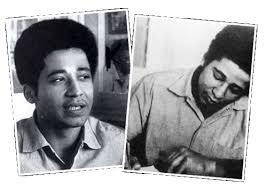 Kalonji Changa is co-founder of Black Power Media and founder of FTP Movement. He joins us from Atlanta to talk about Black August, which has been a fixture of the liberation movement for 43 years.
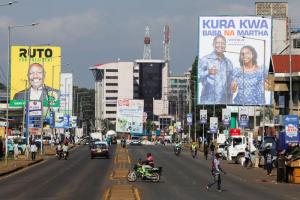 Irene Asuwa joins us from Nairobi, Kenya. She is co-convener of Ecological Justice and supports outreach at Ukombozi Library. We discuss the recent presidential election in that country.
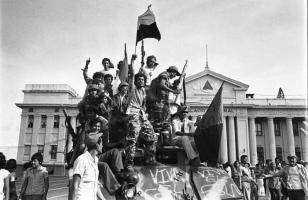 In a recent webinar hosted by the United National Antiwar Coalition (UNAC), Margaret Kimberley discussed what she witnessed during the commemoration events for the 43rd anniversary of the Sandinista…
 Why would Black people laud the FBI or criticize protection against self-incrimination? The FBI search of Donald Trump's home has reawakened Trump Derangement Syndrome.


