A Black Agenda Radio Commentary by managing editor Bruce A. Dixon Georgia is one of several southern states whose Dixiecrat legislature erected high obstacles to new parties on the ballot in the 1940s to keep returning WW2 veterans from cranking up socialist or communist parties. Those laws protected Democrats and Republicans from competition for 70 years. That might end soon, first in Georgia then in the rest of the south. If we cannot vote our hopes instead of our fears, our vote doesn't mean much.
Dixiecrat Ballot Access Law Temporarily Overtuned: This is What a Voting Rights Breakthrough Looks Like A Black Agenda Radio Commentary by managing editor Bruce A. Dixon There's an opportunity for a major voting rights breakthrough in Georgia and several other southern states. It's a breakthrough that may allow third party candidates and campaigns on the ballot for the first time in many states in 70 years.
A few weeks ago the 11th Circuit Court of Appeals made a historic voting rights ruling in a lawsuit brought by the Georgia Green Party against Georgia's unfair election laws.
Back in the 1940s Georgia and other states feared that returning veterans, especially black ones would try to get on the ballot, most likely as communists or socialists. So the Dixiecrat legislatures in Georgia, North Carolina and elsewhere passed laws intended to make ballot access more difficult.
Current Georgia requires nominating petitions signed by one percent of statewide voters in the last election, for a candidate who's not a Republican or Democrat to appear on the statewide ballot. For 70 years, this Dixiecrat ballot access law has kept all candidates and parties which lack the support of friendly billionaires off the statewide ballot in Georgia. They did of course suspend the rule when their fellow Dixiecrat Strom Thurmond ran for president in 1948.
The Dixiecrat laws make it even harder for third party candidates in local elections. Not one but five percent of voters in the last election must sign petitions for local candidates to appear on the ballot. Want to run as a Green or independent for Congress in Georgia? You'll need an almost impossible 18 to 24 thousand voter signatures on your nominating petitions.
But in March 2016 a federal appeals court judge ruled in a lawsuit brought by the Georgia Green Party that Georgia's ballot access barriers for everybody except the two capitalist parties were3 unconstitutional, and temporarily lowered the number of petition signatures for statewide candidates in Georgia from 50,000 to only 7,500, provided these are filed by July 12, 2016.
That's less than eight weeks away. If activists in and near Georgia can mobilize and organize to get on the November ballot, that will make history. They … I mean WE... because I am co-chair of the Georgia Green Party will be the very first party on the statewide ballot not backed by the one percent in 70 years.
Georgia legislators 70 years ago knew what they were doing. They knew you couldn't vote for peace and justice if they didn't allow peace and justice candidates or parties on the ballot. Present day Democrats and Republicans know it too, which is why they've left Dixiecrat barriers to meaningful voter choice still on the books in Georgia, Louisiana, Alabama, Arkansas, Tennessee and especially in North Carolina.
If Georgia Greens can get those 7,500 signatures by July 12, and get one percent of the vote for the Green presidential candidate Jill Stein, we will have guaranteed ballot access for 2018, and we might also get the impossibly high barriers to local Green candidates lowered too. Georgia voters could see Green and independent candidates for school board, county offices, for state legislature, congress and the senate in 2018. Other states with similar rules can't be far behind. That's what a voting rights breakthough looks like.
The judge's ruling is only temporary, until the legislature meets next year. We expect neither Democrats nor Republicans in the state house want these barriers lowered. So we have to get through the door while it's open, to make it harder to close again. Help us out. Click http://www.jill2016.com/ga_ballot_access_07 and see what you can do. That's http://www.jill2016.com/ga_ballot_access_07 , repeat http://www.jill2016.com/ga_ballot_access_07 .
I'm Bruce Dixon for Black Agenda Report. Be sure to subscribe to our weekly email at www.blackagendareport.com .
Bruce A. Dixon is managing editor at Black Agenda Report and the co-chair of the Georgia Green Party. He lives and works near Marietta GA and can be reached via email at bruce.dixon@blackagendareport.com .

 Slow-witted Joe Biden appears to think that we’re still in the age of the sole superpower, when in fact that era has come and gone.
 Neither AOC nor the rest of the Squad has mounted any significant challenge to the party’s corporate leadership, despite being elected for this exact purpose.
 A pamphlet written 70 years ago by an exiled Black American communist reveals an African continent seething to break free from European colonization.
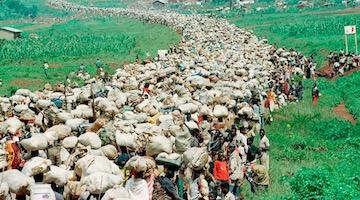 The real story of the Rwandan genocide begins in 1990, when exiled Tutsis from Uganda invaded northern Rwanda, unleashing a deadly campaign that uprooted a million Hutu peasants and set ethnic tens
 Northeast, midwest, southwest, south, down south, up south, out south—south of the Canadian border—Slouched down in his cruiser, slow-rollin’ the ‘hood; Or a-


