Black Agenda Report
Black Agenda Report
News, commentary and analysis from the black left.

  • Home
  • Africa
  • African America
  • Education
  • Environment
  • International
  • Media and Culture
  • Political Economy
  • Radio
  • US Politics
  • War and Empire

Tens of Thousands of California Inmates Join Pelican Bay Hunger Strikers
10 Jul 2013
🖨️ Print Article

A Black Agenda Radio commentary by executive editor Glen Ford

For the third time in two years, inmates in solitary confinement at California’s most notorious prison have gone on hunger strike. Record numbers of prisoners across the state have joined the Pelican Bay strikers, some of whom “have not seen the natural light of day for more than 20 years.”


Tens of Thousands of California Inmates Join Pelican Bay Hunger Strikers

A Black Agenda Radio commentary by executive editor Glen Ford

“Prison is the ultimate surveillance regime, a place where the sense of self, of human agency, and of privacy is systematically crushed, in the name of security.”

About 30,000 California prisoners have joined the hunger strike begun, on Monday, by inmates at the Secure Housing Units at Pelican Bay. That’s more than four times as many as joined Pelican Bay inmates in their first hunger strike, in July of 2011, and two and a half times the number that struck in October of that year. So far, two-thirds of the state’s prisons have been affected.

The Pelican Bay inmates carry a certain moral authority, in that they represent the most long-suffering, intensely persecuted group in the largest and most barbaric prison system in the world – the approximately 80,000 U.S. prison inmates held under solitary confinement. Pelican Bay is the site of more than 1,000 solitary confinement cells, where prisoners are isolated from other human contact for at least 22 and a half hours a day. Around the state, about 4,500 people are held in Special Housing Units, or SHUs, with 6,000 more enduring some other form of solitary. Some of the SHU inmates have not seen the natural light of day for more than 20 years.

The State calls the SHU inmates the “worst of the worst” in order to justify a punishment regime more barbaric, in many respects, than any in recorded history – a massive, multi-billion dollar enterprise whose mission is to destroy the minds of men and women. Inmates are locked away for years on end for possession of literature, or for mere suspicion of political militancy. By far the largest number of SHU inmates are accused of belonging to gangs, and can only be released from solitary by accusing other inmates of gang affiliation – a process that is euphemistically called “debriefing” – thus turning everyone into a potential snitch against everyone else.

“Two-thirds of the state’s prisons have been affected.”

Prison is the ultimate surveillance regime, a place where the sense of self, of human agency, and of privacy is systematically crushed, in the name of security. It is no coincidence that the world’s prison superpower, the United States, which accounts for one out of every four incarcerated persons on the planet, is also engaged in spying on every other nation and population on Earth. It is as if the United States is determined to surveil – with the implicit threat to crush – every expression of the human soul.

Both U.S. global surveillance and American prison policies violate international law. The Center for Constitutional Rights has sued on behalf of the Pelican Bay inmates, citing the finding by the United Nations Special Rapporteur on Torture that any more than 15 days of solitary confinement violates international standards of human rights.

California’s inmates aren’t waiting for the UN or the courts to come to the rescue. They’ve issued five core demands, with elimination of long-term solitary confinement at the top, and insist that the hunger strike will not end until California signs a legally binding agreement. The very concept of negotiation with inmates is anathema to the Prison State, whose goal is to reduce human beings to objects, with no rights whatsoever. The Pelican Bay inmates have concluded that, if they are to have any chance to live, they must be prepared to die.

For Black Agenda Radio, I’m Glen Ford. On the web, go to BlackAgendaReport.com.

BAR executive editor Glen Ford can be contacted at Glen.Ford@BlackAgendaReport.com.


Your browser does not support the audio element.

listen
http://traffic.libsyn.com/blackagendareport/20130710_gf_PrisonStrike.mp3

More Stories


  • Gerald Horne
    Black Agenda Radio with Margaret Kimberley
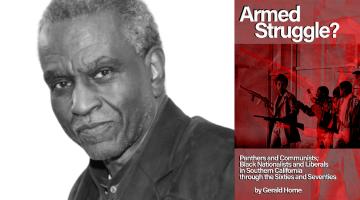
    Gerald Horne Discusses His New Book on Armed Struggle in California in the 1960s and 1970s
    02 Aug 2024
    Dr. Gerald Horne talks to us about his latest book, “Armed Struggle: Panthers and Communists, Black Nationalists and Liberals in Southern California, Through the Sixties and Seventies.”
  • Abandon Biden campaign poster
    Black Agenda Radio with Margaret Kimberley
    The Abandon Biden Campaign Continues
    02 Aug 2024
    Hudhayfah Ahmad joins us to discuss how and whether the Abandon Biden campaign will change in the wake of Biden’s departure from the race and the elevation of Kamala Harris to the role of…
  • Baraka Iversen show
    ​​​​​​​ Ajamu Baraka, BAR editor and columnist , Kim Iversen
    Observer On The Ground In Venezuela Says US Is Threat To Global Democracy
    31 Jul 2024
    Ajamu Baraka, Chair of the Coordinating Committee of the Black Alliance for Peace, and columnist and editor at the Black Agenda Report, is on the ground in Venezuela and joined The Kim Iversen Show…
  • Margaret Kimberley, BAR Executive Editor and Senior Columnist
    How to Protest for Sonya Massey
    31 Jul 2024
    Sonya Massey’s brutal murder at the hands of the police has resulted in anguish and anger but no difference in how state violence is protested. Instead, we see surrender to the crumbs of condolences…
  • Editors, The Black Agenda Review
    ESSAY: In Our Hands: Thoughts on Black Music, Bernice Johnson Reagon, 1976
    31 Jul 2024
    For the late Dr. Bernice Johnson Reagon, Black music was a tool in the struggle for Black liberation, and not what it has mostly become today: a retrograde appendage to neoliberalism and white power.
  • Load More
Subscribe
connect with us
about us
contact us