A Black Agenda Radio commentary by BAR editor and columnist Jared A. Ball
Manning Marable has repackaged Malcolm X as “moving toward views that are ‘race neutral’” – a “gentle humanism” acceptable to the U.S. book publishing industry. Like fellow academic Peniel Joseph’s absurdly twisted linkage of Malcolm and the First Black President, for Marable “Obama becomes the safe expression of Malcolm’s Black nationalist control over politics, and al-Qaeda become the anti-hero.” Such “fallacious leaps” and contortions should be as painful to the revisionist biographer as they are to the Truth. The actual, historical “Malcolm X is the antithesis of Obama, not part of the president’s political lineage.”
Marable’s Malcolm X: A Eulogy of Revolution as an Idea
A Black Agenda Radio commentary by BAR editor and columnist Jared A. Ball
“The overall tone of the book is simply foreplay to his repackaging of Malcolm’s political trajectory into marketable liberal politics of the post-9/11 book publishing world.”
Manning Marable titles his book’s epilogue “Reflections on a Revolutionary Vision.” However, his conclusion is more of a eulogy for the revolutionary ideas so carefully put to permanent rest throughout its preceding pages. Manning Marable’s Malcolm X: A Life of Reinvention positions itself alongside, if not atop, a previous work by Marable’s protégé Peniel Joseph, as a well-written and hard-to-target missive clearly designed to popularize without implementation radical ideas – and by so-doing destroy them.
Throughout the book Malcolm’s constantly deepening and progressive struggle with armed resistance, white supremacy, socialism, pan-Africanism and even the power of the vote are softened by Marable in ways to support what has now become the only way to discuss radical ideas; riddled with scandal and distorted by selective emphasis. Marable’s conclusion is the dead giveaway. The overall tone of the book is simply foreplay to his repackaging of Malcolm’s political trajectory into marketable liberal politics of the post-9/11 book publishing world.
Malcolm’s biting and insightful criticism of electoral politics and neocolonial Black elected officials is repackaged into that which “anticipated” the power of the Black electorate to deliver Barack Obama. Malcolm’s increasing devotion to Sunni Islam and his persistent support of the Mau-Mau, even a similar effort within the United States, is re-imaged, absent context or critique, into a condemnation of Islamic “terrorism.” Malcolm’s explicit post-Mecca views on race that the white man here had not changed so nor would he and that John Brown remained his standard of white activism is lost beneath repeated descriptions of his moving toward views that are “race neutral” and support for anti-imperial struggles around the globe are re-written as “gentle humanism.”
“Marable becomes William Styron, who in the late 1960s gave an interview praising Nat Turner while condemning Rap Brown.”
Marable carefully crafts a narrative that promotes Malcolm’s political changes paternalistically as maturation and consistent with the world we face today. So other than Barack Obama and al-Qaeda which serve as ideological goalposts between good and evil the only contemporary reference Marable makes is to the 2001 World Conference Against Racism which he alleges “was in many ways a fulfillment of Malcolm’s international vision.” Obama becomes the safe expression of Malcolm’s Black nationalist control over politics and al-Qaeda become the anti-hero required to safely place Malcolm’s continued move toward orthodox Islam.
The 2001 conference provides Marable with a timely balance which conveniently allows him to use Malcolm as a Muslim to condemn 9/11. But if Malcolm spoke of chickens coming home to roost over Kennedy would this really be his position? Such questions are only raised to make a current political point. Otherwise we might be more accurate to say that had Malcolm lived the world would be radically different; 9/11 would have never happened and we would all be living in an African-centered socialist utopia. Here Marable becomes William Styron, who in the late 1960s gave an interview praising Nat Turner while condemning Rap Brown. Radicalism is fine once dead and buried, but it has no place in the present.
But no mention is made of the Durban II conference where the world gathered to decry the absence of progress made since 2001. But Obama refused to acknowledge this one just as Bush had the first and for similar reasons equally inconvenient for Marable. Malcolm’s anti-Zionism is easily dismissed as the negative influence of Nkrumah and Nasser. Its contemporary detractors have no such easily dismissed dead targets.
But major publications on such potentially threatening topics like Malcolm X and his ideas must make logically fallacious leaps like those in Marable’s conclusion. Malcolm X is the antithesis of Obama, not part of the president’s political lineage. The very question of Malcolm’s thoughts in 2011 demand that we accept the political impossibility of 2011 existing as it does with a living Malcolm X. This world exists because he and his ideas were and are in perpetuity assassinated.
I am not likely to say much more about Marable’s book. My obsession with it will soon pass. As I close I am reminded of what someone once said not long ago about being careful to distinguish between who you read and who governs your interpretation of what is read.
For Black Agenda Radio, I’m Jared Ball. Online visit us at BlackAgendaReport.com.
Dr. Jared Ball can be contacted at freemixradio(at)gmail.com.

 …
… In this series, we ask acclaimed authors to answer five questions about their book.
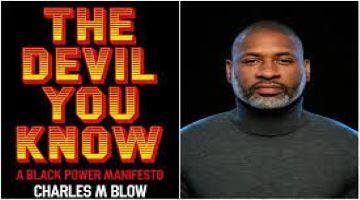 The idea that a reverse migration to the south is a route to greater political power should be treated with skepticism.
 Richard and Roberto would like to dedicate this feature to Glen Ford, one of the fiercest critics of U.S. corporate media the country has ever known.
 There will not be true democracy for Africans as long the U.S., EU, NATO, and Israel train and finance the military in these nations.


