Obama Slowly Edges Toward Ending Failed U.S. Embargo of Cuba
A Black Agenda Radio commentary by Glen Ford
“President Obama will attend a summit meeting of the OAS, most of whose members now maintain good relations with Cuba and wish the U.S. would lift the trade embargo.”
For half a century, U.S. hatred of the Cuban revolution has driven Washington to commit the full spectrum of international crimes against its small island neighbor: invasion, biological warfare, a relentless campaign of assassination and terror, and the world’s longest trade embargo. Yet the Castro brothers and the socialist government still stand. Forty-seven years ago, when all of Latin America – except for Cuba – was under Washington’s thumb, the United States directed the Organization of American States – the OAS – to expel Cuba, which, of course, was promptly done. That was the same year, 1962, that the U.S. imposed its trade blockade on Cuba. Later this week, President Obama will attend a summit meeting of the OAS, most of whose members now maintain good relations with Cuba and wish the U.S. would lift the trade embargo. Some of them will surely tell Obama so, and in this day and age, the president of the United States has no choice but to listen. The Caribbean Community is also on record against the embargo, as is the General Assembly of the United Nations. Captains of U.S. industry, and their foreign counterparts, have for years lobbied for an end to the embargo, for the simple reason that it’s bad for business, putting American firms at a disadvantage in the global marketplace.
The embargo against Cuba, designed to isolate the revolution, today isolates the United States from the community of nations.
“Cuban leader Raul Castro offered to exchange the Cuban Five for any jailed Cuban dissidents the U.S. wants.”
Barack Obama got ready for his Friday meeting with the leaders of the rest of the Americas by dropping a range of restrictions on Cuba, mostly involving visits Cuban Americans will be allowed to make to the island and the money and gifts they can send.
The older generation of Miami Cubans last week finally bowed to the stability and longevity of the Cuban revolution. Acknowledging the handwriting that has long covered the walls, the far-rightwing Cuban American National Foundation called for a significant loosening of restrictions on Cuban American contact with the island. The old reactionaries stopped short of calling for an end to the embargo, but said the issue was only “symbolic” and no longer “important anymore.”
One of the Cuban American National Foundation’s heroes, the infamous terrorist Luis Posada, moved a little closer to his eventual encounter with justice, when a federal grand jury served up a new indictment against him in connection with bombings at Cuban tourism destinations, back in 1997. One Italian tourist was killed in the terror campaign. Posada has long been wanted by Havana in the 1976 bombing of a Cuban airliner that killed 73 people.
But nowadays the Cuban government would be much happier for the return of the so-called Cuban Five, a group of intelligence agents sent by Cuba to infiltrate Miami’s exile groups, where younger versions of Luis Posada planned terrorist attacks on Cuban soil. Instead of being thanked by the FBI for doing the Bureau’s job, the Cuban Five were sentenced to long terms in prison on espionage charges. Cuban leader Raul Castro offered to exchange the Cuban Five or any jailed Cuban dissidents the U.S. wants. Sounds like a good deal. And then the U.S. can end the embargo, and look a little bit less evil in the eyes of the world.
For Black Agenda Radio, I’m Glen Ford. On the web, go to www.BlackAgendaReport.com.

 Johanna Fernandez is an Associate Professor of history at Baruch College, and a longtime advocate for political prisoner Mumia Abu Jamal. She joins us from New York City to discuss the loss of his…
 Efia Nwangaza discusses her participation in the first session of the UN Permanent Forum on People of African Descent, a mechanism that emerged from the 2001 Durban world conference against racism.
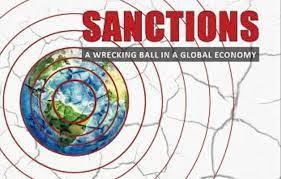 Sara Flounders joins us to discuss her work as editor of the newly published anthology, 'Sanctions: A Wrecking Ball in a Global Economy.' The book is an analysis of U.S. unilateral coercive measures…
 The open white supremacy and fascism exhibited in Ukraine are conveniently swept under the rug. Nazis are bad, unless they serve the interests of the U.S. state.
 A round-up of The Black Agenda Review’s posts from 2022 – and a reprint of Haiti’s January 1, 1804 declaration of independence.


