A Black Agenda Radio commentary by Glen Ford
Millions of Americans are outraged that bank officers get fat bonuses for making bad loans. But what is truly grotesque is how few people demand that these bankers go to jail for the crime of “reverse redlining.” “It is unthinkable that bank lending officers up and down the corporate chain of command might face criminal prosecution for ruining the lives of millions!”
What Do Wells Fargo and Other Banksters Owe Black People?
A Black Agenda Radio commentary by Glen Ford
“Wells Fargo’s practice of 'reverse redlining' has decimated African American neighborhoods while sparing whites of similar economic status.”
Wells Fargo, the biggest home mortgage lender in American banking, just paid back the federal government $25 billion in bailout money. That means Wells Fargo considers itself relieved of further obligations to the taxpayers that rescued the bank from the consequences of its own business practices. But what of the people whose lives Wells Fargo ruined – a hugely disproportionate number of whom are Black?
While Wells Fargo’s executives are cueing up for their bonuses, the list of lawsuits grows, charging the bank with massive racial discrimination. The latest plaintiffs are the city of Memphis and surrounding Shelby County, Tennessee, where Wells Fargo’s practice of “reverse redlining” has decimated African American neighborhoods while sparing whites of similar economic status. In some Black neighborhoods, one out of every eight Wells Fargo loans have gone into foreclosure. The proportion is only one out of 59 in similarly situated white neighborhoods because, according to the suit, Wells Fargo acted responsibly when making loans to whites.
The same pattern of racism in lending caused the city of Baltimore to sue Wells Fargo, earlier last year. Both Memphis and Baltimore argue that Wells Fargo’s disastrous Black lending practices destroyed substantial portions of the cities’ tax base by forcing so many residents out of their homes. The state of Illinois sued Wells Fargo last summer, for charging Blacks and Latinos more for mortgages than whites of similar income.
It’s the same story in Los Angeles, where thousands of Black households have been joined in a class action suit against Wells Fargo. The NAACP has launched suits against Wells Fargo and a long list of its colleagues in mortgage lending crimes.
“Not one Wells Fargo executive will spend a day in jail for participating in a racist assault against millions of Black and brown people.”
But what is the nature of the crime, and what should be the punishment? It is in the presence of massive economic outrages, coldly and systematically executed, against historically oppressed victims who are made more vulnerable in the process of the assault, that “bourgeois justice,” as some of us used to call it, is revealed as a rich man’s con game. There is no limit to what can be taken from the poor, including their lives, especially if they are Black, but the rich commit their crimes behind corporate shields, with relative impunity. Commit a crime against a bank and you face federal criminal prosecution, yet it is unthinkable that bank lending officers up and down the corporate chain of command might face criminal prosecution for ruining the lives of millions! One can earn extra years in jail for physically assaulting a person as part of a racial hate crime, but not one Wells Fargo executive will spend a day in jail for participating in a racist assault against millions of Black and brown people who were simply seeking home mortgages.
Elemental justice cannot exist under capitalism; it is incompatible with the prerogatives of money. That's why few people in our political culture even consider that several thousand bankers should be imprisoned for at least as long as bank robbers for their premeditated crimes against millions of families. But, corporate criminals like Wells Fargo don't need a Get Out of Jail Free card. Nobody even thinks about putting them in jail, in the first place.
BAR executive editor Glen Ford can be contacted at Glen.Ford@BlackAgendaReport.com.

 The US Military Command in Africa allows Washington and its European allies to dominate the continent and its resources.
 Recently, readers have been discussing democratic socialists, American exceptionalism, and identity politics.
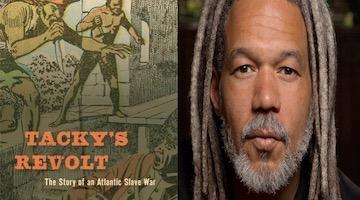 The Jamaican slave revolt of 1760-1761 was one war within an interlinked network of other wars.
 In white patriarchy-ruled South Carolina at the turn of the 20th century, manhood sometimes created temporary yet tenuous bonds between Black and white men.
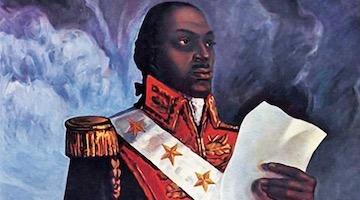 Toussaint stressed that freedom was something that had to be fought for and taken from below by the masses themselves.


