In this series, we ask acclaimed authors to answer five questions about their book. This week’s featured author is Last Moyo. Moyo lectures in the Department of Communications and Multimedia Design at the American University, Nigeria. His book is The Decolonial Turn in Media Studies in Africa and the Global South.
Roberto Sirvent: How can your book help BAR readers understand the current political and social climate?
Last Moyo: The first thing that readers must understand is that this book is written from the perspective of a Black African male scholar who is a decolonial philosopher and activist. This is important because my characterization of the current political and social climate harbors no pretentions to being universal even amongst those who live in the zones of nonbeing but is anchored on African socio-historical experiences as its locus of enunciation. To begin with, despite the modern empire’s utopic registers of human rights, globalization, and multiculturalism that denote a cosmopolitan and just world order, we are still living under a pervasive modern/liberal/colonial/capitalist/ patriarchal/White and Eurocentric world system that anti-Black. It is a global order that continues to be predicated on the Western paradigm of difference. It classifies people according to its cultural and body politics that attacks and demonizes alterity. Although its cultural and body politics are hidden through the Western code – a discourse and theoretical language that obfuscates colonial realities – the real lived experiences of the generality of Black people across the world continue to tell a story of suffering, dismemberment and exploitation even after the global institutionalization of human rights.
What do you hope activists and community organizers will take away from reading your book?
My book is a critique of social and epistemic apartheid in the politics knowledge production in the modern/liberal/colonial/capitalist/ patriarchal and Eurocentric world order. I write from the prism of media and communication studies, and therefore naturally deal with questions of intersecting modes of oppression in terms of race, class, gender, culture, sexuality, nation, etc.
Activists and community organizers must understand this world system and its knowledge power structure as representing a form of global coloniality that is pervasive and inescapable. Coloniality is present in books, magazines, newspapers, television, family, church, and the state as consciousness institutions. We all live under its invisible structures and hierarchies of oppression. We all speak consciously or unconsciously, for it or against it in terms of our social and epistemic location. A plethora of its media and political technologies are entrenched in our lifeworld and they impinge on our political consciousness and transformative agencies to change our material and cultural conditions. As such, activists and community organizers need to develop alternative, decolonized, and counter hegemonic knowledge systems and research methods of reading the word and the world. Otherwise, there is a risk for modern social activists to reproduce the global system’s matrices of coloniality, especially when dealing with racialized people and communities whose humanity is questioned under racial modernity. The struggle for cognitive and social justice is not just for the mere recognition of freedom of thought and conscience of the racialized groups, but the acceptance of their humanity and their cultural identities as a civilization. Indeed, cultural and racial identities give the oppressed groups the social and affective bonds of community without which local and global resistance is diminished. In other words, the activism against cultural racism and anti-black racism can only be effective in transnational and global solidarities that foreground community.
We know readers will learn a lot from your book, but what do you hope readers will un-learn? In other words, is there a particular ideology you’re hoping to dismantle?
My book is an invitation to the readers to unlearn Western modernity as we know it and its concomitant justificatory knowledge power structure and systems. The reason for unlearning modernity as an ideology is because it is based on racism, coloniality, and Eurocentrism. All three are a constitutive part of Western modernity, hence modernity has been framed in the polemic of racial modernity, colonial modernity, and capitalist modernity. But modernity is nothing without its knowledge power structure in the form of media and cultural industries that sustain its colonial impulses. While racism is obviously a dehumanizing and othering force against the black populations, Eurocentrism presents Western universalism as the only means and only way to the truth. Its structure of thought and practice is based on binary logic that bifurcates the world into white/black, civil/barbaric, modern/primitive. Western universalism simply represents the European knowledge, which at worst we must provincialize and at best decolonize. Time has come when we must attack and unmask colonial modernity’s politics of knowledge production and move from its paradigm of difference and war. Only through the paradigm of dialogue can we move beyond Western monoculturalism to a multiversal and polycentric world characterized by transmodernity.
Who are the intellectual heroes that inspire your work?
I am a student of decolonial and Marxist scholars from the Global South and the Global North. These comprise luminaries such as Karl Marx, Harno Hardt, Nicholas Garnham, William DuBois, Frantz Fanon, Molefe Asante, Lewis Gordon, Ngugi WaThiongo, Walter Mignolo, Ramon Grosfoguel, Boaventura de Sousa Santos, etc. This is just a quick, but eclectic list of scholars that come from different generations and disciplines but are not part of the colonial library and archive. They write into the ethic of human liberation and freedom.
In what way does your book help us imagine new worlds?
The book puts forward a message of decolonization as a means of moving from a monoculturalist idea of modernity to transmodernity: a kind of dialogic modernity that embodies the beauty of all humanity where all planetary cultures and knowledges cross pollinate for humanity’s collective good. This new order is a truly multicultural order better expressed as multiverse or pluriverse. Multiversity is about provincializing and disciplining Western universalism and riding it of its colonial and hegemonic impulses in terms of the coloniality of being and coloniality of knowledge. It speaks to the problem of culturecides and epistemicides in the border: the zone of nonbeing and exteriority largely occupied by the blacks regardless of whether the live in the West or non-Western regions. The end of culturecide and epistemicides speak to the re-humanization and re-memberment of the black people as a race.
Roberto Sirvent is editor of the Black Agenda Report Book Forum.



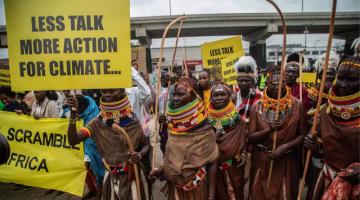 Carbon and biodiversity offsets are the latest imperialist weapons used against African people and their nations. Self-determination is the key to ecological health for the continent.
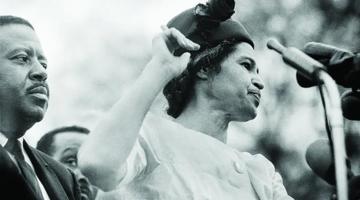 Internationalism is the path toward Black liberation. Black people must resist the push to silo our movements and move in this spirit of Rosa Parks - with fearless integrity.
 Aaron Bushnell's act of self-immolation is a symbol and a call for people around the world to break their silence and fight for a free Palestine.
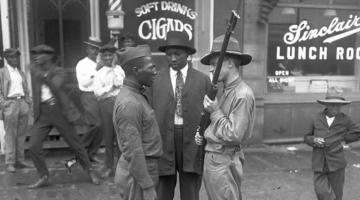 In the time between the two imperialist wars, the spirit and politics of Pan-Africanism grew. African Americans continued to organize and built movements to resist rising fascism.
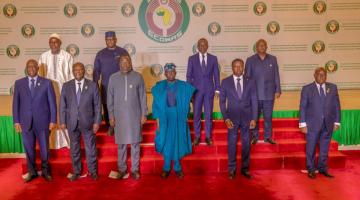 The West African trade bloc has lifted a majority of the sweeping sanctions it had imposed on Niger, including border closures and a freezing of state assets. The move followed soon after Niger, Mali…


