After 41 years in French captivity, revolutionary militant Georges Ibrahim Abdallah speaks, offering an analysis of October 7th, global fascism, and the Palestinian resistance.
Originally published in Al-Akhbar.
Georges Ibrahim Abdallah is a communist, anti-imperialist, anti-Zionist, and internationalist militant born in Lebanon in 1951. To this day, Georges remains a fidai, a freedom fighter, a "sin" of unwavering resistance that the capitalist world-system has never forgiven. Despite forty-one years of captivity in France, enduring the torture of isolation and the weight of a bourgeois "justice" that sought to break his spirit, he was finally released in July 2025 and deported to Lebanon. He returned as he left: a disciplined militant. As he maintains: “I was a militant in captivity. I was never a prisoner wishing to engage in militancy; I am a militant and, as such, I struggle even within the confines of an exceptional circumstance: that of imprisonment.”
The life of Georges Ibrahim Abdallah is the history of a young Lebanese man who threw himself into the vanguard of the Palestinian and global revolution at a very young age. His journey is the living memory of the Palestinian revolution in Lebanon: the movement that ignited after 1967 and which, while betrayed by a pacifying political leadership, refused to die. Instead, it has been reproduced and radicalized by new generations of the dispossessed in Gaza, the West Bank, Al-Quds, 1948 Palestine, and the diaspora.
Georges’ trajectory did not begin with his arrest in 1984, but was forged in the heat of the internationalist offensive of the 60s and 70s. His political consciousness was tempered by the global struggle against the U.S. war machine in Vietnam, the student-worker ruptures of 1968 in France, and Che Guevara’s call to the 1967 Tricontinental. These forces converged to create a militant whose class convictions have remained an immovable obstacle to the imperialist project for over half a century.
The global geopolitical landscape has shifted, but the structural crisis of capital and the revolutionary fortitude of Georges Abdallah have not. He remains anchored in the Arab liberation project, recognizing that the struggle for Palestine is the primary contradiction that must be resolved to liberate the region: “The liberation of Palestine has a historical value and a strategic value: it is the historical lever of the Arab revolutionary process.”
Q: Have your principles and convictions weakened over the past four decades? How did you endure this?
A: I was a militant in captivity. I was never a prisoner wishing to engage in militancy; I am a militant and, as such, I struggle even within the confines of an exceptional circumstance: that of imprisonment. Therefore, my central concern is the struggle itself, and my personal situation is secondary. To the extent that my personal condition allows for the affirmation of the revolutionary process, I am at ease. This is what happened.
Accordingly, my principles were put into daily practice through the comrades who visited me consistently over these 41 years. For them, solidarity with me was merely a pretext for engaging in the struggle alongside the Palestinian people and the masses who support them. It was also an expression of the Palestinian masses' position within the class struggle in France. When workers mobilized for better conditions or political demands, those in solidarity with me participated directly in the demonstrations of the CGT (General Confederation of Labour, France) and other trade unions. Every 20 or 25 days, I would also provide a written intervention; while they were demonstrating, a comrade would undertake the task of delivering a speech on my behalf: a statement from a Palestinian and Arab militant behind bars. Thus, as a militant, time passes from within the struggle, not outside of it.
As for the conditions of my release, the judge’s decision was based on a fundamental legal premise: it stated that Georges Abdallah, while in prison, poses more of a danger to national security than he would outside of it. I was released on that basis. Therefore, my presence in prison was a militant presence. I approached captivity through the logic of struggle, not as an end in itself. This means that I did not spend my time in prison demanding better conditions, nor asking to be released or proven innocent. Such matters are unacceptable to me.
When I appeared before the judiciary, I addressed the central question concerning militant operations in France and Europe. There was no evidence to incriminate me. What "incriminates" me is my political position. I maintained that these military operations are correct and must continue—not only in France, but across the world, especially in the regions dominated by and forming the heart of the imperialist system, which has been waging war against our people since the 1980s. Today, the situation is even worse.
Q: During your captivity, what was your relationship with the outside world, and how did you deal with the evolving news and events?
A: As I noted in my first response, I am a militant in captivity. All those who visited me were also militants whose primary mission was to convey my perspective to the outside and, secondarily, to fortify my position as a militant. To this end, comrades provided me with all the necessary materials for my journalistic, cultural, and militant formation. I actually lacked the time required to read everything I needed to. I did not suffer from too much time, but rather a lack of it. When I say that, it is not to be poetic or to exaggerate. This is the reality.
Every week, the comrades provided me with five files of press clippings alone: everything published in Arabic, French, or English regarding Lebanon, Palestine, and Egypt. Each file was about 90 pages: 450 pages a week just on news concerning the Palestinian struggle in Lebanon, the state of the resistance, and the popular movement in Egypt. I also had access to the entire French press—both the bourgeois press, like Le Monde and L'Humanité, as well as publications from leftist parties, especially the smaller ones. Thus, I had a comprehensive overview of all the available informational and cultural material.
As for my theoretical studies, my time was strictly disciplined. My day began at 8:30 AM when I left my prison cell, returning at 10:45 AM; I spent this time on physical exercise to keep my body "fit for combat," so to speak. From 10:45 to 11:00 AM: washing and showering. From 11:00 AM to 4:00 PM: reading letters and notes from comrades, which took considerable time. From 4:00 PM to 7:00 PM: theoretical readings. In the evening, I handled theoretical notes: what is to be done and what is not to be done. I slept only four hours, waking at 4:00 AM. From 4:00 AM to 7:00 AM, I tended to "minor correspondence" to preserve my humanity. That is, writing to my loved ones, to my brother, or others. Simple words and greetings allowed me to maintain myself as an ordinary person who smiles when he sees a child, sees beauty in a flower, and experiences the simple pleasures of ordinary life. At 7:00 AM, the prison guard arrives, and the prison day begins. And in that way, my day was entirely full.
Q: What was your reaction to the October 7th operation? How did you receive the news when it happened? What were your impressions then, and what are they now?
A: I am Arab, Lebanese, and Palestinian; I approach this matter as one that concerns everyone in the Arab homeland. I am a communist, and as such, I analyze this event based on its global implications and its impact on the Arab and international revolutionary movements.
Regarding its nature as a military operation: in reality, October 7th was a relatively limited operation, not a large-scale one. The Palestinian revolution is over forty years old; for it to mobilize a force of a thousand fighters, more or less, is a natural development of its protracted struggle. While similar operations were expected to recur, October 7th produced a variety of far-reaching effects.
On the socio-political level—that is, the level of the immediate reaction of the masses—like most of the Arab people, when we saw a fidai pulling a Zionist soldier by his head, we all cheered; we were overjoyed. Of course, this was a spontaneous reaction to seeing the fidaiyeen acting exactly as fidaiyeen should.
When we analyze the operation in detail, we might say this or that could have been better, but it remains a highly successful operation which exposed a reality that had not been visible to everyone. When Israel was confronted with Palestinian violence, it responded with a barbarism that is natural to its character. However, from the perspective of Capital, this response transformed the entire region into an unsafe zone, which is the heart of the matter at hand.
We must understand the nature of the Israeli entity. Up until the 1970s, Israel did not own individual financial institutions; banks, insurance companies, and major financial organizations were still public property. In the late 1980s, approximately one million settlers from the Soviet Union arrived in Palestine, bringing a massive influx of millions of dollars. These millions arrived through means deemed "illegal" even by capitalist standards—that is, outside the legal framework of the capitalist mode of production—stemming from prostitution, smuggling, and illicit trade. This vast sum of capital, combined with a settler population possessing the scientific capabilities acquired during Soviet times, created a qualitative leap that allowed Israel to construct its so-called "Silicon Valley."
October 7th struck this "Silicon Valley" and the institutions built since the 1970s in their entirety: not because it destroyed them physically, but because Capital cannot flow safely in a theater of armed conflict. This was unforeseen. This is why Israel is now living out its final chapters; without "Silicon Valley," Netanyahu’s vision of a "Greater Israel" was an unrealistic project. This tech-hub not only paves the way for a classic military occupation, but also the economic and administrative domination of the entire region, similar to that exercised over the so-called Gulf States. The plan was for the entire Arab Mashreq to fall under Israeli hegemony; October 7th liquidated this project without necessarily being conscious of this specific dimension. This is the fundamental dimension of the October 7th operation.
Of course, October 7th also prevented Saudi Arabia from normalizing with Israel. We must not forget that Gaza is a massive prison. The plan at the time was to expand this prison, but October 7th was the very explosion of that prison, altering Zionist plans for the entire region. The imperialist West emptied everything it had from its reservoir of barbarism and criminality, but the people of Palestine stood tall despite their wounds and did not surrender. They presented a model of sumoud the likes of which humanity has never seen: not at Dien Bien Phu, nor at Stalingrad, nor anywhere else has a people fought for their existence as the heroes of Gaza have.
Additionally, the global solidarity movement we are seeing today is a direct result of the resistance in Gaza. The masses are not necessarily rising to defend one specific faction or another; rather, they have simply seen barbarism personified. For the first time in history, a genocide is being broadcast and its detailed events are tracked on an hourly basis. While the entire history of Western capitalist domination is a history of genocidal wars, this is the first time an Argentine, a Bolivian, or a Pakistani can witness that genocide in real-time. This is what drove the youth to revolt. It began as a humanitarian impulse, but it has deepened into a political uprising against a rising wave of global fascism. We must view this within the context of a global capitalist order in crisis. We are standing at the gates of yet another World War fueled by inter-imperialist contradictions. Fascist forces are currently in the process of ascending to power across Europe and the imperialist West.
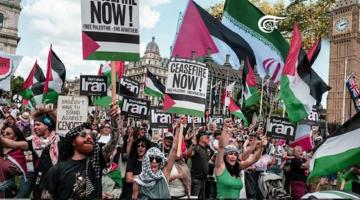
In this context, the Palestinian keffiyeh and the Palestinian flag have become more than national symbols; they are the universal signifiers of confrontation against Israeli fascism on the one hand, and the vanguard against the encroaching fascism in Europe and the world on the other. Initially, when protests broke out, authorities criminalized them. To wear a keffiyeh was to face arrest; to raise the flag was to be branded an anti-Semite. Today, the Palestinian flag is raised in every demonstration around the world: not just in solidarity with the people, but as a stance against fascism in their own countries.
The Israeli entity is an organic extension of the imperialist West. Historically, this West was formed through a series of genocidal wars. How was the United States formed? North America was inhabited by indigenous people. Europeans arrived and committed a total genocide: over 25 million people were liquidated to create the "United States." It wasn't always called that; it was North America. To transform it into a European-descended "United States," 25 million indigenous lives were extinguished.
The same process created Central and South America, or "Latin" America. But where did this "Latin-ness" come from? Neither the Maya, nor the Inca, nor the Quechua are Latin. Millions upon millions were liquidated so that Capital could transform them into "Latin Americans." Australia, too, was home to the oldest people on Earth; they were liquidated so that Australia could become "Australia." Thus, a series of genocidal wars is the very historical process by which the imperialist West was formed. Israel is the latest manifestation of this West, its organic extension.
The Palestinian people have historically withstood this genocidal process. It did not begin in Gaza. It began in the late 19th century, with 1948 being just one of its milestones. In 1948, the Palestinians numbered fewer than one million. Today, they exceed 14 million. Within historic Palestine today, there are approximately 7.32 million Palestinians compared to 7.2 million Israeli settlers. By any measure, this genocide has been a dismal failure. This is the crisis the entity currently finds itself in. October 7th arrived to tell this entity: "You have reached your limit. This is your final chapter." The "thuggery" we see in Lebanon and Gaza today is the hallmark of this final chapter. Israel can no longer pose as the "oasis of democracy" or as a "humanitarian" outpost in the eyes of the Western masses. It is now the ultimate symbol of barbarism. Without this image to act as its source of legitimacy, the entity is doomed to fail. They may provide it with additional weapons for a certain amount of time, but that will not fundamentally alter historical equations. People make the future of this planet. With their primitive weapons, the Palestinian people have proven to be more powerful than the world’s most advanced arsenals. They have resisted genocide on behalf of the entire Arab Mashreq. The settler-war built by the West did not target Palestine alone, but the whole region they call "Greater Israel." But the Palestinian people, the vanguard of the Mashreq, paid the price with the bodies of their children, and they have won. The masses are now telling them: "You have succeeded, and we are with you." And they stand with Palestine not just as an indigenous people, but as a critical starting point for the urgent fight against the fascism creeping into their own lands. These are the true effects of October 7th.
Q: Could you shed light on the conditions of Palestinian refugees and the camps in Lebanon? What is your opinion on the current Lebanese reality in general?
A: The Palestinians in Lebanon are an organic component of Lebanon's historical Arab identity. In Lebanon, we share a long, joint history of struggle. The torrent of Palestinian and Lebanese bloodshed over decades forms the very foundation of our identity as militants. The revolutionary character of my generation was forged through the effects of the Palestinian revolution and the resistance movement. Between our Lebanese and Palestinian resistance parties, there is a deep, historical synergy.
What I saw in the camps is a reality which confirms that Palestine remains the historical catalyst of the Arab revolution. As I told you, I am Palestinian, Lebanese, and Arab, but above all, I am a communist. As such, I view all these movements through the lens of abolishing the system of total exploitation. The liberation of Palestine has a historical value and a strategic value: it is the historical lever of the Arab revolutionary process. You cannot separate one from the other.
Anthropologically speaking, the camp is the space where the most intimate Palestinian identity was forged. In a sense, all of Palestine is a series of refugee camps. What you see in Gaza is also a cluster of camps. To understand this, you need only live in one of these shelters for a short period of time to witness and experience how everyday life is actually reproduced. When you realize this life has persisted since 1948, and even before that, you can start to understand why the imperialist-Zionist-reactionary forces are set on destroying the camps: to destroy the camp is to attempt to destroy the Palestinian identity.
Yet, the camp remains an indestructible bastion of militancy and revolution. They may destroy a camp here, but the Palestinians will move somewhere else to build another. Refugee camps do not exist due to "desertification" or poverty; we have camps because an entity occupied the land where these people lived. There isn't a camp in Palestine that hasn't been demolished and rebuilt multiple times.
In Lebanon, the camp has become the primary refuge for the nation's poor. It is no longer just "Palestinian." In a place like Shatila, perhaps only 20% are Palestinian; the rest are the dispossessed of Lebanon: Syrians, Iraqis, and Lebanese. It has become a focal point for the objective revolutionary process, born from its direct contradiction with the imperialist and Zionist strategy.
I saw people standing firm despite all their hardships. We are like any other people on Earth; we don't have horns or wings. We have social classes that lean toward compromise and surrender. But we have a vast majority, the masses, who erupted in joy when they saw Israeli soldiers weeping, all while the Arab regimes and their armies merely stood by. These masses are in search of a leadership that meets the demands of this revolutionary moment. Current leaders may not be up to the task, but eventually, the masses will forge their own effective leadership and become the revolutionary spark that transforms the entire Arab world.
As for the current situation, Lebanon is the only place in the Arab nation where a revolutionary will and an "unregulated" rifle exist. As a result, we will face immense pressure. The entire imperialist system, the forces linked to Israel, and especially the Arab reactionaries, will pour out all their stored hatred and reactionary bile to force our surrender. But our people will not surrender.
We will protect this rifle. We will be the spark that detonates the regimes currently suffocating the masses in Egypt, Jordan, and the Gulf protectorates. This is what I found in Lebanon: a living revolutionary force. I was received with the warmth expected for a militant, and I am more than grateful for it. I am at peace with what I saw: a readiness for infinite sacrifice among the masses.
Our people have proven that the capacity of the masses for sumoud exceeds all calculations. When it comes to resistance against occupation, our Arab masses, specifically in Palestine and Lebanon, are at their highest level of consciousness. They will fulfill their historical role by enduring this pressure, just as the Palestinian people have historically carried the burden of confronting Zionist settlement. They carried it largely alone. Now, the Palestinian and Lebanese masses must bear the weight of this stage so that the Arab masses may eventually revolt, allowing us to rid ourselves of the tyrants whose interests are organically linked to the movement of global Capital.
Q: The socio-economic situation is worse than ever, yet we hear voices claiming that the struggle must remain strictly peaceful. What is your view?
A: On a global level, we must state the following: the situation is volatile and explosive. The movement of Capital and the capitalist system are trapped in an incurable structural crisis that is forcing various bourgeoisies into violent contradictions with one another. For the third time in less than a century, we stand at the gates of a Third World War: a direct result of the capitalist crisis. This much is clear to everyone.
What can we expect? The masses will increasingly find themselves confronting fascism. The capitalist system is undergoing a transformation, abandoning what it once called "representative democracy." Today, we see fascists taking power in Argentina and Italy, and standing at the gates of power in France, Germany, and the United States. This entire process leads to the massive impoverishment of the masses, and this immiseration will only deepen.
The urgent question is the following: to successfully aggregate the forces necessary to confront fascism, how will the revolutionary vanguards be formed? To begin to answer, we must recognize that the composition of the working class today differs from that of the 20th century. The so-called "dispossessed" class now constitutes the majority of the planet's population. How will this popular force organize itself within a political program capable of confronting fascism from Argentina to Peru to France?
We maintain that the social composition of the revolutionary forces—those with a material interest in revolutionary change—is a mixture of the dispossessed, the traditional working class, and others. This "popular bloc" is built through daily praxis. It is forged in the historical, economic, social, political, and cultural contradictions of our time.
Together, and only together, do we win. Together, and only together, do we advance. Everywhere, together, we triumph: in Argentina just as in Beirut. We must seek out our commonalities and strengthen our movement to build a collective revolutionary identity. Solidarity with Venezuela today is identical to solidarity with Palestine, with the people of Kanaky, or the people of the Caribbean. This solidarity is what forms the historical character of the popular bloc in its confrontation with global Capital, a system that leads to nothing but barbarism.
Barbarism is the only thing Capital has left to offer. It has nothing else. We see this barbarism in Gaza and the West Bank; we see it in Argentina; we see it in the shantytowns of the starved; and we see it across Africa and Southeast Asia. To the extent that we succeed in working as a collective toward common goals, we contribute to building the identity of this historical popular bloc. This is the force with an interest in revolutionary change, and it is formed within the struggle, not outside of it.
Through the process of struggle, the pacifying bourgeois forces will be filtered out. The masses will come to understand their own interests. They are the ones who will change the world. The role of revolutionary militants is to succeed in mobilizing this popular bloc on the following principle: Together, and only together, do we win.
If we are to win together, we must struggle together, and our revolutionary consciousness must be formed together. For the popular bloc to exist as a conscious force paves the way for it to grasp its immediate and historical interests, and thus, to understand the movement of history itself. This is what true liberation is: it is found within this process, not outside of it.
Q: Lastly, we want to send a message to comrades in Latin America.
A: The message to Latin American militants is clear: we are fighting the same battle.
Imperialism’s greatest fear is that the anti-imperialist struggle will cease to be an abstract slogan and become a concrete, legitimate reality embraced by the masses.
Together, and only together, shall we overcome. Alone, we cannot win; fragmented, we are all defeated. When Latin America’s masses mobilize under the Palestinian flag, they do so as part of a global struggle against fascism. This is the most effective form of solidarity with Palestinian prisoners and every revolutionary fighter. This principle isn't just a slogan; it is a necessity. The Argentine, Palestinian, and Egyptian masses share common interests against Capital’s barbarity. When Argentina’s working classes mobilize against fascism, it is also defending Palestine. Every victory there is a victory here; any triumph against imperialism on the planet is a victory for us all. Every step forward anywhere in the world strengthens the global revolutionary force. When the Argentine people advance in their struggle, that progress is ours. Likewise, every Palestinian victory is a victory for the people of Argentina, Peru, and beyond.
Revolutionary leadership must understand that our struggles require coordination. We must learn to relate to one another just as Capital does on a global scale, but without replicating its internal contradictions. Together, and only together, shall we overcome. This must be our motto today and forever. This is how we build a global movement with a historical interest in revolutionary change. Through this solidarity, a revolutionary international is forged. Whether defending Venezuela, Argentina, or any oppressed people, the struggle is the same. Every victory in Cuba, Russia, or elsewhere is a collective triumph.
Revolutionary leaders must weigh this when defining their priorities. Our enemy is global Capital; our allies are the masses. Movement identity is born through this coordination. The struggle’s success mirrors the quality of its leadership: when reformist or reactionary leaders prevail, it is a defeat for all people. But when revolutionary leadership thrives in Palestine, it is a victory for Argentina.
This interaction allows us to build a global force capable of overthrowing the capitalist system. This cannot be achieved with abstract speeches, but through the daily practice of unity. To confront the enemy is our duty, in Palestine and everywhere.
This interview was originally published on Masar Badil and translated from Arabic by Youmna Mroue

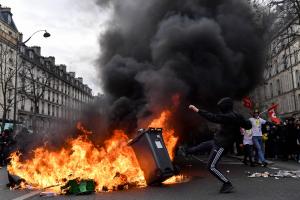
 In this week’s segment, we hear about the ongoing uprising in France against austerity, neo-liberalism, colonialism, and white supremacy. But first, we will talk about a new report that shows a 25%…
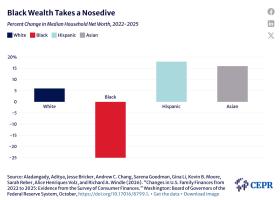 The Center for Economic and Policy Research (CEPR) recently reported on Federal Reserve data that shows that Black Americans have lost 25% of their wealth between 2022 and 2025. Whites, Asians, and…
 Bouna Mbaye is an activist, a member of the Pan-African League-Umoja, the Pan-African Brigade for Palestine, and the US Out of Africa Network.
 As Black Agenda Report is poised to celebrate its 20th anniversary, we reprint Glen Ford's commentary on the killing of Trayvon Martin and the impunity provided to his killer in a criminal justice…
 The Democratic Party is terrified of even small liberal reforms and will not abide left leaning democrats thwarting their plans for austerity and neoliberal orthodoxy.


