“It is clear that the availability of white money caused Black organizations to restructure themselves into fund-raising agencies.”
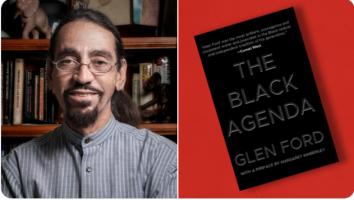
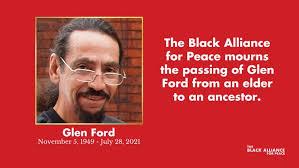
Last week, The Black Agenda Report passed a tremendous milestone: we marked the twentieth year since its founding. This week, to commemorate BAR’s anniversary, we reprint a piece by one of BAR’s founders: the late, legendary journalist, editor, intellectual, and radical Glen Rutherford, aka Glen Ford.
In 1975, while Glen was a young but already well-established journalist, working as the Capitol Hill correspondent for the Mutual Black Network, he wrote a short essay titled “Black Organizations and White Money.” Published in Essence magazine – of all places – the essay examined a transition occurring among Black organizations in the mid-1970s: as white foundations abandoned support for Black organizations, Black organizations found their work increasingly consumed by fund-raising efforts – begging white granting agencies for money. As a result, Glen found that not only was white funding shaping the policy direction of Black organizations, but securing white funding became the aim and purpose of Black organizations themselves. A vicious and paralyzing fiscal circle emerged: the purpose of grant-writing was to secure more funding to support more grant-writing. Political activism and policy work fell by the wayside.
For Glen, the only way to break this circle was to turn away from the white foundations and the white philanthropists – and to return to a model of Black self-sufficiency wherein the Black community funded its own projects, and thus determined its political and policy goals. This was not a model of Black capitalism. Instead, Glen had a vision of Pan-African socialism that married Black nationalist self-determination with the principles of shared, collective, anti-capitalist action. These principles guided Glen’s professional and political engagements, be it via the Mutual Black Network or the Black Agenda Report. And in a world where Black individuals and Black organizations are too often bought off, and too easily sell out, Ford’s vision is desperately needed. His “Black Organizations and White Money” is reprinted below.
Black Organizations and White Money
Glen Ford
Tenants in an inner-city apartment building called the National Tenants Organization to request help in organizing a rent strike. No help was available. Everyone was busy trying to raise money to pay the organization’s rent.
Welfare rights leaders throughout the country were concerned about the Department of Health, Education and Welfare’s recent proposal eliminating food stamps and Aid to Dependent Children. Their attempts to reach the National Welfare Rights Organization for information and guidance were unsuccessful; the organization’s phone had been disconnected.
The freeze is on. Many Black and poor people’s organizations, dependent upon foundation, corporation and church support, are finding that the wells of white philanthropy have gone dry. The militants of the sixties, whose desks, mimeograph machines and transportation costs were paid for with money accumulated on Wall Street, now find themselves spokesmen without a rostrum — power brokers gone broke.
Today John Hampton, associate director of the National Tenants Organization (NTO), sits in reduced circumstances and cramped quarters amid the reports and memorabilia of the once powerful lobbying agency. Although the organization has 500 affiliates, it has been all but abandoned by foundations that previously supported it. Part of the problem, Hampton says, is the “arbitrary and faddish nature” of foundation founding decisions.
Hampton traces the end of the honeymoon between poor people and white philanthropy to the Tax Reform Act of 1969. This legislation says that foundations may not claim as tax deductible money given to fund any activity that may result in a demonstration or support groups pressuring for changes in legislation or government policy. Only “education” projects are eligible for tax deductible funding.
NTO’s activities, pressing for changes in landlord laws and demonstrating against federal housing policy, put them outside the guidelines. “And makes everyone,” Hampton says, “leery about giving us money.” NTO Received only one grant last year, $19,000. They are $57,000 in debt.
Hampton views the Tax Reform Act as part of the backlash against the activist groups of the sixties and the foundations that financially supported them. After Nixon’s election, he says, the federal government exerted tremendous pressure on foundations, using IRS audits to enforce the Tax Reform Act.
Accordingly, the church followed the state. Howard Quandary is the executive director of the Community Action and Human Development Program of the National Episcopal Church. “A good deal of church money,” he says, “comes from people who are threatened by social change. At one point we supported the California farm worker’s movement. But we were forced to cut off direct funding. The area diocese reacted strongly against our policy because growers were their financial backbone. Now we provide only training and consultative services.” Clearly, the question is more one of politics than of conscience.
The National Welfare Rights Organization (NWRO) also charges outright political manipulation by church funding agencies. Faith Evans, NWRO associate director, says, “The Catholic Church granted our Pittsburgh affiliate $40,000. Shortly afterward, one of the local leaders appeared on a television show and was asked her position on abortion. As a welfare recipient with six kids, she said every woman should have the right to decide whether or not she is going to have a baby.
“The church didn’t even wait for the mails. The following day she received a hand-delivered letter saying that they were cutting off the affiliate’s $40,000 because of her position on abortion.”
While churches and foundations have cut off many national Black organizations, they continue to fund projects sponsored by local affiliates, which creates competition between the national organizations and their local branches. There is no doubt that this scramble for dwindling funds has had a devastating impact on relations among Black organizations. It is not, however, enough to bemoan the callousness of white foundations and churches or denounce the bias and faddishness of middle-class executives. Somewhere, something went wrong with the Black movement leading to the present crisis. It is clear that the availability of white money caused Black organizations to restructure themselves into fund-raising agencies. As a result, day-to-day strategy was not directed at building a self-sufficient, coordinated goal-oriented movement.
John Hampton calls this the poverty-program mentality. “The poverty programs of the sixties,” he says, “gave rise to a certain kind of thinking that said if you are poor or Black, you don’t have to put any money out to deal with a problem. The federal government or some foundation will come in, pay for a staff, give you an office, paper and a mimeograph machine. That mentality came with us into the seventies as foundation support dried up, we were not prepared to raise enough money to survive.” Of course, the potential financial support was there all the time, within the masses of people on whose behalf the organizations were struggling. It was never tapped.
The National Welfare Rights Organization has an estimated membership of 125,000 people. Yet it could not raise the $5,000 needed to save its telephone. Faith Evans believes that assessing each member one dollar a year will be enough to sustain a powerful national advocacy agency. She says her agency has already begun setting up such a dues system.
The current crisis has forced the National Tenants Organization into a crash restructuring program. The group envisions a system of tenant unions with the power to enter into binding contracts with landlords and a dues system.
Times have changed but the dynamics of power have not. It will take a nationwide action to set in motion forces strong enough to beat back the current assault on the poor. The gains made by Black people during the sixties were the fruits of such a movement. Organization is still the element that can transform a small group of oppressed people into members of a powerful pressure group able to shape legislation, command the attention of the national news media and resist the policies of giant corporations.
Glen Ford, “Black Organizations and White Money,” Essence (June 1975).






 “In a democracy, it’s supposed to be one person, one vote, and the more one person can influence, the less egalitarian our system becomes,” said one expert.
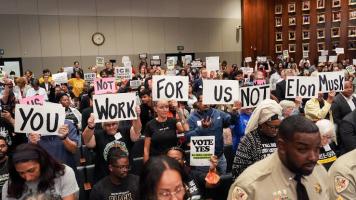 KeShaun Pearson of Memphis Community Against Pollution discusses the struggles against Elon Musk's data center and Memphis' compromised elected officials.
 Robert Wilson analyzes Lula da Silva's comeback from defeat in the first round of voting in Brazil's presidential election.
 BAR Executive Editor Margaret Kimberley joined Sabby Sabs to analyze recent developments in West Asia.



