“Oppressed communities around the world need to divorce themselves from empires.”
On Christmas morning, many major shareholders and executives of oil companies, weapons manufacturers, mining corporations and other enterprises that are part of the military-industrial complex will rise with their families and spend a day feasting and trading obscenely expensive gifts. It is, of course, possible they will say an obligatory prayer of thanksgiving, but there will be scant mention, let alone in-depth consideration of the life of the individual whose birthday has become the annual excuse for the capitalist system to wage a no-holds-barred campaign to promote among working people and the poor a lust for material excess, waste and mindless consumption.
Corporate big shots will not consider that the little baby born in Bethlehem about 2,050 years ago grew into a man who found himself in the midst of a revolutionary maelstrom. He watched as an overseas empire headquartered in Rome deployed its military troops and enforcers to occupied Palestine where they went house-to-house extorting the meager financial resources of desperately poor people and torturing and killing those who resisted. Modern day capitalists will not think about the guerrilla fighters (“Zealots”) who ambushed and killed Roman soldiers. Nor will they contemplate that at least one of these fighters was recruited into Jesus’ trusted circle of disciples.
“Jesus walked streets teeming with ragged, disease-ridden, starving people who were made this way by Roman imperialism.”
Expensive art collections of today’s wealthy families contain Renaissance paintings of a sanitized, idealized First Century Palestine where a delicate, nicely-groomed white Jesus moved easily through idyllic grassy pastures attired in pastel silk robes and sandals. On Christmas morning it will be these Biblical fantasy images that will float through the minds of corporate executives rather than thoughts of the real Palestine that Jesus experienced. Jesus walked streets teeming with ragged, disease-ridden, starving people who were made this way by Roman imperialism. As for Jesus himself, we don’t know precisely what he looked like, but we do know he was not the white man in Renaissance paintings. To escape death, the baby Jesus was taken into Africa to hide. It was not a place where a white infant would blend into the local population.
While it is likely capitalists will consider none of these facts about the historical Jesus on Christmas, it is practically certain that as they piously sing Christmas carols about a figure they claim to worship, they will fail to see the parallels between the Roman Empire and 21st Century U.S. imperialism. They will definitely fail to acknowledge the blood on their own hands, and the fact that Jesus would point an accusing finger at them for their role in oppressing and killing the people he loves.
“Today’s wealthy families idealize a delicate, nicely-groomed white Jesus who moved easily through idyllic grassy pastures attired in pastel silk robes and sandals.”
At the beginning of his ministry, Jesus proclaimed that his mission was to fulfill prophesy and preach the good news to the poor, heal broken hearts, preach deliverance to captives, restore sight to the blind and to set the prisoners free. By contrast, corporate executives practice a religion of greed and materialism that causes hopelessness, despair and frustration among the poor. The U.S. Empire holds captive numerous political prisoners and it leads the world in maintaining a soul-killing, racist, mass incarceration enterprise.
Jesus was not as preoccupied as were his revolutionary comrades with the troubles of this world. From his perspective our journey on this planet was a momentary experience leading to an eternal life in the hereafter. Thus, his first priority was saving souls. But he also had compassion for the people around him and he understood the need for effective resistance to oppressive forces. His approach is one that oppressed people in the current era -- particularly the people of Africa and the African Diaspora -- would do well to emulate. He simply divorced his community from the empire.
“The U.S. Empire leads the world in maintaining a soul-killing, racist, mass incarceration enterprise.”
When Jesus’ foes attempted to trick him by giving him the Hobson’s choice of either telling his followers to pay taxes to Rome or to instead become tax resisters, Jesus recognized the contrived dilemma. Calling on a bitter, angry oppressed community to pay taxes to the empire would destroy his credibility. Urging tax resistance would bring down the heavy hand of the empire prematurely. He brilliantly responded by essentially saying that if Rome wants the coins it minted, give them back. But coins are only objects that represent labor, time, industry, talent, loyalty and energy. Jesus said those things belong only to God, and the empire was not entitled to receive them.
Members of the First Century Christian community divorced themselves from the Roman Empire and totally committed themselves to their own community. Whatever resources they possessed, financial and otherwise, were placed in a communal treasury. Likewise as individuals had material needs, they withdrew from the treasury the resources that they needed. In this way they eliminated poverty. This simple, but effective method of organizing an economy was not lost, and was expressed many years later in the familiar axiom: “From each according to his abilities and to each according to his needs.”
Oppressed communities around the world need to divorce themselves from empires. While imperialism controls many of their natural and financial resources, whatever other financial resources these communities possess, as well as political commitment, skills, talent, time, and energy must be held in common and shared for revolutionary purposes. If the revolutionary vision is of a society that shares, then the practice of sharing must be part of even the earliest stages of a revolutionary process.
Mark P. Fancher is an attorney who writes frequently for Black Agenda Report. He is the author of: I Ain’t Got Tired Yet: The Spiritual Battles of Enslaved African Christians and their Descendants. He can be contacted at mfancher(at)Comcast.net.

 The moniker “Genocide Joe” is well deserved and one that Joe Biden can never live down, along with any other names that describe the damage he brought to the country and to the world. His legacy is…
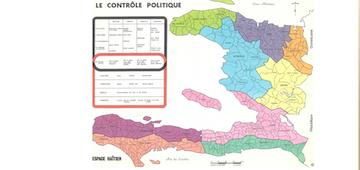 Despite selling out Haiti, former Haitian leftist Gerard Pierre-Charles’s 1983 diagnosis of the imperialist assault on current movements still resonates today.
 Both class and color barriers were broken down during the Michael Manley era, but class barriers re-emerged.
 Over a month after the killings of four young boys in Ecuador, now known as the Guayaquil Four, the community is still reeling but is also activated. This case has sparked a movement that is…
 In this series, we ask acclaimed authors to answer five questions about their book. This week’s featured authors are Tracy Rosenthal and Leonardo Vilchis. Their book is Abolish Rent: How Tenants Can…


