Burundi is Africa’s Syria and Venezuela, a developing nation that dared to defy US dictates under Nkurunziza’s leadership.
“His legacy is his effort to reconcile Burundi’s Hutu and Tutsi classes and end the deep-seated, centuries-old hatred between them.”
Burundian President Pierre Nkurunziza, died suddenly on June 8th, reportedly of a heart attack. The new president, Évariste Ndayishimiye, who had been elected on May 20th, was sworn in ten days later, two months earlier than planned, in accordance with a decision by Burundi’s judiciary.
Burundi is a tiny East African nation bordering Rwanda to the north, Democratic Republic of Congo to the east, and Tanzania to the west and south. It is Africa’s Syria and Venezuela, a developing nation that dared to raise an independent head, contracted with a Russian firm to mine its nickel reserves, then survived the ensuing Western propaganda and covert operations. Russia and China came to Burundi’s aid by vetoing UN Security Council resolutions to censure it, which would have laid ground for a military intervention of one sort or another. Samantha Power, the USA’s violent, know-it-all Ambassador to the UN from 2013 to 2017, was as furious as she was when Russia and China vetoed resolutions to censure Syria.
Burundi is on the western edge of China’s One-Belt, One-Road Initiative in Africa. Venezuelan President Nicolas Maduro was quick to send his condolences to Burundians upon Nkurunziza’s death, writing, “We express our condolences to the people of the Republic of Burundi for the regrettable and unexpected physical departure of its president, Pierre Nkurunziza. My respect and solidarity with our brothers and sisters of Mother Africa at such a difficult time. Embrazos!"
I spoke to Edgar Muvunyi Tabaro, the author of an eloquent tribute first published in The Observer, a Ugandan outlet.
Ann Garrison: Edgar, your essay "Fare Thee Well, President Nkurunziza" is complex, nuanced, and historical, and I recommend it to anyone seeking to further understand the African Great Lakes Region. Could you summarize what you most hoped to make people understand about President Pierre Nkurunziza, what you hope his legacy will be?
Edgar Muvunyi Tabaro: President Nkurunziza taught at Burundi University and the military academy. His mother was a Tutsi nurse and his father a Hutu governor. The Hutu and Tutsi identities transfer patrilineally, from father to children, so he was a Hutu, but nevertheless born to an elite class. Despite privilege, he conducted his presidency in humble simplicity. He was very much in touch with the Hutu peasant majority, very accessible to them. His legacy is his effort to reconcile Burundi’s Hutu and Tutsi classes and end the deep-seated, centuries-old hatred between them.
He also kept his promise to step down and hand power over to a successor chosen by the people in a democratic election. Word had it that he wanted his party’s 2020 nomination to go to the president of the national assembly, the lower chamber of Burundi’s legislature, but the party’s executive committee preferred General Évariste Ndayishimiye, and he accepted that.
AG: You wrote about the assassination of Louis Rwagasore, a Tutsi prince who married a Hutu and joined a prominent Hutu politician to forge a movement that would move Burundi beyond polarization of the Hutu and Tutsi classes. Tutsi supremacists assassinated Rwagasore just before he was to become prime minister, then assassinated two Hutu prime ministers elected to follow him. The tyrant who then came to power committed genocide against 300,000 Hutu people. Can you explain what was so extraordinary about the way that President Nkurunziza engaged with this history?
EMT: Military leaders of elite Tutsi clans were responsible for three Hutu genocides, in 1972, 1988, and 1993, all of which were intended to wipe out the educated Hutu elites. Nkurunziza nevertheless engaged with these groups and never discriminated against them. He appointed one of their members to serve as vice president in his first government, from 2005 to 2010. He extended an olive branch to them, including them in his cabinet and treating their previous presidents with respect.
AG: Amnesty International and the Institute for Security Studies both responded to President Nkurunziza's death by calling him "divisive," which is the opposite of what you write. Why do you think Western governments, think tanks, and NGOs held such animosity toward him?
EMT: The outside world, and especially the Western media, grossly misunderstood President Nkurunziza. Much of the narrative they report has been that of the narrow political class that lost power when democracy took root in Burundi. The bitter elements of that class drive the bulk of Western press and social media about Burundi. But I'm very certain that if you had a chance to discuss him with ordinary people in the farms and grazing lands in Burundi, you would learn that they loved him, honor his memory, and disagree with these dominant Western institutions.
I am a lawyer and a former law professor. I practice law in Kampala, Uganda, and East Africa in general, and I am most interested in dialogue and conflict transformation between warring parties in the African Great Lakes Region, which has undergone civil wars and genocides for many decades. I am among those who think we should take careful, purposeful steps to address the reasons for conflicts and establish the best paths to conflict resolution and peaceful, productive society.
You are in an industrialized country where what matters at the end of the day is the relation between the producer and the consumer, not the relationship between clans or ethnicities. What matters is whether or not all your people have a sustainable way of living and reproducing. That is what we are pursuing here in the African Great Lakes Region, and I hope we will achieve it before I meet my creator.
Thank you very much for your time and attention. God bless you.
Edgar Muvunyi Tabaro is a Ugandan jurist. His essay “Fare Thee Well, President Nkurunziza” can be read on the websites of "The Observer” and “San Francisco Bay View.”
Ann Garrison is an independent journalist based in the San Francisco Bay Area. In 2014, she received the Victoire Ingabire Umuhoza Democracy and Peace Prize for her reporting on conflict in the African Great Lakes region. Please support her work on Patreon. She can be reached at ann-at-anngarrison.com.
COMMENTS?
Please join the conversation on Black Agenda Report's Facebook page at http://facebook.com/blackagendareport
Or, you can comment by emailing us at comments@blackagendareport.com


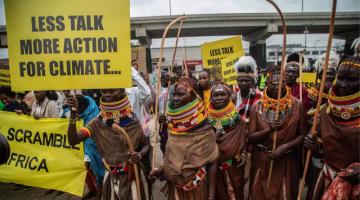 Carbon and biodiversity offsets are the latest imperialist weapons used against African people and their nations. Self-determination is the key to ecological health for the continent.
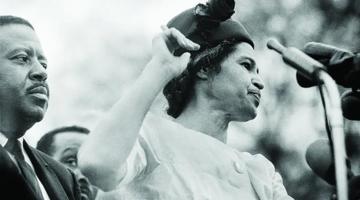 Internationalism is the path toward Black liberation. Black people must resist the push to silo our movements and move in this spirit of Rosa Parks - with fearless integrity.
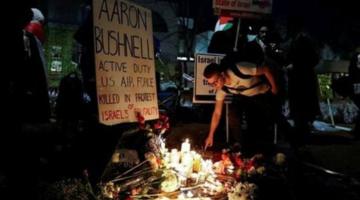 Aaron Bushnell's act of self-immolation is a symbol and a call for people around the world to break their silence and fight for a free Palestine.
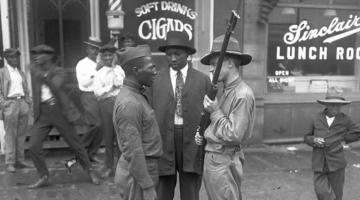 In the time between the two imperialist wars, the spirit and politics of Pan-Africanism grew. African Americans continued to organize and built movements to resist rising fascism.
 The West African trade bloc has lifted a majority of the sweeping sanctions it had imposed on Niger, including border closures and a freezing of state assets. The move followed soon after Niger, Mali…


