BAR Book Forum: Symposium on Achille Mbembe's "Critique of Black Reason" (Part 3)
Mbembe invites us to rethink the foundation of thought upon which the world is predicated.
“Anti-blackness and white supremacy—are symptoms of the world-problem.”
(In this three-week symposium, we asked authors to comment on Achille Mbembe’s book, Critique of Black Reason. This week’s contributor is Calvin Warren. Warren is Assistant Professor of Women's, Gender, and Sexuality Studies at Emory University. Read the first part of the symposium, by Vincent Lloyd, here. The second part, by Neda Atanasoski and Kalindi Vora, can be read here.)
“What is a World?“
by Calvin Warren
The problem of black reason is the problem of the world.
For Dubois, the problem of the 20thcentury was the “color line.” Mbembe’s The Critique of Black Reason, however,redefines this “line”for the 21stcentury as the “world-partition”—the separation, fragmentation, and disjuncture of the world, along racial difference. His critique, as both a philosophical genre and methodological strategy, foregrounds the world-problem in black reason, and attempts to (re)present a more accurate understanding of the world, as a necessary corrective and solution. The “black man,” assumes the status of sign, portal, and allegory of the world itself; his brokenness, despair, and atomization provide both the ground of knowledge for the world and embodied possibility in this critique. Everything, then, depends on the world. If “the world is the same as declaring humanity,” (180) then the world and humanity become interchangeable synonyms, and the “critique” is both the mode of declaring this synonymity and insidiously synthesizing world and humanity together. Declaration and synthesis are two names for the strategy of his critique.
Put differently, the problem of black reason (its obsession with exclusion and difference) and the problem of black reason—the problem black reason is mobilized to address, such as anti-blackness and white supremacy—are symptoms of the world-problem. If Mbembe can correct (and resolve) the world-problem, then the problems of difference, anti-blackness, and white supremacy are also resolved by consequence. Everything, then, depends on the world—its presentation, presumptions, and capacities. Thus, “world-thinking,” as a presentation of “the possibility of restitution, reparation, and justice,” (179) is an integral aspect of this critique. How does one think the world? What philosophical infrastructure enables such thinking? What protocols and strategies enable such thinking? We might ask, after Kant, what are the necessary conditions of such thinking? So, part of the problem with black reason is that its thinking is inferior or inadequate, according to Mbembe—this is why critique, as a mode of judgment and thought, is not a trivial word in the title. Critique presumes it can correct thought by demarcating the limits of Reason, and subordinating and exposing unreason (or delirium, as Mbembe would call it) as a dogmatic or mythic formation.
“The ‘black man” assumes the status of sign, portal, and allegory of the world itself.”
Kant understood the “world” as a problem for philosophy in his Critique of Pure Reason. For him, traditional metaphysics misused “world,” as a term to capture the absolute whole all at once. Within Kant’s critique, this line of thinking itself is an error because one cannot have direct experience of the world—as an absolute whole (of everything all at once). One would have to assume a position outside the world (the container) to have direct perspective of the whole world, and such a perspective is impossible and limits Reason. Kant distinguishes between a prior condition of space (and time), through which appearances emerge (something sense can experience), and the world, as an Idea.[i]As Sean Gaston has suggested,
“For Kant, the world is not a concept arising from a priori intuitions. The world is an idea; it is not ontologically given nor is it discursively known. There are no sensible intuitions or concepts for the world as a whole. The world is only a regulatory idea of reason.” The regulative world is not space…the regulative world is not presupposed…as a regulative idea, we give the world form but do not create it. We gain the world as a regulative idea and systematic unity through the progress of our reasoning[ii].”
A regulatory idea exposes the inadequacy of the “concept” to contain and convey all that the world promises as a feature of metaphysical systemization. Kant proposes that we act “as if” there is a world, to deploy a necessary fiction at the boundary of reason to express this whole.[iii]It is this very fiction that grounds his moral, anthropological, and pragmatic philosophy—the move from cosmos to cosmopolitanism, as Foucault suggested.[iv]In Toward Perpetual Peace, Kant introduces “the right to the earth’s surface, which belongs to the human race in common” and the necessity of the “whole world,” when political concerns are at issue.[v]In Kant’s Anthropology, he also speaks of “citizens of the earth.” Political necessity, then, fortifies a regulatory fiction to justify the metaphysical impulse to unify, systematize, and schematize the whole, at once.
“When we elevate fictions to a realm of apodictic certainty, we have done nothing more than produce myths (or delirium/delusions).”
I want to emphasize that necessity does not diminish the fiction of the world, the “as if” is only a feature of fantasy, of circumventing the earth and assuming a perspective of everything, as a unit. But if we take the Idea of the world as a fact, rather than a fiction, do we not produce metaphysical dogma, the same dogma Kant warned us against? When we elevate fictions to a realm of apodictic certainty, we have done nothing more than produce myths (or delirium/delusions). Moreover, the acting “as if” requires a performative consensus, a collective acceptance of metaphysical fantasy, and we must questions the conditions of such a performance—what enables its deployment.
If race has become a feature of dogma, because it consolidates appearances, delusions, and fantasies as real, according to Mbembe, then we might say that Mbembe can only combat this dogma with the dogma of world-thinking—to raise political necessity (necessity for whom we might ask?) to the level of fact, or as he avers, “the fact remains that we all share this world. It is all that there is, and all we have.”(182). So the question before us is one of epistemology, how do we know “that there is only one world?” With what form of reason does the critique establish that fact that “there is only one world. We are all part of it, and we all have a right to it. The world belongs to all of us equally, and we are all its coinheritors, even if our ways of living in it are not the same”? This is also to suggest that “restitution, reparation, and justice” must also be thought of as “fantasy-effects”—the capacities we ascribe to humans and the world through our delusions. In presenting this fantasy as Critique, Mbembe presumes the world is “sharable,” “accessible,” and “livable,” but are these features of experience? If the world is not reducible to the earth, the experience of sharabiility and livability is not certain, and cannot be presumed as given. The critique reaches its limit in the ability to present the facticity of its universal gestures, that everyone and all things share and access the “world.” The attributes of this world are presented as given and fact, although they are predicated on an “as if” fiction.
“The disjuncture between historical experience and regulatory idea is an impasse the text neglects.”
Mbembe’s critique presents the fact of fragmentation, division, and difference as a degraded experience of blackness throughout the book, but he wants to subordinate that experience to a regulatory idea, one counter to this well documented experience, The disjuncture between historical experience and regulatory idea is an impasse the text neglects, other than to suture it with declaration and dogma.
Perhaps, this is the discomfort Afro-pessimists have with cosmopolitan idealism—its strategy of offering up a regulatory idea as the corrective and solution to anti-blackness. Frank Wilderson, for example, claims that blacks lack a world, and this lack of a world is a precondition of human world-hood.[vi]To suggest that blacks “lack a world” is not to suggest blacks do not inhabit the earth, I would argue—its resources, etc—but that the metaphysical fiction of sharing, unity, wholeness, and openness is a historical fallacy and unhelpful. Indeed, Mbembe spends the majority of the critique describing, with precision, the experience of exclusion, limits, and fragmentation, only to end with the presentation of a regulatory idea as a response to anti-black experience.
We might revisit Wilderson’s call to “end the world” as a response to world-thinking as solution. To “end” the world is to dispense of world-thinking and its metaphysical presumptions of capturing the “whole” and the “1.” Just as metaphysics has reached its “end” for post-metaphysicians, the world, as an idea circulating as a concept, has reached its end as well—as one of the last vestiges of metaphysical thinking. If Badiou is correct that “1” begins metaphysical violence, then calling for the end of the world, is to think of the world, itself, as metaphysical violence. The “world” cannot achieve perpetual peace or co-belonging because it is the essence of violence.[vii]
Mbembe’s beautifully written critique invites us to rethink the efficacy of the world, as fantasy- idea, and the foundation of thought upon which the world is predicated.
Calvin Warren is Assistant Professor of Women's, Gender, and Sexuality Studies at Emory University.
COMMENTS?
Please join the conversation on Black Agenda Report's Facebook page at http://facebook.com/blackagendareport
Or, you can comment by emailing us at comments@blackagendareport.com
[i]Immanuel Kant, Critique of Pure Reason, trans. Paul Guyer. Cambridge: Cambridge University Press, 1998, 498.
[ii]Sean Gaston, The Concept of World from Kant to Derrida. New York: Rowan & Littlefield, 2013. 15-16.
[iii]Critique of Pure Reason, 606; Gaston, 17
[iv]Ibid. , 24
[v]Immanuel Kant, Toward Perpetual Peace, in Practical Philosophy, ed. And trans. Mary J. Gregor, intro, Allen Wood. Cambridge: Cambridge University Press, 1999. 349.
[vi]Frank Wilderson, Red, White, & Black: Cinema and the Structure of Antagonism. Durham: Duke University Press, 2010.
[vii]Alain Badiou, Being and Event. New York: Continuum, 2007.

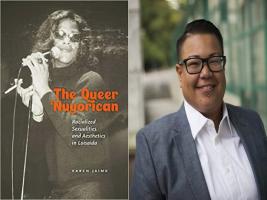 This week’s featured author is Karen Jaime. Jaime is Assistant Professor of Performing and Media Arts and Latina/o Studies at Cornell University. Jaime’s book is The Queer Nuyorican: Racialized…
 Ghana has initiated talks with the International Monetary Fund to seek a potential bailout amid a major economic crisis. This has been rejected by the Socialist Movement of Ghana and trade unions who…
 US police departments spend tens of millions of dollars every year to manipulate the news, flooding the discourse with “copaganda.” These aggressive tactics give the public a distorted view of what…
 Behind rolling power cuts loom deep-seated socioeconomic issues worsened by the rich countries of the world.
 For almost two weeks, tens of thousands of Panamanians have been taking to the streets across the country protesting the cost of living crisis and lack of of response and attention from the…


