In this series, we ask acclaimed authors to answer five questions about their book. This week’s featured author is Karen Jaime. Jaime is Assistant Professor of Performing and Media Arts and Latina/o Studies at Cornell University. Jaime’s book is The Queer Nuyorican: Racialized Sexualities and Aesthetics in Loisaida.
Roberto Sirvent: How can your book help BAR readers understand the current political and social climate?
Karen Jaime: The Queer Nuyorican: Racialized Sexualities and Aesthetics in Loisaida is the first queer genealogy and critical study of the historical, political and cultural conditions under which the term “Nuyorican” shifted from a raced/ethnic identity marker to “nuyorican,” an aesthetic practice and political-poetical alliance, by attending to the too often ignored contributions of queer and trans artists of color in the founding and maintenance of the Nuyorican Poets Cafe. In the book, I posit that the epistemic turn, from Nuyorican to nuyorican, was produced via market forces and the demographic upheavals of the 1990s in New York City: specifically, the gentrification of the Lower East Side and New York City overall, with the explosive outpouring of spoken word and poetry slams at the Nuyorican Poet’s Cafe serving as a forthright expression of queer of color politics and communities in the urban United States. In turn, the aesthetics formulated in this packed dark space operate as foundational to poetic-political, literary and performative matrices of the late 20th and 21st centuries. The Queer Nuyorican allows for a critical engagement with our current political and social climate through art-making practices rooted in collectivity evidenced community formations that challenge definitions of what constitutes art as activism. How do contemporary performance practices draw from and extend social justice movements of the past, within the present, to enact change? Specifically, as it relates to queer communities of color and their quest for survival?
What do you hope activists and community organizers will take away from reading your book?
I hope that activists and community organizers come away with an appreciation for the relationship between art and activism, and art-making as activism. In particular, how performance practices, as extensions of social justice activism, help to effect change. For example, in terms of the Nuyorican Poets Cafe, a community institution founded in 1973 during the heyday of New York’s Puerto Rican communities’ nationalist liberation movements, the founders’ usage of “Nuyorican,” with an uppercase “N,” marked an ethnic, political and cultural identity signifying Puerto Rican community, culture, and struggle in New York City from the late 1960s through the 1980s. By including “Nuyorican” in the name of their performance space, Miguel Algarín and Miguel Piñero made visible the lived political, social, and economic conditions of the Nuyorican community. In addition, their use of “Nuyorican” connected their poet’s cafe with other cultural proponents of national liberation, as well as other minoritarian movements’ efforts to transform historically pejorative identity markers into signifiers of (masculinist) strength, defiance and resistance. Thus, the development in the 1990s of a lowercase “nuyorican” references an aesthetic practice and performance style that developed alongside the spoken word scene, positioning Nuyoricans in coalitional relation to other Latina/os, the Black diaspora, and Asian-American and Pacific Islanders.
We know readers will learn a lot from your book, but what do you hope readers will un-learn? In other words, is there a particular ideology you’re hoping to dismantle?
In The Queer Nuyorican, I challenge the dominant narrative that defines the Nuyorican Poets Cafe, and its history as specifically ethnic-Puerto Rican, heterosexual, and predominantly cis male. Specifically, I document the interventions made by queer and trans artists of color, demonstrating how the Nuyorican Poets Cafe has operated as a queer space since its founding, both in terms of sex acts and performance practices. Although existing histories of the Cafe focus primarily on the writers and the space within a nationalist, heterosexist framework, I highlight the queer work of artists including Miguel Piñero, Regie Cabico, the participants in the Glam Slam, and Ellison Glenn/Black Cracker, proposing this redeployment of the archive as recuperative of elided histories and negated futurities. In particular, I assert that queer politics and slam poetics at the Cafe in the 1990s disrupt the patrilineage and racial monologic, used by most, to narrativize and normalize the Nuyorican and its aesthetics. Proposing nuyorican as a signifier queers and resignifies Nuyorican, marking those who are not necessarily ethnically Puerto Rican, but whose performance practices are simultaneously influenced by, and critical of, the countercultural discourse inherent in the founding and continuance of the Nuyorican Poets Cafe. I chose the title of my monograph as a way to deliberately index the work of performance artists who all began their careers at the Nuyorican Poets Cafe as performance poets but whose work now extends beyond poetry to include music, theater, video, and drag. Significantly, the politics of their work parallel those exhibited in the recodification of the term Nuyorican from pejorative to empowering.
Who are the intellectual heroes that inspire your work?
I owe a great debt to the scholars, mentors, and artists who I am in conversation with throughout the book. I think back to graduate school, where I was fortunate enough to work with Diana Taylor, José Muñoz, Tavia Nyong’o, and Fred Moten and am reminded of how they taught me to critically engage with both theory and practice. Their scholarship modeled for me an ethics of care that I hope to have employed when analyzing the work of the artists I discuss throughout The Queer Nuyorican. In addition to these early mentors, I continue to benefit from being in community and conversation with Ramón Rivera-Servera, Juana María Rodriguez, Deb Vargas, Arlene Dávila, Renato Rosaldo, E. Patrick Johnson, and C. Riley Snorton. Alongside these critical interlocutors, I am also incredibly moved by the work of Uri McMillan, Sandra Ruiz, Albert Laguna, Leticia Alvarado, and Patricia Herrera. In addition to these scholars, I am also indebted to artists such as Lola Flash, Regie Cabico, Andres Chulisi Rodriguez, Emanuel Xavier, and Marga Gomez. As a scholar and practitioner, it is essential for me to engage with both theory and practice as a mode of scholarship, focusing on communities who are often rendered invisible in order to highlight their contributions to our political and social landscape.
In what way does your book help us imagine new worlds?
The Queer Nuyorican attends to artistic practices that expand on previous spoken word and slam poetry performances resulting in contemporary versions of drag, video, music, and theatre that signal alternate possibilities for queer survival and possible futurities. Artists such as Regie Cabico, Andres Chulisi Rodriguez, Emanuel Xavier and the participants in the Glam Slam, alongside Ellison Glenn as Black Cracker draw from the countercultural politics evidenced in the founding and maintenance of the Nuyorican Poets Cafe by poets such as Miguel Piñero and Miguel Algarín. In using the writing and performance of these early Nuyorican artists in devising their own cultural productions, these artists mobilize their work beyond the physical geography of the Nuyorican Poets Cafe, and through their work travel between different temporalities, spaces, and performance genres. This movement through time and space through performance articulates more expansive conditions of possibility for queer artists of color, not just in the present but also in the future. The ability to imagine a queer futurity beyond the here and now, is particularly highlighted in events such as The Open Room, the open mic that brings the Friday Night Poetry Slam to a close. The Open Room is useful as a site of analysis because of how it brings together poets who are committed to spoken word poetry as a tool for envisioning other ways of being in the world.
Roberto Sirvent is editor of the Black Agenda Report Book Forum.


 The UN Permanent Forum on People of African Descent must uphold the 2001 Durban Declaration and Programme of Action (DDPA). A recently written mandate affirms the importance of DDPA and the need to…
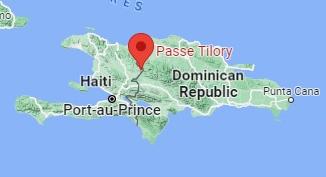 The Dominican Republic does not restrict its assaults on Haitians and its Haitian descended citizens. Its military feels free to enter Haiti itself and to commit killings there.
 The International Criminal Court (ICC) has no legitimacy. It has always acted on behalf of the U.S. and its allies.
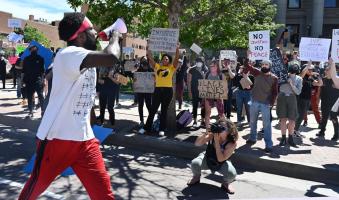 In 2020 law enforcement continued their practice spying on activist groups and attempting to entrap them. Police infiltration of movement spaces never ended.
 In this segment, we learn why Atlanta is the site of the planned Cop City police training facility in what purports to be a Black mecca


