Black women are still regularly ignored by the very political projects that celebrate us.
“Black feminist theoretical work should allow intersectionality to move in unexpected and maybe even unsettling ways.”
In this series, we ask acclaimed authors a few questions about their book. This week’s featured author is Jennifer Nash. Nash is Associate Professor of African American Studies and Gender and Sexuality Studies at Northwestern University. Her book is Black Feminism Reimagined: After Intersectionality.
Roberto Sirvent: How can your book help BAR readers understand the current political and social climate?
Jennifer Nash: In recent years, the US Left has developed a set of refrains preoccupied with black women: Vote like a black woman. Listen to black women. Follow black women. Thank black women. Believe black women. As the Left continues to feel the aftershocks of Donald Trump’s election, black women are increasingly celebrated as not just the Democratic Party’s reliable base, but as its most committed voters, as salvific figures who regularly show up to the save the country from itself. Black women are imagined to be the Moses of the US Left: if we simply follow black women’s lead, we will all be free. My book aspires to understand not only how black women – and intersectionality – have become key symbols in the US academy, but also in US politics, particularly in the age of Trump. I am particularly interested in how this newfound gratitude can hide the ways that black women are still regularly ignored by the very political projects that celebrate us even as they pat themselves on the back for gesturing to our existence.
We know readers will learn a lot from your book, but what do you hope readers will un-learn? In other words, is there a particular ideology you’re hoping to dismantle?
My book is aspiring to transform the felt experience of black feminism in the US academy. I argue that defensiveness is manifested most explicitly through black feminism’s – and black feminists’ -- proprietary attachments to intersectionality. These are relationships to intersectionality marked by a desire to hold on to intersectionality, to keep it close, to guard it—these are desires which render intersectionality property. As I argue in the book, these defensive attachments conscript black feminism into a largely protective posture, leaving us mired in policing intersectionality’s usages, demanding that intersectionality stay located within black feminism, and reasserting intersectionality’s “true” origins in black feminist texts. The call of the book, then, is to inspire black feminist theoretical work that can practice love and care for analytics, tools, methods, and traditions differently, that can allow intersectionality to move in unexpected and maybe even unsettling ways.
Who are the intellectual heroes that inspire your work?
I am deeply inspired by the long tradition of black feminist intellectual, creative, and political work. I am particularly drawn to work by Patricia J. Williams, June Jordan, Barbara Smith, Barbara Christian, and Ann duCille – their collective work has travelled with me since my earliest days as a women’s studies undergraduate major, and continues to inspire and challenge me as a scholar and teacher.
In what way does your book help us imagine new worlds?
I imagined this book as directed at black feminist theorists, as the beginning of a necessary conversation about how to transform our theory, practice, and even our feelings to allow us to unleash the true work of black feminist politics—envisioning more equitable futures, freedom dreaming, world making, collective struggle in the service of freedom. It is my enduring belief that unleashing black feminism’s truly radical potential to both diagnose the cruelty at the heart of the present moment and to move us forward toward different kinds of futures (even futures we can’t yet imagine) requires a shedding of the defensive posture.
Click hereto read the book’s introduction (Courtesy of Duke University Press).
Roberto Sirvent is Professor of Political and Social Ethics at Hope International University in Fullerton, CA. He also serves as the Outreach and Mentoring Coordinator for the Political Theology Network. He is co-author, with fellow BAR contributor Danny Haiphong, of the new book, American Exceptionalism and American Innocence: A People’s History of Fake News—From the Revolutionary War to the War on Terror.
COMMENTS?
Please join the conversation on Black Agenda Report's Facebook page at http://facebook.com/blackagendareport
Or, you can comment by emailing us at comments@blackagendareport.com





 Both class and color barriers were broken down during the Michael Manley era, but class barriers re-emerged.
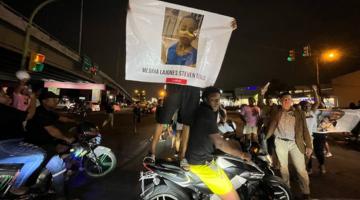 Over a month after the killings of four young boys in Ecuador, now known as the Guayaquil Four, the community is still reeling but is also activated. This case has sparked a movement that is…
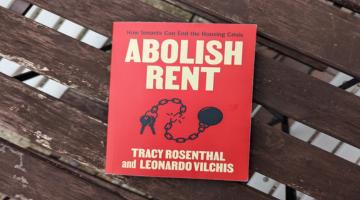 In this series, we ask acclaimed authors to answer five questions about their book. This week’s featured authors are Tracy Rosenthal and Leonardo Vilchis. Their book is Abolish Rent: How Tenants Can…
 for Aiyana, for Tommie, for Jordan.
 In excerpts from a speech given in Accra, Ghana, BAR editor and contributor Dr. Jemima Pierre highlights the United Nations’ involvement in the 2004 coup d'état and the subsequent…


