“Mere compliance with environmental permits should not negate civil rights concerns.”
The US Environmental Protection Agency has dismissed a civil rights case brought by residents of a small, overwhelmingly African American town in Alabama who have spent much of the past decade battling a toxic landfill they blame for causing a myriad of physical and mental illnesses.
In a 28-page letter, the EPA said there was “insufficient evidence” that authorities in Alabama had breached the Civil Rights Act by allowing an enormous landfill site containing 4m tons of coal ash to operate near residents in Uniontown. A separate claim that the landfill operator retaliated against disgruntled residents was also turned down.
Uniontown has been framed by advocates as one the most egregious examples of environmental racism in the US, where a largely poor and black population has had a polluting facility foisted upon it with little redress.
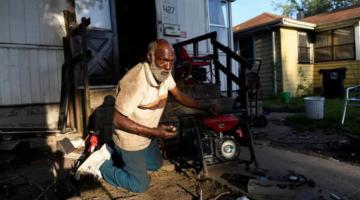
“To say there is insufficient evidence is ludicrous; I just can’t take it seriously,” said Ben Eaton, who has lived in Uniontown for 33 years. Eaton blames regular headaches and burning eyes upon the landfill, which he said has an odor than can be smelled from several miles away.
“The protection we’ve got from the government is little to none,” he said. “I can’t help but feel it’s because the population is mainly black and poor. This was forced on us. If this was a white, wealthy community, this would’ve never happened.”
The huge Arrowhead landfill rubs up against Uniontown, where about 90% of the population is black and half of the town lives below the poverty line. Arrowhead, operated by Green Group Holdings since 2011, sprawls over an area twice the size of New York City’s Central Park, accepting the waste from 33 different states.
“If this was a white, wealthy community, this would’ve never happened.”
The site used to contain a jumble of car parts, electronics and other discarded items until a flood hit a coal plant 330 miles away in Kingston, Tennessee, in 2008. Over the next two years, the clean-up of Kingston involved shifting 4m tons of potentially hazardous coal ash by train to the Arrowhead landfill abutting Uniontown.
Coal ash contains toxins such as mercury and arsenic that can affect the nervous and reproductive systems and cause other health problems. According to the EPA, people living within a mile of unlined coal ash storage ponds have a one in 50 risk of developing cancer.
Residents, already upset the landfill was placed next to a historic cemetery, began to fret that the coal ash would seep out into the air and water. Some stopped drinking the tap water. Many still spend as little time outdoors as possible due to the smell and swarms of flies. A rash of nosebleeds, breathing difficulties, mental health issues and cancers have been blamed upon the coal ash, although the authorities have not conducted any studies to analyze the potential link.
“The shipping of toxic coal ash from a mostly white county in Tennessee to this rural, poor and most black county and community in the Alabama black belt is a textbook case of environmental racism,” said Dr Robert Bullard, an academic who pioneered research that has found people of color are disproportionately blighted by pollution in the US.
In 2013, several dozen Uniontown residents filed a complaint under title VI of the Civil Rights Act. EPA officials visited the town and spoke to residents as the Obama administration sought to overhaul a federal system that has rarely invoked anti-discrimination laws to remedy environmental injustices.
“The landfill sprawls over an area twice the size of New York City’s Central Park, accepting the waste from 33 different states.”
However, residents’ hopes have now been squashed by the EPA. The agency handled far fewer new legal cases against polluters in the Trump administration’s first year compared with recent years, and it has moved to relax regulations around the disposal of coal ash. Coal plants generate about 130m tons of ash a year, much of it stored in ageing reservoirs that are prone to leaking.
“To date we haven’t seen any actions by the Trump administration in support of our most vulnerable communities,” said Mustafa Ali, who worked at the EPA’s office of environmental justice for more than two decades before resigning after Trump’s inauguration. “They continue to weaken or roll back basic protections critical to their survival.”
In its letter to the residents’ lawyer, the EPA said there was “no causal connection” between the coal ash and health problems nor any significant threats to Uniontown’s groundwater. In a separate letter to the Alabama department of environmental management, the EPA recommended the state “improve its nondiscrimination complaint process”.
Green Group said it had made “significant facility improvements” to Arrowhead since acquiring it in 2011 and exceeded all environmental regulations set out in its state permit. The company recently settled a defamation lawsuit against a handful of Uniontown residents, including Eaton.
Marianne Engleman Lado, a lawyer at Yale Law School who has represented residents, said an appeal against the EPA was possible but unlikely. Lado said mere compliance with environmental permits should not negate civil rights concerns.
“The decision is frustrating, it’s angering,” she said. “Uniontown is a classic civil rights situation. How can people trust the government if it can’t even recognize how this enormous facility is affecting the community? It’s mind-boggling.”
This article previously appeared in The Guardian







 In this segment, we discuss housing proposals in New York City and nationally. Do they improve affordability? How do they impact Black people? But first, we discuss a new book written by a Black…
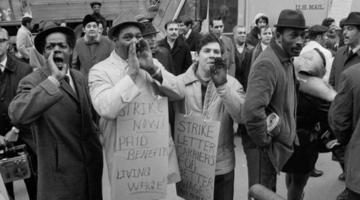 Black Agenda Report contributor, Jon Jeter joins us from Washington to talk about his new book, "Class War in America: How the Elites Divide the Nation By Asking Are You a Worker or Are You White?"…
 Leah Goodridge is a tenants’ rights attorney, a writer, and a member of New York City’s City Planning Commission. She joins us to discuss New York City Mayor Eric Adams' recently passed housing…
 The U.S. edges closer to hot war and continues aiding and abetting a genocide. Censorship and war propaganda are necessary tools when a rogue state chooses to silence its opponents.
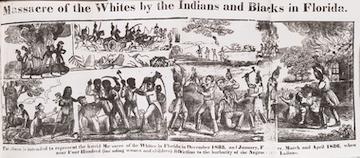 “The Seminoles had set a dangerous example, for if Blacks and Native Americans united everywhere in the Americas, then a genuine racial democracy might emerge.”


