The fact that the apparent gunman in the Virginia Tech massacre was a South Korean immigrant will inevitably spark corporate media speculation about the "Asian" mentality, says the author. Already, the pundits are circulating the old racist canard that Asian men have "frail egos" and are "prone to engage in Kamikaze style violence." In the end, the Korean student "will become whoever the white media wants him to be and for whatever political platform it and legislators want to push," and "Asian Americans will, like other non-whites, be picked apart, dissected, and theorized by whites."
Asian Americans and the Virginia Tech Shootings
by Tamara K. Nopper
"Asians are seldom seen in the media except when one of us wins a golfing match, Woody Allen has sex, or Angelina Jolie adopts a kid."
Like many, I was glued to the television news, keeping updated about the horrific shootings at Virginia Tech University . I was trying to deal with my own disgust and sadness, especially since my professional life as a graduate student and college instructor is tied to universities. And then the other shoe dropped. I found out from a friend that the news channel she was watching had reported the shooter as Asian. It has now been reported, after much confusion, that the shooter is Cho Seung-Hui, a South Korean immigrant and Virginia Tech student.
As an Asian American woman, I am keenly aware that Asians are about to become a popular media topic if not the victims of physical backlash. Rarely have we gotten as much attention in the past ten years, except, perhaps, during the 1992 Los Angeles Riots. Since then Asians are seldom seen in the media except when one of us wins a golfing match, Woody Allen has sex, or Angelina Jolie adopts a kid.
I am not looking forward to the onslaught of media attention. If history truly does have clues about what will come, there may be several different ways we as Asian Americans will be talked about.
One, we will watch white media pundits and perhaps even sociologists explain what they understand as an "Asian" way of being. They will talk about how Asian males presumably have fragile "egos" and therefore are culturally prone to engage in kamikaze style violence. These statements will be embedded with racist tropes about Japanese military fighters during WWII or the Viet Cong - the crazy, calculating, and hidden Asian man who will fight to the death over presumably nothing.
"They will talk about how Asian males presumably have fragile ‘egos' and therefore are culturally prone to engage in kamikaze style violence."
In the process, the white media might actually ask Asian Americans our perspectives for a change. We will probably be expected to apologize in some way for the behavior of another Asian - something whites never have to collectively do when one of theirs engages in (mass) violence, which is often. And then some of us might succumb to the Orientalist logic of the media by eagerly promoting Asian Americans as real Americans and therefore unlike Asians overseas who presumably engage in culturally reprehensible behavior. In other words, if we get to talk at all, Asian Americans will be expected to interpret, explain, and distance themselves from other Asians just to get airtime.
Or perhaps the media will take the color-blind approach instead of a strictly eugenic one. The media might try to whitewash the situation and treat Cho as just another alienated middle-class suburban kid. In some ways this is already happening - hence the constant referrals to the proximity of the shootings to the 8th anniversary of the Columbine killings. The media will repeat over and over words from a letter that Cho left behind speaking of "rich kids," and "deceitful charlatans." They will ask what's going on in middle-class communities that encourage this type of violence. In the process they may never talk about the dirty little secret about middle-class assimilation: for non-whites, it does not always prevent racial alienation, rage, or depression. This may be surprising given that we are bombarded with constant images suggesting that racial harmony will exist once we are all middle-class. But for many of us who have achieved middle-class life, even if we may not openly admit it, alienation does not stop if you are not white.
"We are not even seen as having legitimate reasons to have anger, let alone rage."
But the white media, being as tricky as it is, may probably talk about Cho in ways that reflect a combination of both traditional eugenic and colorblind approaches. They will emphasize Cho's ethnicity and economic background by wondering what would set off a hard-working, quiet, South Korean immigrant from a middle-class dry-cleaner-owning family. They will wonder why Cho would commit such acts of violence, which we expect from Middle Easterners and Muslims and those crazy Asians from overseas, but not from hard-working South Korean immigrants. They will promote Cho as "the model minority" who suddenly, for no reason, went crazy. Whereas eugenic approaches depicting Asians as crazy kamikazes or Viet Cong mercenaries emphasize Asian violence, the eugenic aspect of the model minority myth suggests that there is something about Asian Americans that makes them less prone to expressions of anger, rage, violence, or criminality. Indeed, we are not even seen as having legitimate reasons to have anger, let alone rage, hence the need to figure out what made this "quiet" student "snap."
Given that the model minority myth is a white racist invention that elevates Asians over minority groups, Cho will be dissected as an anomaly among South Koreans who "are not prone" to violence - unlike Blacks who are racistly viewed as inherently violent or South Asians, Middle Easterners and Muslims who are viewed as potential terrorists. He will be talked about as acting "out of character" from the other "good South Koreans" who come here and quietly and dutifully work towards the American dream. Operating behind the scenes of course is a diplomatic relationship between the US and South Korea forged through bombs and military zones during the Korean War and expressed through the new free trade agreement negotiations between the countries. Indeed, even as South Korean diplomats express concern about racial backlash against Asians, they are quick to disown Cho in order to maintain the image of the respectable South Korean.
Whatever happens, Cho will become whoever the white media wants him to be and for whatever political platform it and legislators want to push. In the process, Asian Americans will, like other non-whites, be picked apart, dissected, and theorized by whites. As such, this is no different than any other day for Asian Americans. Only this time an Asian face will be on every television screen, internet search engine, and newspaper.
Tamara K. Nopper is an educator, writer, and activist living in Philadelphia . She can be reached at tnopper@yahoo.com.

 Iraqi Kurdish leaders say the US withdrawal will leave their region, long a CIA and Mossad hub, vulnerable to Iranian attacks.
 BAR Executive Editor and Senior Columnist Margaret Kimberley advises caution regarding the narrative that the US is in a state of decline. The US is committed to achieving full-spectrum dominance…
 In this week’s segment, we discuss events in the Horn of Africa as the Somaliland region requests U.S. recognition and the Trump administration ends some sanctions against Eritrea. But we begin by…
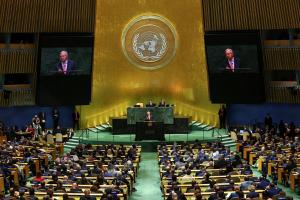 Ajamu Baraka discusses U.S. influence over the United Nations and its Security Council as the 81st General Assembly high-level meetings take place.
 Abayomi Azikiwe, editor of the Pan-African Newswire, discusses Israeli recognition of the Somaliland region, the US reduction of sanctions on Eritrea, a new anti-government alliance in Ethiopia, and…


