 To listen to this Black Agenda Radio commentary click the flash player above. to download an MP3 copy for broadcast or personal use, click here.
A Black Agenda Radio commentary by Glen Ford
Last year's "brief but terrifying" experience with $4-a-gallon gasoline "proved beyond doubt that the suburban and exurban model of development based on automobiles is broken beyond repair." When the era of high-priced gasoline returns for good - which it will, and soon - it will bring on a "transportation crisis so excruciating it will make the whole society scream." A multi-trillion dollar national makeover is desperately needed, to undo suburbia and the car culture.
Undo Suburbia: The Imminent Transportation Catastrophe
A Black Agenda Radio commentary by Glen Ford
"The cost of rectifying this huge historical mistake - the car culture - will be in the many trillions of dollars."
In the decades after World War Two, the corporate rulers of the United States embarked on the biggest, most sustained infrastructure makeover in the history of capitalism. Suburbia was invented, a monumental, coast-to-coast makeover fueled in large part by fears that the Great Depression might return unless national energies were directed toward some unifying, transformational project. It was a new model of living - a uniquely "American way of life" - with the private automobile as its organizing principle and mechanism. African Americans were, of course, deliberately left out of this motorized "civilization" - a model that projected itself deep into the future in TV cartoons like The Jetsons, in which every family owned at least one flying car and the suburbs had expanded into - space!
Fifty years later, $4-a-gallon gasoline proved beyond doubt that the suburban and exurban model of development based on automobiles is broken beyond repair. If $4 gasoline returns - and it will - the American infrastructure erected after World War Two will break and shatter under the stress, as will the social and economic structures that are so totally dependent on this catastrophically mistaken model. The suburban model that President Dwight Eisenhower and subsequent administrations built faces inevitable and imminent extinction, on a timeline that is measured in years - maybe months - not decades. An Israeli or U.S. attack on Iran - tomorrow - could bring the whole house down. But even without an apocalyptic crisis, the House of Cars is doomed.
"The suburban and exurban model of development based on automobiles is broken beyond repair."
According to a new report by the American Public Transportation Association, ridership on public transit has increased 38 percent since 1995, with the biggest jump last year, spurred by the brief but terrifying explosion in oil prices. Ridership finally equaled the number of trips made in 1956, although proportionally still a lot less than a half century ago, since there are now so many more Americans. But these incremental increases in mass transit usage don't even come close to preventing a societal breakdown when $4-plus gasoline prices return for good - and they will, and soon.
The recent economic stimulus package includes $8.4 billion for mass transit, but that's just a drop in the bucket, most of which cannot be used to offset current and planned hikes in mass transit fares and draconian cutbacks in local service. The cities of Houston and Cincinnati put the squeeze on public transportation users last year, and consequently lost riders.
What's desperately needed is a national mass transit plan - far bigger and more basic than a couple of inter-city bullet trains - that will undo the suburban, automobile-based model with all the deliberate speed that the national treasure can provide. Even then, it will be impossible to avert a transportation crisis so excruciating it will make the whole society scream. The cost of rectifying this huge historical mistake - the car culture - will be in the many trillions of dollars, just as the equivalent of many trillions was spent in creating the suburban monstrosity. At this late stage in the energy game, only a national transformation will avert a cataclysmic collapse. For Black
Agenda Radio, I'm Glen Ford. On the web, go to www.BlackAgendaReport.com.
BAR executive editor Glen Ford can be contacted at Glen.Ford@BlackAgendaReport.com.

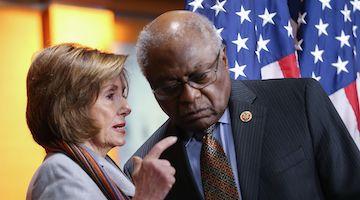 Son, it look lak Unca Jim say, “Las’ time I chek I’se de whip— an’ got no time fo’ young Negroz wit all dey Blak Life lip…”
 The idea that we can resolve racism by integrating a fundamentally anti-Black institution is the most absurd notion of all.
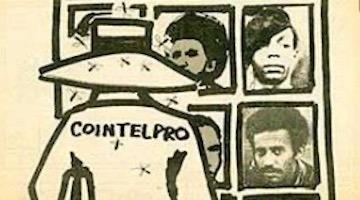 The Bureau’s COINTELPRO deployed every trick and crime in the book to crush left dissidents, from disruption to assassination.
 This week the presidential election and the legacy of Paul Robeson were on your minds.
 Politicians ignore at their peril the power of popular culture and its people-moving practitioners.


